
Gluten-free travelers face unique challenges that can turn dream vacations into stressful experiences. For the 3 million Americans with celiac disease and countless others managing gluten sensitivity, the fear of accidental exposure often overshadows the excitement of exploring new destinations. Recent surveys show that 68% of gluten-free individuals limit their travel due to dietary concerns, missing out on cultural experiences and personal growth opportunities.
The good news is that with strategic planning and insider knowledge, you can confidently navigate any destination while maintaining your gluten-free lifestyle. This guide cuts through the anxiety with actionable strategies used by experienced gluten-free travelers worldwide. You’ll discover how to transform potential dietary disasters into seamless adventures, ensuring your health never has to take a backseat to your wanderlust.
Pre-Departure Medical Documentation Essentials
Secure Comprehensive Medical Documentation
Contact your gastroenterologist 4-6 weeks before your trip to obtain critical documentation. Request a detailed letter explaining your diagnosis in medical terminology for international border crossings and emergency situations. This document should specify your condition as celiac disease or non-celiac gluten sensitivity, noting that even trace amounts of gluten can cause severe health consequences.
Simultaneously, schedule a consultation with a registered dietitian specializing in gluten-related disorders. They’ll help you create destination-specific meal plans that account for local cuisine and available gluten-free options. This professional guidance ensures you won’t face unexpected nutritional gaps while traveling through regions with limited gluten-free infrastructure.
Prepare Your Emergency Medical Kit
Assemble a compact medical kit containing essential items for gluten-related emergencies. Include activated charcoal tablets to help absorb accidental gluten exposure, electrolyte replacement packets for managing potential gastrointestinal distress, and any prescribed medications for symptom management. Store these in clearly labeled containers that match your prescription information.
Create a waterproof medical alert card listing your condition, emergency contacts, and medication allergies in both English and your destination’s primary language. Many travelers find laminated cards invaluable when communicating with restaurant staff or medical professionals in foreign countries. Keep this card with your passport for immediate access during emergencies.
Destination Selection & Research Strategy

Identify Truly Gluten-Friendly Locations
Choose destinations with established gluten-free infrastructure to minimize stress. Italy stands out as a surprisingly safe option due to nationwide celiac testing programs and strict gluten-free certification standards. Look for cities with dedicated gluten-free bakeries, restaurants, and hotels verified through community-driven apps like Find Me Gluten Free and Gluten Free Roads.
Conduct thorough research by joining destination-specific Facebook groups and Reddit communities where recent travelers share experiences. Search for “[City Name] + gluten free” to uncover hidden gems and newly opened safe dining options. Create a personalized Google Map marking verified gluten-free establishments near your planned accommodations for easy navigation.
Overcome Language Barriers Effectively
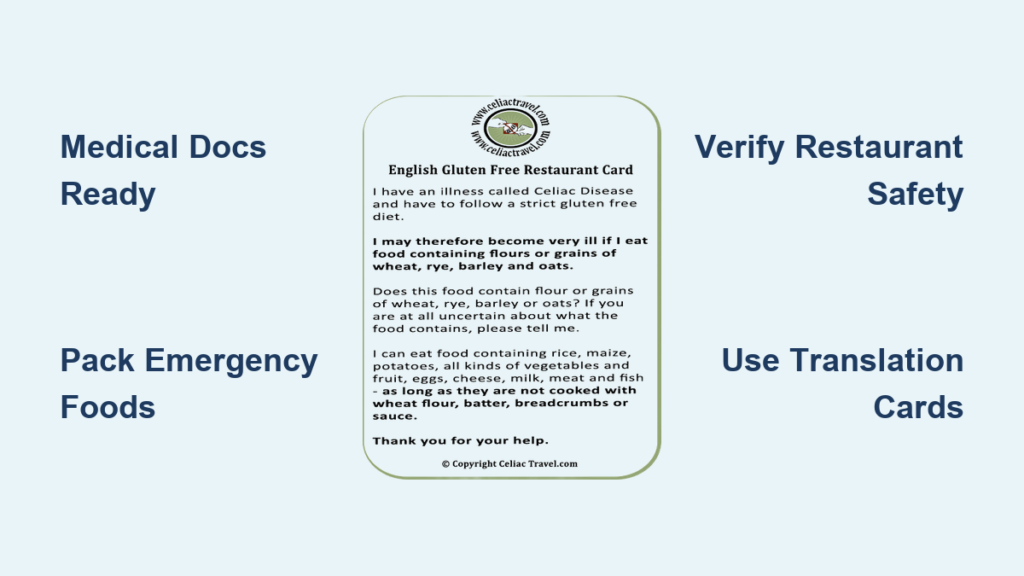
Download translation apps with offline capabilities before departure. The Celiac Travel app provides gluten-free dining cards in 54 languages, clearly explaining cross-contamination risks and safe preparation requirements to kitchen staff. Print physical copies as backup in case your phone loses power during critical moments.
Master essential phrases beyond “I can’t eat gluten.” Learn to ask “Is this prepared in a separate area?” and “Do you have gluten-free soy sauce?” using language learning apps that provide pronunciation guides. Practice these phrases until you feel confident speaking them, as proper pronunciation significantly increases your chances of being understood in restaurants.
Strategic Packing for Gluten-Free Success
Build Your Emergency Food Arsenal
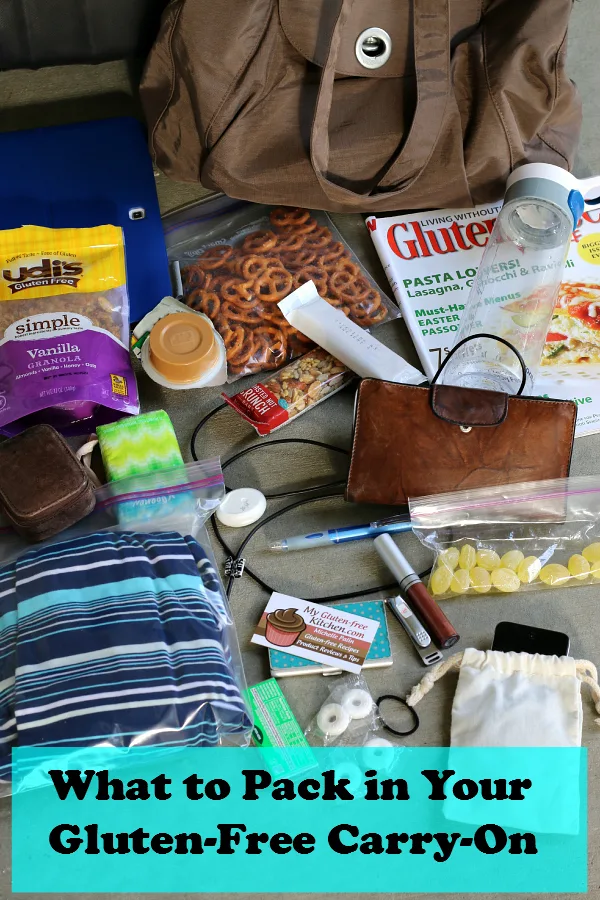
Pack 3-4 days’ worth of non-perishable gluten-free foods regardless of your trip’s duration. Include single-serving protein bars, individual nut butter packets, instant gluten-free oatmeal, and rice cakes that provide reliable backup meals when safe restaurants aren’t accessible. These items prove invaluable during travel delays or when arriving at your destination late at night.
For destinations with limited gluten-free options, include shelf-stable gluten-free bread and wraps in your carry-on luggage. Vacuum-sealed varieties travel well without refrigeration until opened, allowing you to create quick sandwiches from safe ingredients. Keep these essentials in your carry-on to avoid potential spoilage from temperature fluctuations in checked baggage.
Equip Yourself with Portable Kitchen Solutions
For extended stays or challenging destinations, pack compact kitchen essentials that transform any accommodation into a safe eating environment. A collapsible silicone container keeps restaurant leftovers separate from potential contamination, while a portable gluten tester like the Nima Sensor provides peace of mind for questionable food items.
Include a small cutting board and knife for preparing safe meals in hotel rooms, and pack travel-size dish soap to thoroughly clean unfamiliar utensils and surfaces. These simple tools significantly expand your dining options and reduce reliance on restaurant kitchens that may not fully understand gluten-free requirements.
Navigating Airports and Airlines with Confidence
Streamline TSA Security Screening
Pack gluten-free snacks in clear, quart-sized bags separate from liquids to expedite security screening. Declare medically necessary food items to TSA agents before entering the screening line, presenting your doctor’s letter explaining why you’re carrying these items. This documentation proves particularly valuable when agents question packaged foods or liquid medications.
Place liquid medications and supplements in a separate bag for easy inspection, ensuring prescription labels remain visible and quantities align with your trip duration. Avoid homemade items that might raise suspicion, opting instead for commercially packaged gluten-free products with clear labeling.
Secure Safe In-Flight Dining
Order gluten-free meals when booking your flight, then reconfirm 24-48 hours before departure as airlines typically require 24-72 hours’ notice for special dietary accommodations. Always pack backup snacks even when meals are pre-ordered, as cross-contamination remains possible during airline meal preparation.
Upon boarding, discreetly inform flight attendants about your severe gluten intolerance. Request to see ingredient lists for any served items and ask that your meal be served first to minimize cross-contact from other passengers’ trays. Many experienced travelers report that proactive communication significantly reduces in-flight dietary risks.
Hotel Accommodation Safety Protocols
Secure Truly Gluten-Free Rooms
Call hotels directly rather than relying solely on online booking platforms. Speak specifically with the food and beverage manager or executive chef to discuss your needs using precise language: “I have celiac disease and require strict gluten-free preparation with separate prep areas and dedicated utensils.”
Request rooms with refrigerators and microwaves for storing and preparing safe foods. Some premium hotels offer gluten-free rooms with mini-fridges pre-stocked with certified snacks—confirm these amenities both at booking and again 48 hours before arrival to ensure they’re properly arranged.
Create a Safe Kitchen Environment
Immediately upon arrival, clean all surfaces with disinfectant wipes to remove potential gluten contamination from previous guests. Place your portable cutting board over potentially contaminated countertops when preparing food. Store gluten-free items on top shelves of mini-fridges, away from possible spills of gluten-containing products.
Use hotel coffee makers to heat water for instant gluten-free meals, but clean the pot thoroughly first or request a small travel kettle. Many hotels provide these upon request for guests with documented medical dietary needs, significantly expanding your safe meal options.
International Dining Without Compromise
Vet Restaurants Using Proven Criteria
Research restaurants using specific verification methods: look for official certifications like AIC in Italy or Coeliac UK accreditation, focus on recent reviews from verified celiac travelers, check for dedicated gluten-free menus with clear labeling, and assess staff training by calling ahead to gauge their gluten-free knowledge.
Create a prioritized restaurant list with addresses, hours, and reservation requirements. Book popular gluten-free spots in advance, especially when traveling to smaller towns with limited dining options. This preparation eliminates last-minute stress and ensures you always have safe eating alternatives.
Implement Foolproof Ordering Strategies
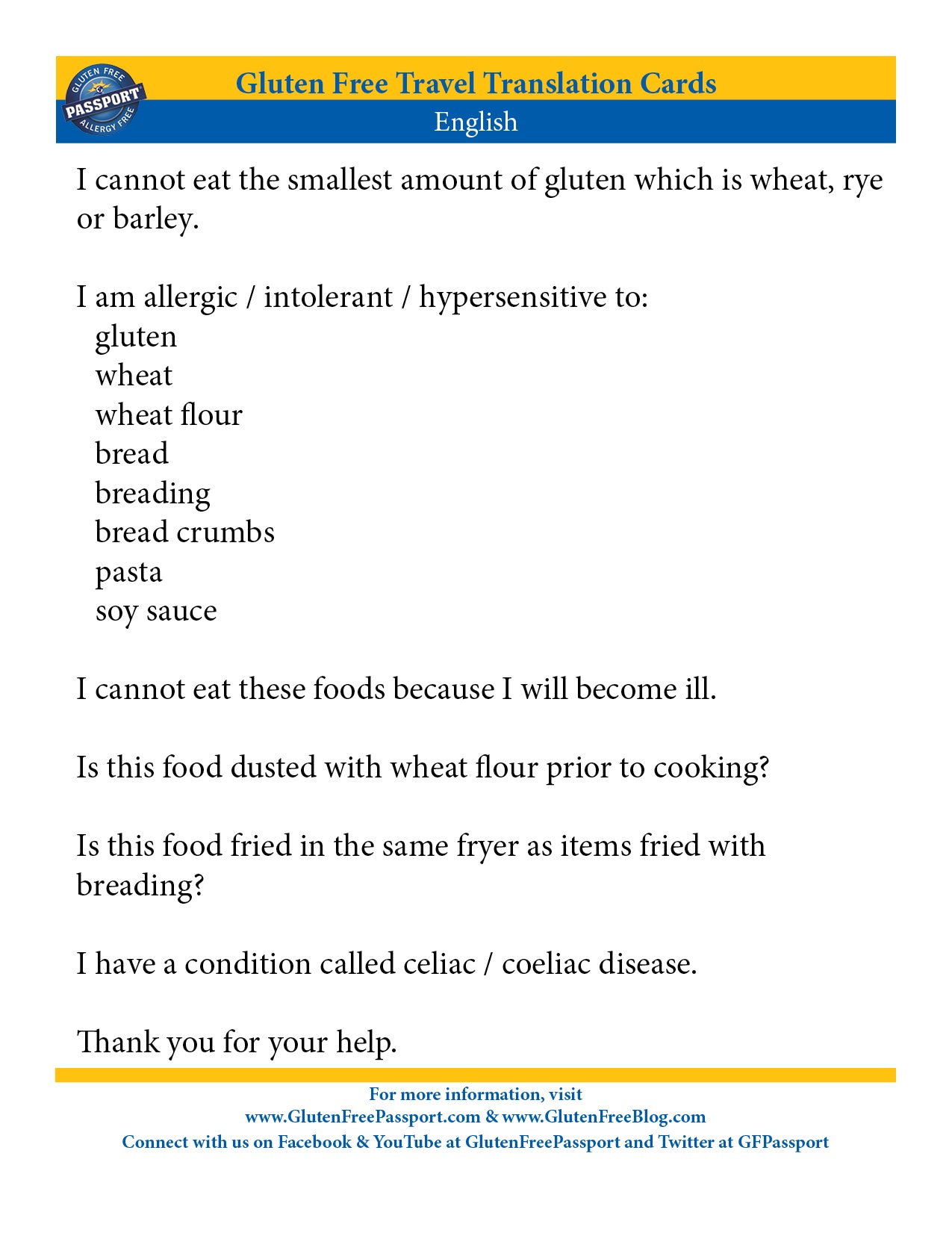
Arrive at restaurants during slower hours when staff can dedicate proper attention to your dietary needs. Present your translation card immediately upon seating and ask specific questions like “Do you have a separate fryer for gluten-free items?” rather than the vague “Is this gluten-free?”
Opt for naturally gluten-free dishes when possible—grilled meats, steamed vegetables, and rice-based meals significantly reduce cross-contamination risks. Avoid complex sauces or fried foods unless the restaurant explicitly confirms safe preparation protocols, as these items present the highest risk of accidental exposure.
Build Your Emergency Response Plan
Prepare for Accidental Exposure
Pack activated charcoal tablets and electrolyte packets to manage symptoms if accidental gluten exposure occurs. These items help minimize discomfort while you seek appropriate medical care. Document exposure incidents with photos of restaurant receipts and food items to create a paper trail for insurance claims and to warn other travelers through review platforms.
Research your destination’s healthcare system before departure, focusing on facilities with English-speaking staff familiar with celiac disease management. Countries like Australia, Canada, and most of Europe provide excellent celiac care for visitors, but knowing where to go beforehand reduces emergency stress.
Secure Comprehensive Travel Insurance
Purchase travel insurance with “Cancel for Any Reason” coverage in case health concerns arise during your trip. Some specialized policies now cover the cost difference for gluten-free meals when medically necessary—keep all receipts for potential reimbursement claims.
Verify whether your domestic health insurance offers international coverage, as many standard policies exclude pre-existing conditions abroad. This critical step ensures you won’t face unexpected medical expenses if you require treatment while traveling.
Your gluten-free travel journey begins with proper preparation transforming anxiety into excitement. Start with a short domestic getaway to test these strategies, then gradually expand to international destinations as your confidence grows. The gluten-free travel community continues to expand, creating safer pathways for adventurous eaters worldwide—your successful trip contributes to making the world more accessible for all gluten-free travelers.