
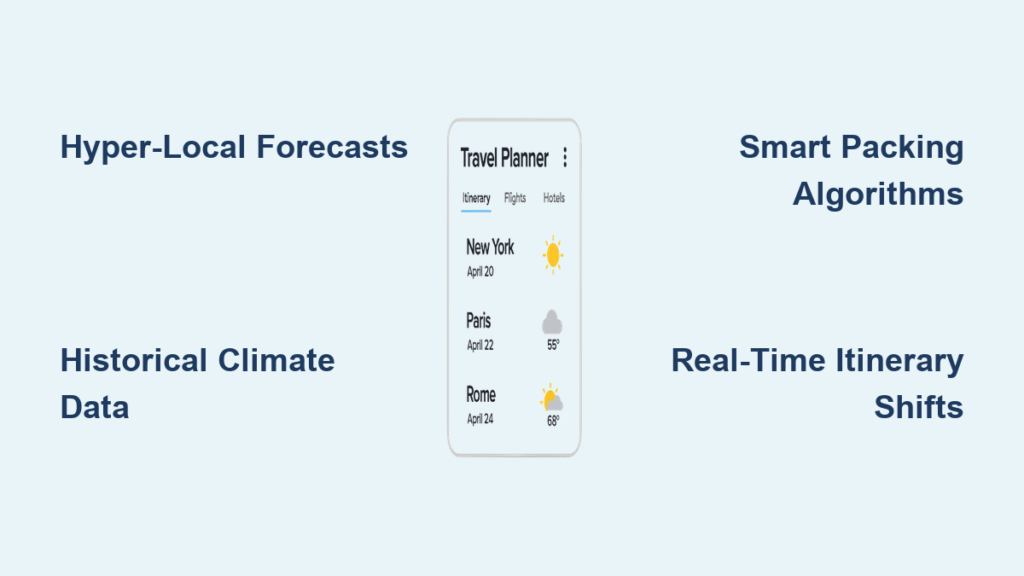
Your dream vacation shouldn’t become a soggy disappointment because you didn’t check the microclimate of your Portuguese seaside town. A travel weather planner eliminates this gamble by delivering hyper-local forecasts and historical patterns that transform how you prepare for any destination. Forget generic “sunny with a chance of rain” predictions—modern travel weather planners analyze decades of climate data alongside real-time atmospheric conditions to tell you exactly what to pack and when to schedule activities.
Whether you’re planning a hiking trip through the Swiss Alps or a beach wedding in Bali, understanding the precise weather patterns for your specific destination and dates makes the difference between an average trip and an unforgettable experience. This guide reveals how to leverage these powerful tools to avoid weather-related disasters and maximize your travel enjoyment.
Why Standard Weather Apps Fail Travelers
General weather applications deliver broad regional forecasts that miss critical destination-specific nuances. Your airport weather station might show pleasant 75°F temperatures while your mountain resort sits under 30°F conditions just 20 miles away. Standard apps don’t account for elevation changes, microclimates, or cultural factors that dramatically impact your actual experience.
A specialized travel weather planner solves this by integrating location-specific data sources and historical patterns. When planning a trip to Machu Picchu, it doesn’t just show Cusco’s weather—it calculates conditions at the actual elevation of the ruins, factoring in the standard 3.5°F temperature drop per 1,000 feet of elevation gain. This precision prevents costly packing mistakes and activity cancellations.
How Professional Travel Weather Planners Gather Reliable Data
Travel weather planners pull forecast information from multiple authoritative global sources to ensure accuracy. For US destinations, they access National Weather Service data with neighborhood-level precision. European trips benefit from the European Centre for Medium-Range Weather Forecasts, known for exceptional accuracy in complex terrain. Asian destinations use Japan Meteorological Agency inputs, while local meteorological services provide region-specific insights global models miss.
This multi-source approach creates redundancy that catches potential errors before they impact your plans. When three different weather models agree on a forecast, confidence levels soar. When they diverge, the system flags potential uncertainty and suggests flexible planning approaches—like booking refundable activities during volatile weather periods.
Historical Climate Patterns That Save Trips
The real power of a travel weather planner lies in its historical analysis capabilities. These systems access 10-30 years of weather data for each location, revealing patterns that simple forecasts cannot capture. You’ll discover that April in Paris isn’t just about current conditions—it’s understanding that rainfall probability jumps 40% during the third week compared to early April.
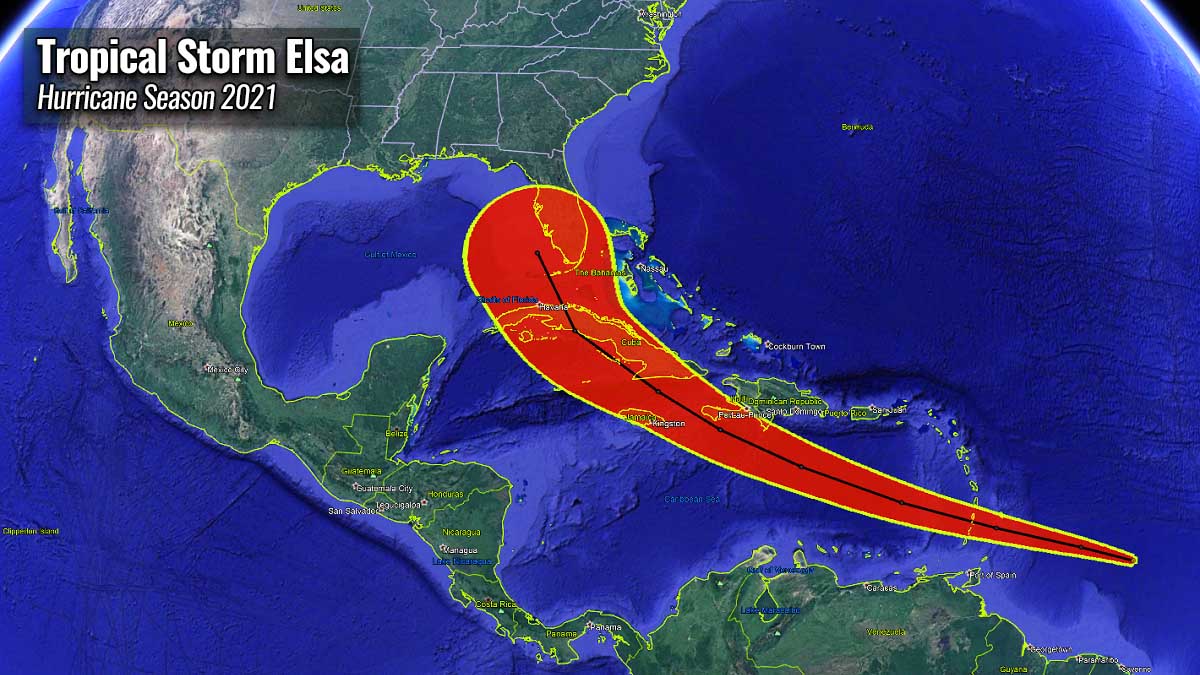
This historical perspective proves especially valuable for shoulder season travel. While current forecasts might suggest perfect weather, historical data reveals that sudden cold snaps occur 25% of the time during your planned visit, prompting you to pack that extra jacket you’d otherwise leave behind. For Caribbean trips, historical hurricane track analysis identifies which specific weeks carry the highest risk for your chosen island.
Tropical Destination Weather Intelligence
Monsoon Season Timing Precision
Tropical destinations demand specialized weather intelligence beyond basic temperature readings. Advanced travel weather planners track wet versus dry season transitions with precision, identifying those magical shoulder weeks when crowds thin but weather remains idyllic. They calculate daily rainfall probability against your planned activities, suggesting indoor alternatives when afternoon thunderstorms approach.
Rather than just warning about general hurricane season dates, sophisticated systems analyze historical storm tracks to pinpoint your exact risk window. They’ll recommend travel insurance triggers and flexible booking strategies that protect your investment without limiting options—like knowing that late September carries 3x higher storm risk than early September for your Bali villa.
Mountain Weather Survival Strategies
Mountain weather planning involves understanding elevation’s dramatic impact on conditions. A travel weather planner calculates not just summit conditions, but temperature variations throughout your entire route. Snowfall predictions integrate with avalanche risk assessments to determine both safety and gear requirements—you’ll receive specific recommendations for microspikes versus full crampons based on current snowpack conditions.
Trail condition reports linked to weather impacts help you decide between hiking boots and snowshoes. You’ll discover that your planned 14er attempt should shift two days earlier to avoid incoming storms, or that afternoon thunderstorms make morning summit attempts essential in Colorado’s Rockies.
Smart Packing Through Weather Intelligence
Clothing Algorithm That Prevents Overpacking

Modern travel weather planners revolutionize packing through sophisticated clothing algorithms that consider destination specifics, activity requirements, and cultural norms. These systems don’t simply suggest “bring a jacket”—they calculate exact layering strategies based on expected temperature ranges, humidity levels, and your planned activities.
For variable conditions, you’ll receive specific layering combinations rather than generic advice. A shoulder season trip to Scotland might generate recommendations for a merino wool base layer, packable down vest, and waterproof shell, with exact temperature thresholds for each layer’s deployment. Cultural dress codes integrate with weather requirements, ensuring you’re prepared for both temple visits in Thailand and sudden monsoon downpours.
Gear Selection That Matches Activity Needs
Umbrella necessity calculations extend beyond simple rain probability. Advanced systems analyze rainfall intensity, wind speeds, and your planned activities to determine whether a compact travel umbrella suffices or if you need a wind-resistant golf umbrella. Sun protection recommendations specify exact SPF requirements based on UV index, altitude, and reflection factors from water or snow.
Footwear recommendations become remarkably specific. Rather than generic “comfortable walking shoes” advice, you’ll receive guidance like “waterproof hiking boots required for days 3-5 due to muddy trail conditions, but pack lightweight sneakers for city exploration days.” Technology protection suggestions might include waterproof phone cases for coastal destinations or insulated battery packs for cold weather photography.
Timing Your Perfect Trip
Optimal Travel Window Identification

Advanced travel weather planners identify ideal travel periods through sophisticated pattern analysis that goes far beyond “best weather” generalizations. These systems correlate historical weather patterns with crowd levels, pricing fluctuations, and festival schedules to pinpoint weeks offering optimal combinations of pleasant weather, thin crowds, and reasonable prices.
Shoulder season advantages become particularly clear through this analysis. While guidebooks might suggest “April-May” for Mediterranean destinations, weather planners reveal that late April offers 70% less rainfall than early May, with hotel prices 30% lower than peak season. Festival weather correlations help you time cultural events with favorable conditions—imagine planning your India Holi celebration visit during the driest historical week rather than during typical monsoon onset.
Real-Time Itinerary Flexibility Features
Modern travel weather planners excel at real-time adaptation, transforming rigid schedules into flexible frameworks that maximize experiences despite weather changes. When Tuesday’s hiking forecast deteriorates, the system automatically suggests moving that activity to Thursday while proposing indoor alternatives for Tuesday. Restaurant reservations, museum visits, and shopping districts integrate with weather-based activity shuffling.
Transportation delay predictions prove invaluable during weather-sensitive travel periods. Rather than discovering flight delays at the airport, you’ll receive advance warnings with suggested backup routes or earlier departure times. Accommodation weather upgrade options appear automatically when incoming storms threaten beachfront properties, with specific alternative suggestions that maintain your vacation quality.
Emergency Weather Response Capabilities
Severe Weather Protocols That Keep You Safe
When severe weather threatens, advanced travel weather planners activate comprehensive emergency protocols. Evacuation route weather conditions update in real-time, accounting for storm movement and road closures. Shelter location mapping identifies safe havens along your planned routes, while emergency contact integration ensures rapid communication with family and authorities.
Insurance policy activation triggers automatically when weather conditions meet specific thresholds, streamlining future claims processes. Embassy and consulate notifications activate when severe weather affects international destinations, ensuring you receive both local and home country support during emergencies.
Offline Emergency Features for Remote Travel
Offline weather data caching ensures access to critical information even during communication outages. Emergency broadcast reception capabilities provide official warnings regardless of internet connectivity. SOS signal integration connects weather emergencies with rescue services, while family notification systems automatically update loved ones about your safety status.
These features prove invaluable during remote travel—imagine receiving avalanche risk assessments while hiking in the Himalayas with no cell service, or getting tsunami alerts while island hopping in Indonesia through emergency broadcast systems.
A sophisticated travel weather planner transforms vacation uncertainty into confident preparation. By leveraging decades of historical data alongside cutting-edge forecasting, these tools ensure you arrive prepared for whatever Mother Nature delivers. The investment in advanced weather planning pays dividends through avoided disappointments, optimal timing decisions, and enhanced travel experiences that maximize every destination’s potential. Start using a specialized travel weather planner for your next trip and discover the difference precise weather intelligence makes to your travel enjoyment and safety.