
Your golf clubs represent a significant investment that deserves proper protection when traveling. Whether you’re heading to Scotland for the Open Championship or Florida for spring break golf, knowing how to travel with golf clubs properly means the difference between hitting perfect shots on arrival and facing costly repairs before your first round. Most golfers don’t realize that 90% of travel damage comes from improper packing techniques and case selection—not airline handling.
This guide reveals the exact methods professional golfers and frequent travelers use to protect their equipment. You’ll discover how to choose the right case, pack like a pro, navigate airline policies without surprise fees, and implement insurance strategies that safeguard your investment. By the end, you’ll have a complete system that ensures your clubs arrive in perfect condition, ready for championship performance.
How to Select the Perfect Golf Travel Case for Your Needs
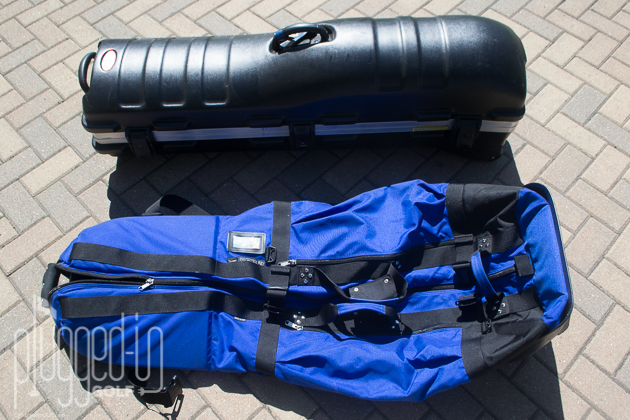
Your travel case serves as your clubs’ first line of defense against baggage handlers and rough handling. Choosing the wrong case can cost you hundreds in repairs, while the right one provides peace of mind worth every penny of its price tag.
Hard-Sided Cases for Maximum Protection
Military-grade protection comes from cases like the SKB Deluxe ATA model with polyethylene construction and TSA-approved locks. These $300-500 cases absorb crushing forces that would destroy your clubs in softer alternatives. While they add 12-18 pounds to your baggage allowance, the investment pays off when your premium driver survives rough handling.
Budget-friendly hard cases like the CaddyDaddy Constrictor 2 offer solid protection at $150-250 with 1800D nylon construction and reinforced corners. These work well for occasional travelers who need decent protection without premium pricing.
Weight considerations are critical—hard cases often push you toward overweight fees on international flights. Always weigh your packed case before heading to the airport to avoid $100-200 surprise charges.
Soft-Sided Cases for Easy Navigation
High-end soft cases like the Sun Mountain ClubGlider Meridian feature patented leg mechanisms that support 100% of the bag’s weight, making airport navigation effortless. The 900D polyester construction with dense foam padding offers surprising protection at just 8-12 pounds total weight—perfect for avoiding overweight fees.
Budget soft cases starting at $80-120 provide basic protection through padded tops and inline skate wheels. The major advantage? They fold flat for storage—essential if you live in a small apartment or hotel room.
Hybrid solutions like the Bag Boy T-750 combine hard tops for club head protection with soft lowers for weight savings, offering middle-ground protection at moderate prices.
Professional Packing Techniques That Prevent 90% of Travel Damage
Proper packing prevents the majority of travel damage, yet most golfers simply toss clubs into a case and hope for the best. Implement these professional techniques to safeguard your equipment during transit.
Essential Packing Sequence
Step 1: Club preparation requires removing driver and wood heads when possible, storing heads in protective covers within your carry-on. This eliminates the leverage point that causes most shaft breaks during handling.
Step 2: Shaft protection involves installing a stiff arm device diagonally across your bag, positioning the padded end at club heads. This $20-40 investment absorbs crushing forces that would otherwise snap your driver during baggage stacking.
Step 3: Individual club wrapping means wrapping each iron in bubble wrap or using commercial shaft protectors. Pay special attention to graphite shafts and club faces with sharp grooves that can damage neighboring clubs during transit.
Advanced Protection Methods
The towel barrier technique creates a protective cocoon using rolled towels between clubs and bag sides. This provides cushioning while utilizing items you’re already packing—no extra cost for added protection.
Shoe storage strategy fills golf shoes with socks and small accessories, then positions them along bag sides for additional structure and weight distribution. This simple trick prevents clubs from shifting during transit.
Rain hood deployment adds an extra protection layer while keeping your clubs dry during unexpected weather exposure at baggage claim or during transfers.
Navigating Airline Policies Without Paying Surprise Fees

Airline golf policies vary dramatically, and ignorance costs money. Understanding each carrier’s specific rules prevents surprise fees and ensures smooth check-in.
Domestic Airline Breakdown
Delta Air Lines charges $30 domestically but hits international travelers with $150 fees. Their 62-inch linear limit includes a brutal $200 oversize penalty. Pack strategically to stay within limits—measure your packed case before arriving at the airport.
American Airlines counts your golf bag as one checked bag at $30, making them attractive for standard sets. However, exceed their 62-inch limit and you’ll pay $200 additional—worth budgeting extra time to measure carefully.
Southwest Airlines offers the best value at $75 each way, with a generous 80-inch limit. Their “two bags fly free” policy means your golf bag doesn’t count against your standard allowance—a significant advantage for golf travelers.
United Airlines charges $35 and offers “fragile” handling upon request—a worthwhile ask for expensive equipment. Always request this special handling to potentially improve your clubs’ treatment.
International Carrier Variations
British Airways includes golf clubs within standard baggage allowance on many routes, making them ideal for UK golf trips. Lufthansa requires pre-registration for golf equipment at €50-100 depending on route—call ahead to avoid delays.
Emirates provides free allowance within standard baggage limits, perfect for Asian golf destinations. Always verify current policies as rules change frequently—don’t rely on last year’s information.
Shipping vs. Flying: Which Option Saves You Money and Stress?
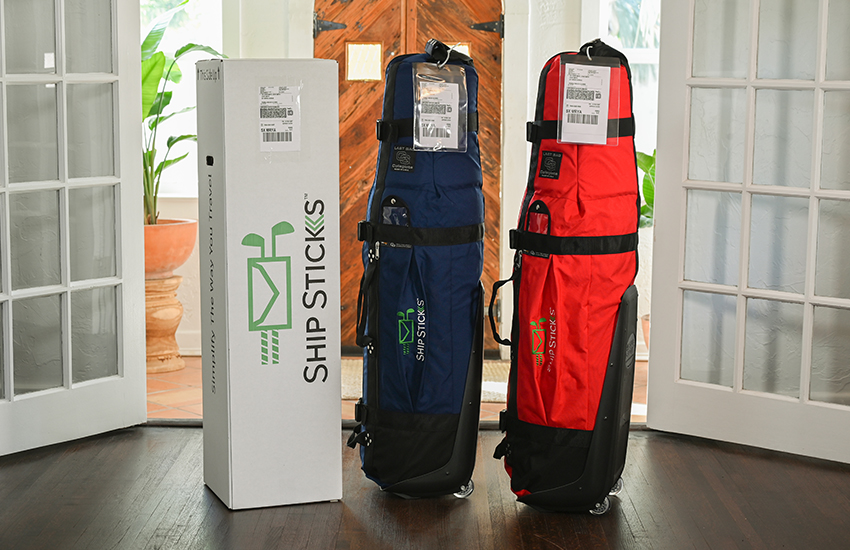
Sometimes shipping your clubs beats airline hassles, especially for longer trips or when traveling with family who need your attention at the airport.
Professional Shipping Services Compared
Ship Sticks dominates the golf shipping market with door-to-door service starting at $39.99 domestic. They pick up from your home and deliver directly to your resort or golf course, eliminating airport navigation entirely. For NYC to Orlando round-trip, Ship Sticks runs $80-120 with 15-minute pickup scheduling and guaranteed on-time delivery.
FedEx Golf Shipping offers $80-150 domestic rates with real-time tracking and declared value coverage up to $100. Their specialized golf boxes provide professional-level protection but require you to drop off at a shipping center.
Luggage Forward provides white-glove service at premium prices ($99-199 domestic) but includes GPS tracking and photo confirmation of delivery—worth considering for high-value equipment.
Essential Insurance Strategies to Protect Your $2,000+ Investment
Your homeowner’s policy probably doesn’t cover airline damage or international travel. Specialized protection fills these critical gaps that most golfers overlook.
Coverage Gap Analysis
Standard homeowner’s policies typically limit sporting equipment to $2,500-5,000 with $500-1,000 deductibles. This barely covers a premium driver and leaves wedges unprotected. Airline liability maxes out at $3,500 domestically and even less internationally, regardless of your equipment’s actual value.
Specialized Golf Insurance Options
Golf Care Insurance offers £5,000 equipment coverage with worldwide protection for £39.99-89.99 annually. US Golf Insurance provides up to $10,000 coverage including rental reimbursement when equipment is delayed—critical if your clubs don’t arrive in time for your tee time.
Credit card protection through premium cards like Chase Sapphire Reserve offers $10,000 baggage coverage, but only when you pay for travel with the card. Always use your premium card for flight bookings to activate this coverage.
Airport Check-In Procedures That Get Your Clubs Special Handling
Master these check-in procedures to ensure your clubs receive the proper handling they deserve during your journey.
Check-In Optimization
Specialized counters for oversize baggage exist at most airports—locate these before joining regular check-in lines. Priority handling requests cost nothing but provide additional care tags that signal handlers to treat your case with extra care.
Timing strategies require arriving 2 hours early domestically and 3 hours internationally when traveling with golf clubs. Add 30 minutes during peak travel periods to avoid rushing your check-in process.
Damage Inspection Protocol
Immediate check of your clubs upon arrival is non-negotiable—inspect before leaving the airport. Photo documentation of any damage provides crucial evidence for insurance claims. Claim filing must happen immediately—most airlines require reports within 4-24 hours of baggage claim.
Post-Travel Inspection Checklist to Catch Hidden Damage
Your clubs’ journey doesn’t end at baggage claim. Proper post-travel care prevents long-term damage from travel stress that might not be immediately visible.
Damage Assessment Protocol
Visual inspection examines every club for dents, cracks, or bends that might affect performance. Shaft testing involves gentle flexing to detect hairline fractures that could cause catastrophic failure mid-swing—don’t skip this critical step.
Grip evaluation looks for tears or unusual wear patterns from shifting during transit. Loft and lie verification ensures specifications haven’t changed—critical for consistent shot-making that might be affected by travel stress.
International travel requires deep cleaning to remove foreign soil that could violate biosecurity rules. Salt air exposure from coastal destinations demands immediate metal surface wiping to prevent corrosion you might not notice immediately.
Traveling with golf clubs transforms from stressful gamble to confident routine when you master these systems. Your equipment represents significant investment—protect it with proper cases, packing techniques, and insurance coverage. Whether shipping ahead or carrying on, these strategies ensure your clubs arrive ready for championship performance. The golf courses of the world await—pack smart, travel confidently, and focus on what matters: your next birdie putt.