
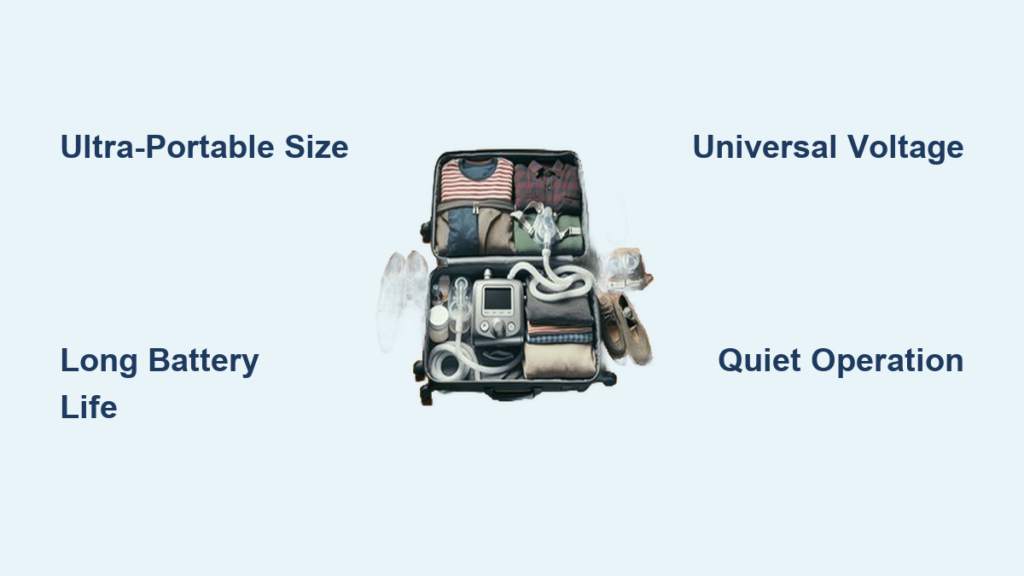
Tossing and turning in unfamiliar hotel rooms while your bulky home CPAP gathers dust at home? You’re not alone—nearly 30 million Americans with sleep apnea face this exact dilemma when traveling. The frustration of disrupted therapy during trips can leave you exhausted before your vacation even begins. But here’s the good news: today’s travel CPAP machines deliver full therapeutic power in packages smaller than your tablet. This guide cuts through the marketing fluff to give you a practical, step-by-step approach to selecting the perfect travel companion that fits your therapy needs and your suitcase.
Stop guessing which features matter most for your specific travel patterns. Whether you’re a road warrior logging 20 business trips yearly or an occasional vacationer planning a dream cruise, you’ll discover exactly how to balance size, battery life, and essential features without overspending. Most importantly, you’ll learn how to avoid the common mistake of buying a machine that looks perfect online but gets left behind because it’s too cumbersome for real-world travel.
Size and Weight That Actually Fits in Your Luggage
Ultra-Portable vs Standard Portable: What’s Right for Your Travel Style
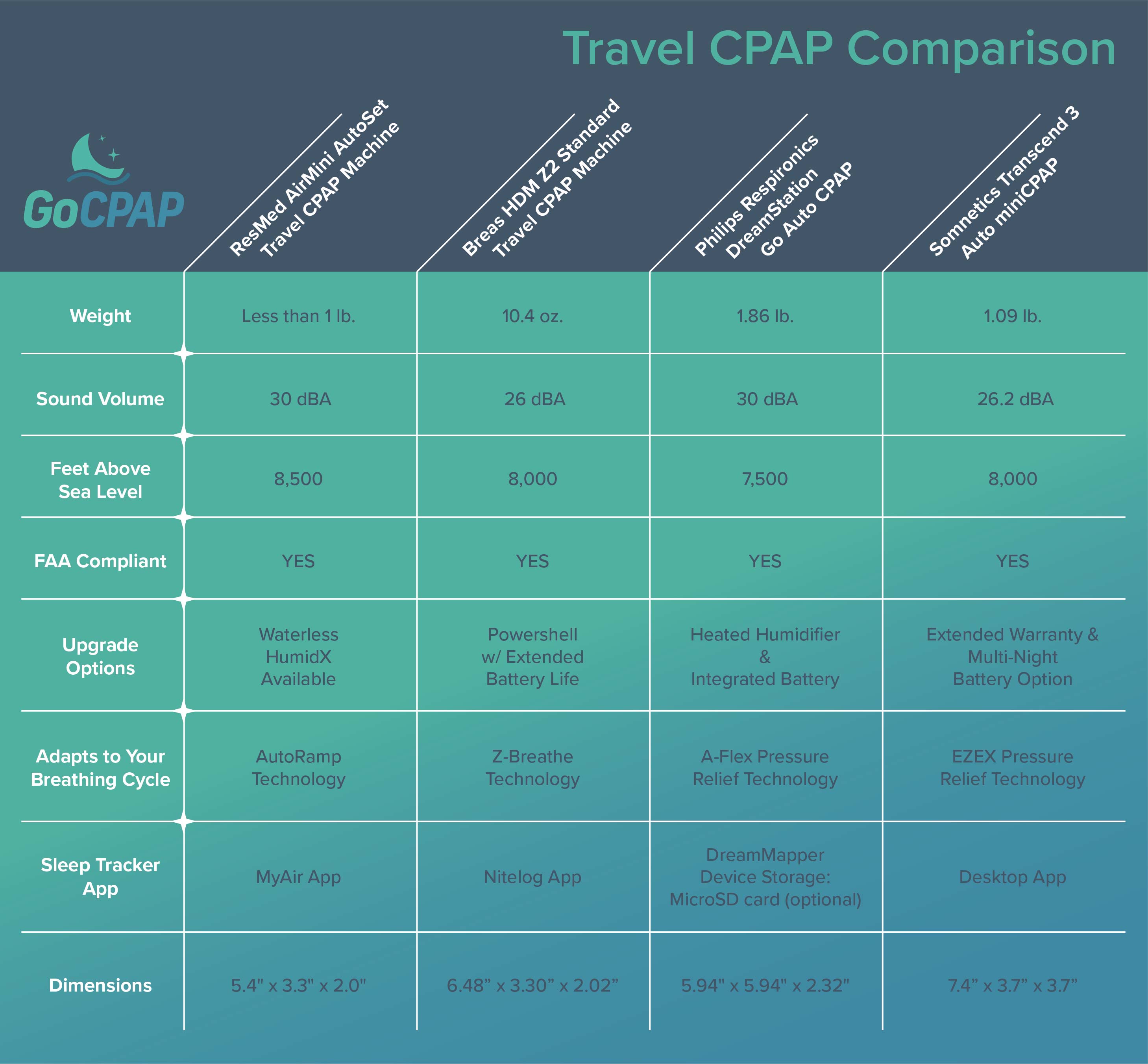
The Transcend Micro (3.6 x 3.6 x 2.4 inches, 0.48 pounds) disappears into even the smallest personal item bag, while the ResMed AirMini (5.4 x 3.3 x 2.1 inches, 0.66 pounds) offers more features but requires dedicated space. Your airline’s carry-on limits shouldn’t dictate your therapy—most carriers exempt medical devices from size restrictions, but you still need to lift it into overhead bins during hectic connections.
Weekly business travelers should prioritize units under 1 pound that fit in jacket pockets, while monthly vacationers can opt for slightly larger models with better battery life. Never assume advertised dimensions reflect your complete setup—remember to account for the case, tubing, and battery in your mental calculation before purchasing.
Weight Distribution Strategies That Prevent Shoulder Pain
That seemingly light 0.66-pound AirMini suddenly feels heavy when combined with a 0.5-pound battery, mask, and case after hours of airport walking. Smart travelers separate components—store batteries in checked luggage when not needed during transit to reduce carry-on weight. Always weigh your complete travel kit before departure; anything exceeding 2.5 pounds becomes burdensome during unexpected terminal sprints.
Pro tip: Pack your CPAP in the bottom of your carry-on with heavier items toward the base—this creates better weight distribution and reduces shoulder strain during long walks through airports.
Power Solutions That Won’t Leave You Stranded

Battery Life Reality Check: Stop Believing Manufacturer Claims
While manufacturers advertise “2-night batteries,” real-world conditions reduce actual performance by 25-40%. Higher pressure settings, cold temperatures, or using humidification can turn that “2-night” battery into barely enough for one full session. The HDM Z2 Auto’s standard battery delivers reliable 8-hour operation at 10 cm H2O pressure, but drops to 6 hours at 15 cm H2O with waterless humidification.
Critical test before buying: Run your specific pressure settings with all intended features (ramp, humidification) to verify actual battery life. A unit that lasts 9 hours at home might only manage 6 in a cold hotel room—know this before your flight takes off.
Universal Power Compatibility Checklist for International Travel
Your travel CPAP must handle worldwide voltage (100-240V) without transformers, but don’t overlook these essential power considerations:
– Multi-country plug adapter ($25-75) for European, Asian, and Australian outlets
– FAA-compliant batteries under 100Wh (most travel units qualify)
– Printed medical device letter from your doctor for customs and security
– USB charging capability for emergency top-ups from power banks
Never skip this step: Test your complete power setup at home using a travel adapter—some hotel outlets deliver inconsistent voltage that can disrupt therapy if your machine lacks proper regulation.
Performance That Works in Any Sleeping Environment
Pressure Range Essentials Based on Your Therapy Needs
Standard CPAP machines deliver fixed pressure (4-20 cm H2O), while APAP models automatically adjust between those ranges. If your prescription exceeds 15 cm H2O or requires bilevel therapy (separate inhale/exhale pressures up to 25 cm H2O), verify your travel unit supports your exact requirements—many compact models cap at 20 cm H2O.
Ramp feature non-negotiable: Choose units offering at least 15 minutes of gradual pressure increase—this makes falling asleep in unfamiliar hotel rooms dramatically easier. The DreamStation Go’s customizable ramp (0-45 minutes) proves particularly valuable for light sleepers.
Noise Level Truths for Shared Accommodations
At 27 dB, the Transcend Micro operates at library whisper levels—perfect for hotel rooms with thin walls. But don’t trust manufacturer noise claims; test units in person or watch independent reviews showing real-world operation. Vibration becomes critical in cruise ship cabins or older European hotels where machinery hum travels through structures.
Game-changing tip: Place your travel CPAP on a folded towel or small yoga mat to absorb vibrations—this simple trick reduces noise transmission by 30-50% in sensitive environments.
Essential Features vs Marketing Hype
Humidification Trade-offs Based on Your Destination Climate
Integrated humidifiers add crucial moisture in dry desert climates but contribute 0.2-0.5 pounds to your carry-on. Waterless systems like HME filters weigh ounces but provide minimal moisture relief. For trips under 48 hours in moderate climates, skip humidification entirely—most travelers find they can tolerate short-term dryness.
Smart strategy: Pack an HME filter as backup for longer trips. When hotel air dries your throat, switch to waterless humidification without lugging extra water bottles. The AirMini’s integrated waterless humidification system exemplifies this efficient approach.
Data Tracking Capabilities That Actually Matter
Basic compliance reporting (usage hours, AHI) satisfies insurance requirements, but wireless connectivity transforms the travel experience. Bluetooth-enabled units like the Z2 Auto sync data to your phone overnight—no laptop needed for doctor appointments. Cloud storage ensures your sleep specialist receives data regardless of your location.
Critical for frequent travelers: Verify your machine’s data export format matches your doctor’s requirements—some international clinics use incompatible systems that render your compliance data useless.
Budget Breakdown by Travel Frequency
Entry-Level Travelers: Smart Spending for Occasional Trips
If you take 2-4 trips yearly, focus on units like the Transcend Micro ($400-600) that prioritize ultra-portability over features. Skip humidification and accept basic battery life—these models excel as secondary machines. But budget realistically: add $200-500 for essential batteries and $50-150 for a quality case, bringing your total investment to $800-1,000.
Hidden trap: Cheapest units often lack universal voltage compatibility—always verify 100-240V support before purchasing to avoid costly transformers abroad.
Weekly Business Travelers: The Mid-Range Sweet Spot
For those logging 20+ business trips annually, the $600-900 range delivers optimal value. The ResMed AirMini dominates here with waterless humidification, smartphone control, and reliable battery life. Integrated features eliminate accessory costs, making the total investment ($700-1,000 with essentials) more cost-effective long-term.
Value secret: These units typically last 3-5 years—amortized over weekly travel, that’s just $15-30 monthly for uninterrupted therapy anywhere.
Making Your Final Decision
Personal Assessment Framework: Two Questions That Simplify Everything
Ask yourself these critical questions before browsing models:
1. What’s the longest consecutive trip I’ll take? (Determines minimum battery requirements)
2. Where will I sleep most often? (Hotels need quiet operation, camping requires battery-only)
Travel frequency cheat sheet:
– Weekly flyers: Prioritize units under 1 pound with reliable 8-hour batteries
– Monthly vacationers: Balance size with features like waterless humidification
– Annual travelers: Consider renting high-end models rather than buying
Smart Testing Strategy Before You Commit
Never buy based solely on specs—take advantage of 30-day trial periods to test real-world performance. Set up your potential machine in your living room for three nights mimicking travel conditions (different pillow, unfamiliar environment). Validate these non-negotiables:
– Battery lasts through your full therapy time at actual pressure settings
– Noise doesn’t disturb a light sleeper 3 feet away
– Setup takes less than 2 minutes in dim lighting
– Case fits in your standard carry-on with other essentials
Pro move: Photograph your prescription and store it in cloud storage—this accelerates replacements if your machine gets lost or damaged internationally.
Final tip: The best travel CPAP machine is the one you’ll actually pack. An ultra-compact unit left home because it lacks humidification serves no purpose. Prioritize two non-negotiables based on your travel style, then select the most affordable option meeting those criteria. Test thoroughly before your first trip, invest in a quality case, and sleep soundly knowing your therapy continues seamlessly wherever your adventures take you. Remember, consistent CPAP use while traveling isn’t a luxury—it’s essential for enjoying your trip with real energy.