
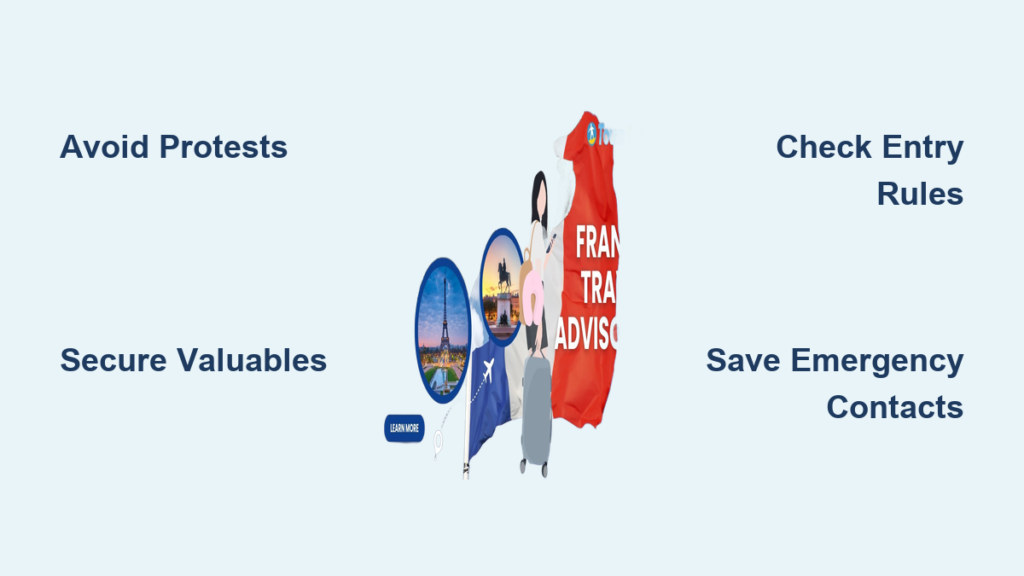
Your dream Paris vacation is just weeks away, but the current France travel advisory requires smart preparation rather than cancellation. As of May 2025, the U.S. State Department maintains France at Level 2: “Exercise Increased Caution” due to terrorism threats and civil unrest. This doesn’t mean avoiding France—it means traveling smarter with targeted safety protocols that let you enjoy your trip with confidence.
Nearly 2 million American travelers visit France annually despite the current France travel advisory status. The key difference between a smooth vacation and a travel nightmare comes down to preparation. This guide cuts through official jargon to deliver actionable safety steps, entry requirements, and crime prevention tactics you won’t find in standard government bulletins.
Why France Remains Level 2: Terrorism and Unrest Explained
Level 2 Advisory Practical Implications
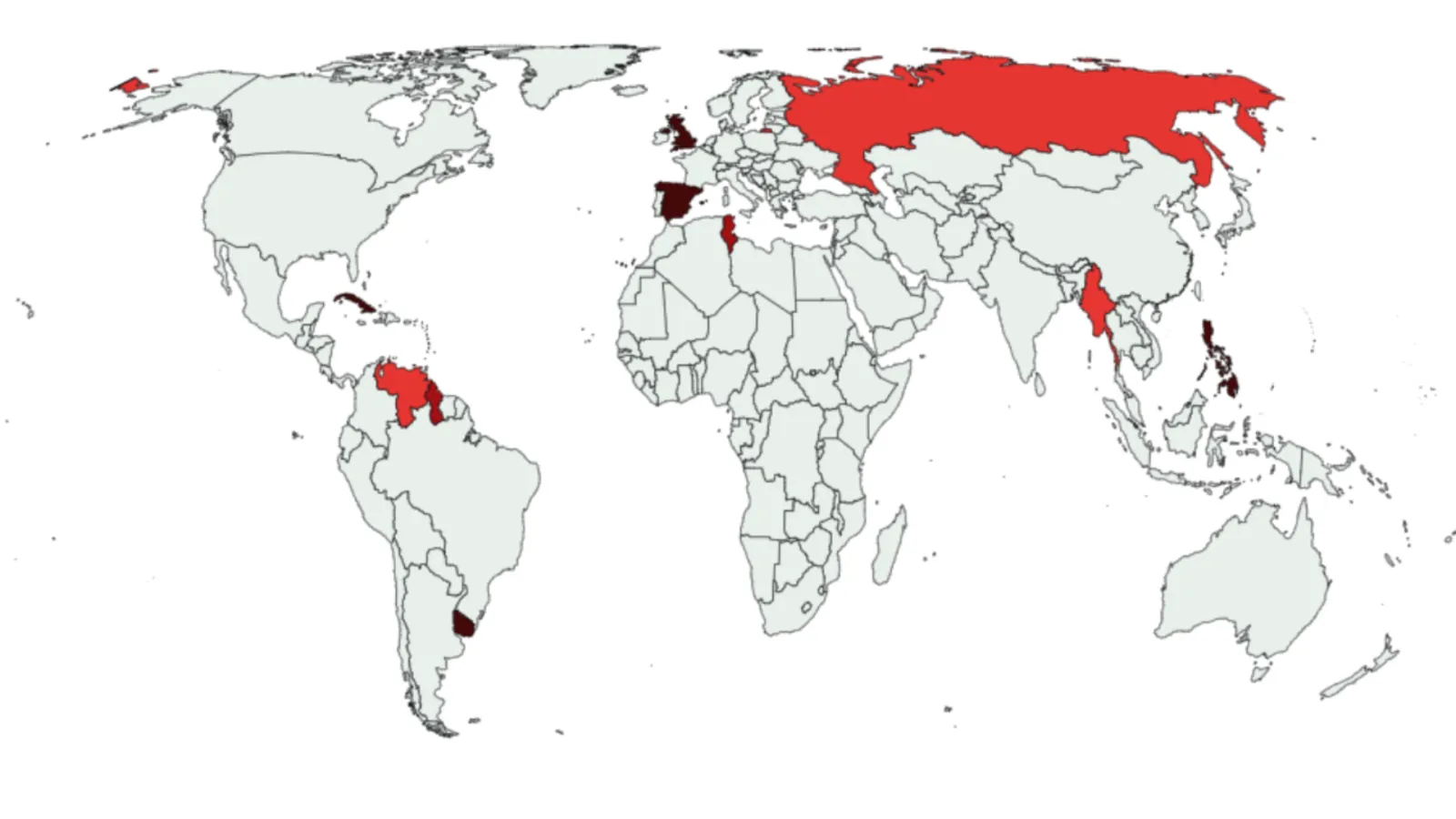
The France travel advisory Level 2 classification means you should enhance your situational awareness without altering travel plans. Unlike Level 3 (“Reconsider Travel”) or Level 4 (“Do Not Travel”), Level 2 permits normal tourism activities with targeted precautions. French security forces maintain visible patrols at major attractions, with bag checks at the Eiffel Tower, Louvre, and Notre-Dame ensuring layered protection.
Critical reality: Terrorist threats remain persistent but not imminent. Attackers typically target crowded tourist zones using simple methods like bladed weapons, vehicle ramming, or firearms rather than complex operations. Your risk drops dramatically by avoiding crowded demonstrations and maintaining exit awareness in public spaces.
High-Risk Zones Requiring Vigilance
Focus your attention on these specific high-risk locations identified in the current France travel advisory:
- Transportation hubs: CDG and Orly airports, Gare du Nord station
- Iconic attractions: Eiffel Tower base, Sacré-Cœur steps, Arc de Triomphe
- Entertainment districts: Champs-Élysées restaurants, Latin Quarter bars
- Public squares: Place de la Concorde, Trocadéro Gardens
Pro tip: Download the Radio France International app before departure to monitor local news in English. Check protest schedules daily—most demonstrations occur on predictable dates like May 1st, Bastille Day (July 14), and first Tuesdays of the month.
Civil Unrest Navigation and Transportation Safety
Protest Avoidance Tactics That Work
While French protests are typically peaceful, they frequently disrupt transportation and occasionally escalate. Smart travelers monitor demonstration schedules using these specific strategies:
- Track monthly patterns: Labor protests often happen first Tuesday of each month
- Check RATP app: Real-time metro line closures during demonstrations
- Use alternative transport: Vélib’ bike sharing avoids metro shutdowns during protests
- Stay 100 meters away: Maintain distance from police lines and march routes
Critical mistake to avoid: Never walk with or against protest crowds. Move perpendicular to the march direction to exit safely. If caught near escalating demonstrations, immediately seek refuge in nearby shops or cafés.
Metro and Road Safety Essentials
Pickpocketing peaks on Paris Metro Lines 1, 4, and 9—routes connecting major tourist sites. Protect yourself by:
- Standing in center car sections away from doors
- Using cross-body bags worn in front with zippers facing inward
- Avoiding phone use while boarding or exiting
- Storing wallets in front pockets rather than back pockets
For airport transfers, always take the A1 autoroute to CDG rather than Route N2 through Seine-Saint-Denis to avoid “smash and grab” robberies. Keep valuables in your lap during rides, never visible in seatback pockets.
Crime Prevention Strategies That Actually Work
Pickpocket Hotspots and Defense Tactics
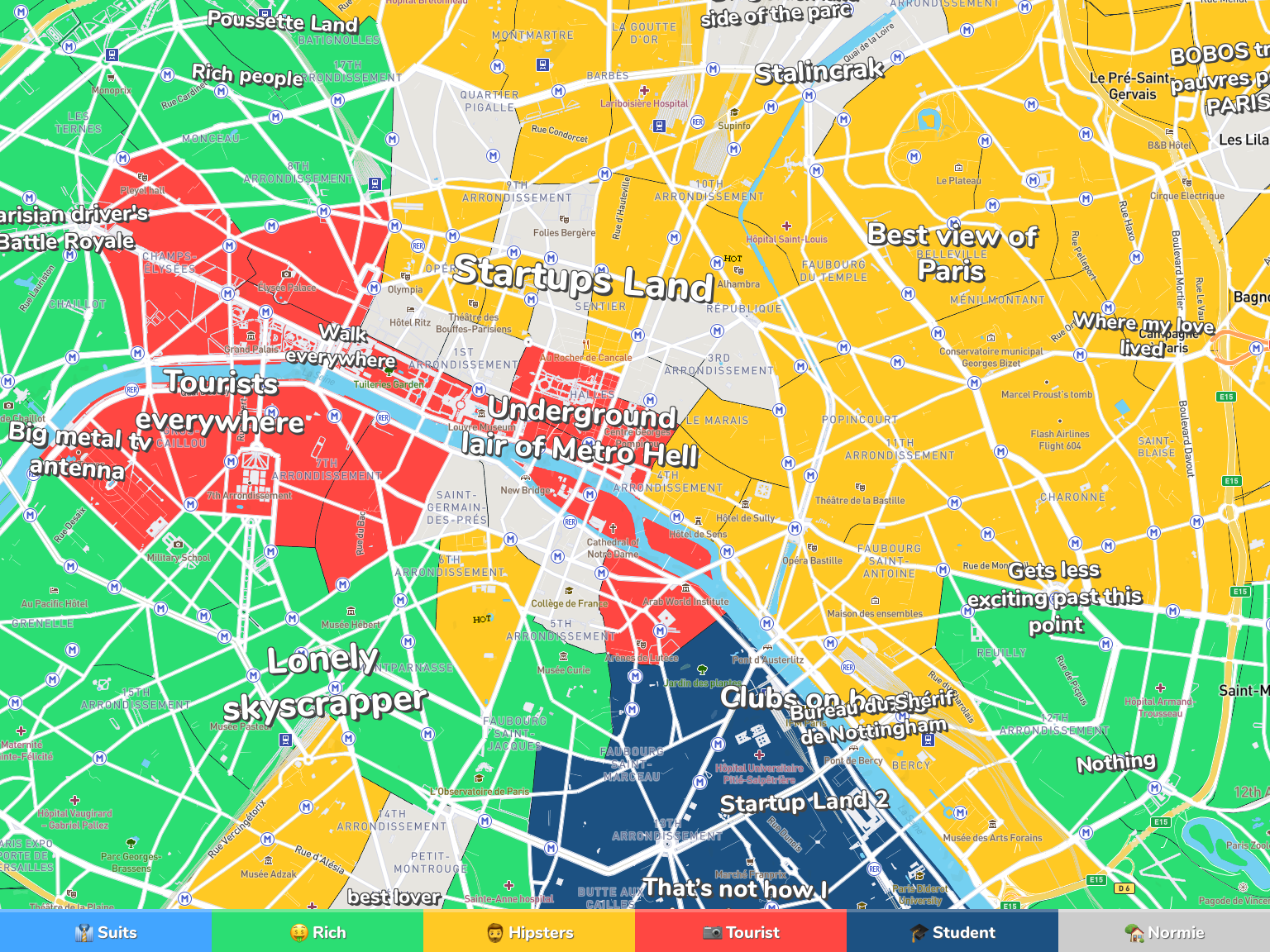
Tourist-targeted thefts follow predictable patterns at these specific locations:
- Airports: Thieves target distracted travelers at baggage claim
- Metro transfers: Gare du Nord and Châtelet stations see highest theft rates
- Restaurant terraces: Phones left on tables during meals get snatched
Effective defense: Use a decoy wallet with expired cards in your back pocket while keeping real valuables secured in an inner pocket money belt. Attach phone leashes to your belt loops—thieves can’t grab what’s physically connected to you.
Vehicle Security Protocols
“Smash and grab” incidents increase near airport routes and low-income neighborhoods. Follow these specific protocols:
- Daylight travel: Schedule airport transfers during daylight hours
- Trunk storage: Place luggage out of sight before arriving at your destination
- Window awareness: Watch for motorcycle pairs approaching at traffic lights
- Cash strategy: Carry minimal cash—French merchants widely accept cards
Essential Entry Requirements You Must Know

Passport and Visa Critical Details
Your passport must have 3 months validity beyond your Schengen departure date with 1 blank page for stamps. The France travel advisory emphasizes that 12-page emergency passports won’t grant entry—only standard 28- or 52-page passports work.
Common mistake: Assuming the 90-day visa-free rule applies per calendar year. Actually, you’re limited to 90 days within any rolling 180-day period across all Schengen countries. You cannot extend tourist stays or change visa status while in France.
Financial and Minor Travel Requirements
Declare 10,000 euros or equivalent in cash, traveler’s checks, or bearer instruments when entering or exiting France. While not strictly required for non-residents, carrying notarized parental permission letters prevents delays when traveling with minors.
Critical update: France’s July 2025 public smoking ban prohibits tobacco use in parks, beaches, and restaurant terraces. Violators face immediate 135-150 euro fines without warning.
Emergency Protocols Every Traveler Needs
Immediate Action Steps During Crises
Save these critical contacts in your phone before departure:
- European emergency number: 112 (works throughout France with English speakers)
- U.S. Embassy Paris: +33-1-43-12-22-22
- After-hours emergency: Same number, enter nine “9”s after greeting
Pro tip: Register with the Smart Traveler Enrollment Program (STEP) 48 hours before departure. This enables security alerts and emergency evacuation coordination if crises occur.
Legal Compliance Essentials
French authorities enforce strict laws regarding:
- Drone usage: Complete ban near airports, government buildings, and military zones (fines up to 75,000 euros)
- Drug possession: Zero tolerance for all substances including CBD products with THC
- Photography restrictions: Prohibited in sensitive areas without authorization
Critical warning: French hospitals may require payment before treatment. Verify your travel insurance covers international medical claims before departure.
Pre-Departure Safety Checklist
Complete these specific actions before your trip:
- 72 hours prior: Register with STEP program, download offline Paris maps
- 24 hours prior: Save embassy contacts in multiple locations (phone + printed copy)
- Day of travel: Pack anti-theft accessories, inform bank of travel dates
- Upon arrival: Download RATP app for metro updates, identify nearest embassy
France remains one of the world’s most spectacular destinations when approached with smart preparation. The current France travel advisory doesn’t signal danger—it demands awareness. By focusing on specific high-risk zones, implementing proven crime prevention tactics, and understanding entry requirements, you’ll transform potential risks into manageable considerations. Follow these protocols, and you’ll navigate Parisian streets with confidence while creating unforgettable memories in the City of Light.