
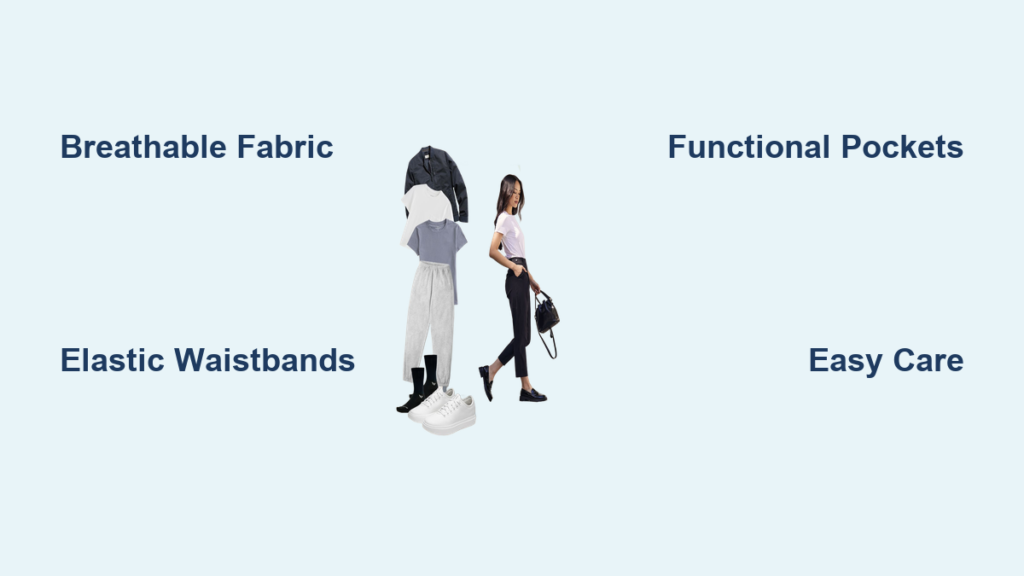
Flying demands thoughtful wardrobe choices that impact your entire travel experience. The right clothing transforms a potentially grueling journey into a comfortable adventure, while poor selections leave you frustrated, overheated, and desperate for a change of clothes. This guide examines the specific fabric characteristics and design features that genuinely enhance air travel comfort, helping you build a practical wardrobe that works as hard as you do through security lines, cramped cabins, and changing climates.
Your clothing choices directly affect temperature regulation, mobility through crowded terminals, and how you feel after hours confined in a seat. The best clothes for air travel share essential qualities: breathable construction that manages body temperature, lightweight materials that won’t weigh down your carry-on, easy-care fabrics that resist wrinkles, and functional designs that adapt to unpredictable conditions. Understanding these fundamentals lets you make smarter packing decisions and arrive looking refreshed rather than disheveled.
Why Your T-Shirt Choice Makes or Breaks Your Flight Experience
Airplane cabins create unique environmental challenges that most travelers underestimate. The combination of recycled air, fluctuating temperatures, and extended sitting periods means your clothing’s performance becomes critically important. What feels comfortable on the ground often becomes unbearable at 35,000 feet, making fabric selection non-negotiable for comfortable air travel.
How Organic Cotton Solves Common In-Flight Discomfort
Organic cotton represents an excellent choice for air travel because it combines natural breathability with practical performance. Certified organic cotton (verified through standards like GOTS) delivers the comfort characteristics cotton is known for while ensuring environmentally conscious production. This material allows your skin to breathe throughout long flights, reducing uncomfortable sensations from trapped moisture and heat.
The lightweight nature of quality travel cotton—typically around 4.5 ounces per square yard for t-shirts—means these pieces compress easily into small spaces without sacrificing durability. You can roll a lightweight cotton shirt into a compact bundle that fits in a laptop compartment or jacket pocket, providing backup warmth without adding meaningful bulk to your carry-on.
Machine Washability: The Secret Weapon for Multi-Day Trips
Easy-care properties significantly enhance travel clothing functionality. Clothes that emerge from a quick hotel laundry cycle looking fresh save you from packing multiple outfit changes or searching for expensive dry cleaning services. Fabrics that tolerate tumble drying on low heat without shrinking offer practical freedom that frequent travelers increasingly prioritize.
When selecting travel clothes, prioritize items with clear care instructions that match your travel style. Machine washable clothing with tumble dry low capabilities means you can maintain a fresh appearance throughout your trip without special laundry arrangements. This feature proves particularly valuable for weekend getaways where luggage space constraints limit outfit options.
Functional Design Features That Actually Improve Your Flight

Beyond fabric selection, specific design elements determine whether clothing performs well in the varied situations air travel presents. These functional considerations often matter more than fashion concerns when navigating the practical realities of flying.
Elastic Waistbands: The Unsung Hero of Air Travel Comfort
Relaxed fits with elastic waistbands adapt to the body’s natural changes during long flights. Your midsection may expand slightly after meals, and rigid waistbands become increasingly uncomfortable as you sit for hours. An elastic waistband accommodates these fluctuations without requiring you to unzip buttons or deal with uncomfortable pressure points.
This comfort-focused design also proves valuable when crossing time zones and experiencing digestive changes that many travelers report. Pants or skirts with elastic waistbands provide consistent comfort from takeoff to landing, eliminating the need to constantly adjust restrictive clothing while confined in your seat.
Adjustable Straps and Layering Capabilities for Temperature Swings
Adjustable straps on tops and dresses offer crucial versatility for temperature regulation in airplane cabins, which often swing between uncomfortably warm and surprisingly cool. Being able to adjust your clothing’s coverage allows you to respond to these fluctuations without packing additional layers.
Layering capability deserves priority when selecting travel clothes. Pieces that work well alone but also combine effectively with other items in your wardrobe maximize outfit flexibility while minimizing luggage volume. A lightweight cotton tee works as a base layer under a cardigan, a standalone top in warm terminals, or a light layer during outdoor connections.
Functional Pockets That Simplify Security Screening
Functional pockets significantly enhance travel convenience. Side pockets and kangaroo pockets provide accessible storage for passports, boarding passes, earbuds, or small electronics without requiring constant bag access. During security screening, having items readily accessible in your pockets—rather than buried in a bag—speeds the process considerably.
Kangaroo pockets on hoodies or sweatshirts offer particularly generous storage while maintaining a streamlined silhouette. These pockets keep essentials secure during movement through crowded terminals while providing a place to warm your hands during chilly gate waits or unexpected temperature drops onboard.
Building Your Capsule Travel Wardrobe Strategy
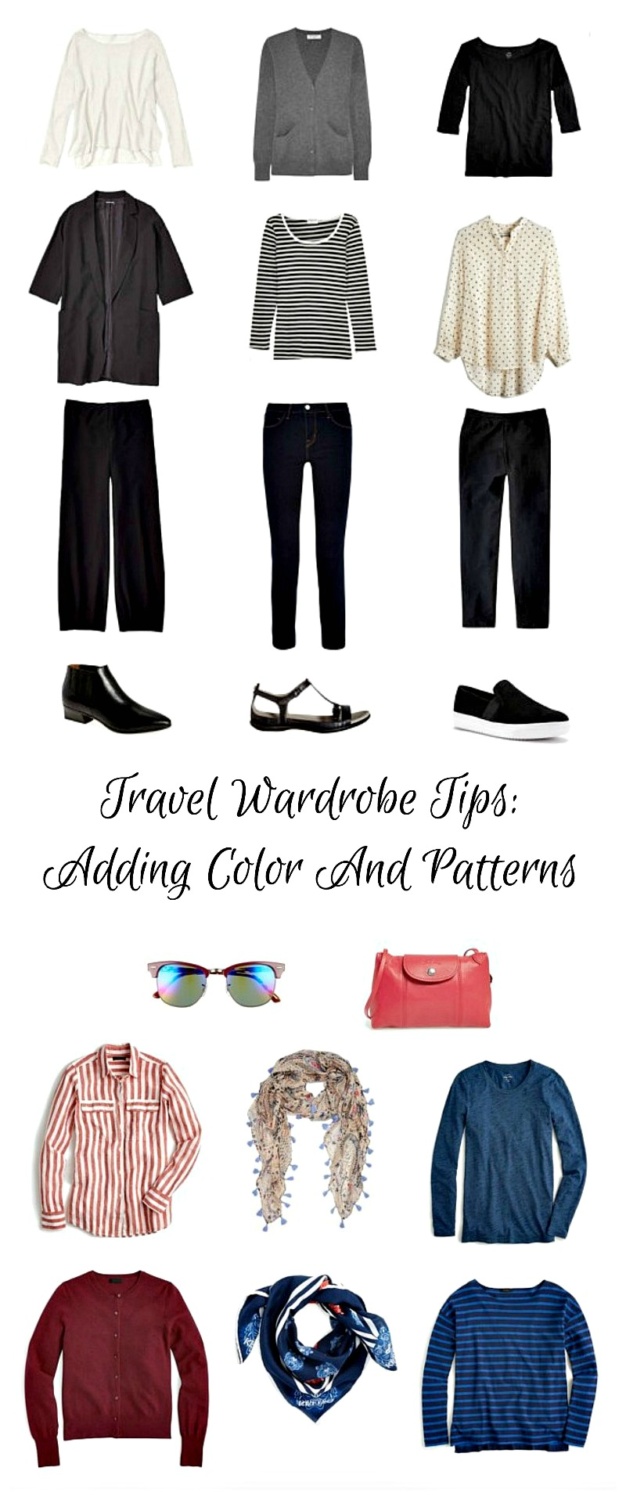
Constructing an effective air travel wardrobe requires thinking holistically about your entire journey rather than focusing on individual pieces in isolation. The goal is creating a system where everything works together, reducing decision fatigue while maximizing comfort and practicality.
Matching Your Wardrobe to Trip Duration and Destination
Begin by considering the duration and nature of your typical flights. Weekend trips require different strategies than international journeys spanning multiple days and climate zones. Short hops might prioritize speed and simplicity, while longer flights warrant more sophisticated layering systems.
Prioritize neutral colors that mix and match easily, allowing fewer pieces to generate more outfit combinations. Solid colors in versatile tones—navy, gray, white, black—coordinate with everything and don’t show minor stains or wrinkles as readily as complex patterns. This approach effectively doubles your wardrobe’s apparent size without adding luggage volume.
Transitioning Seamlessly from Plane to Destination
Select pieces that transition seamlessly from travel to destination. Clothes that work equally well on the plane and at your destination maximize your packing efficiency. A comfortable cotton tee dressed up with appropriate accessories serves equally well as airplane wear and as part of a casual destination outfit.
Consider the activities you’ll engage in at your destination when selecting travel clothes. If your trip involves walking tours or casual dining, choose pieces that accommodate these activities without requiring changes. Versatile items that work for multiple contexts reduce the total clothing you need to pack while ensuring you’re appropriately dressed upon arrival.
Practical Care Techniques for Clothes on the Road
Keeping your travel clothes fresh throughout a trip requires understanding simple care techniques that work without full laundry facilities. Most travel wardrobes can be maintained with basic sink washing and air drying, especially when you’ve selected appropriate fabrics.
Effective Hand Washing Methods for Hotel Rooms
Hand washing cotton travel clothes in hotel sinks typically requires minimal time and produces excellent results. Use lukewarm water and a mild soap, gently agitating the garment for a few minutes before thoroughly rinsing. Most lightweight cotton pieces dry overnight when hung in a bathroom with ventilation running.
Tumble drying on low heat works well for cotton travel clothes that have been hand washed, returning them to a clean, fresh state without the careful attention that air drying sometimes requires. This option proves particularly valuable when traveling through multiple destinations with limited drying time between locations.
Spot Treatment Strategies for Unexpected Stains
Spot treating minor stains extends wear between full washes, preserving your clothes and reducing laundry requirements. Keeping a small stain remover pen in your travel kit allows you to address visible marks quickly before they set in. Most travel-friendly fabrics respond well to immediate spot treatment, maintaining a consistently fresh appearance throughout your trip.
Smart Packing Strategies for Your Next Flight

Building an effective air travel wardrobe doesn’t require expensive specialized gear or complicated systems. Focus on quality fabrics with proven performance characteristics and functional designs that accommodate the realities of flying.
Testing Potential Travel Clothes Before Your Trip
Select lightweight, breathable organic cotton pieces that you feel comfortable wearing for extended periods. Test potential travel clothes by wearing them for several hours at home before your trip—this reveals any comfort issues while you still have alternatives available. Pieces that feel comfortable after four hours of normal activity will likely perform well during flight conditions.
Choose relaxed silhouettes with functional details like elastic waistbands, adjustable elements, and useful pockets. These features adapt to the physical challenges of air travel better than tailored, structured pieces. A comfortable hoodie with a kangaroo pocket serves better than a fitted blazer, even if the blazer looks more polished in photos.
Pack versatile pieces that work across multiple contexts rather than specialized items for narrow uses. Your travel wardrobe should transition smoothly from plane to destination without requiring changes. This approach reduces luggage volume while ensuring you’re prepared for whatever your trip demands.
The best clothes for air travel ultimately come down to fabrics that breathe, designs that adapt, and construction that endures repeated use and washing. By focusing on these fundamentals—lightweight organic cotton, functional pockets, elastic waistbands, and layering capability—you build a travel wardrobe that serves you reliably trip after trip. When you prioritize these practical considerations over fleeting fashion trends, you transform the stressful experience of air travel into a comfortable journey from terminal to tarmac.