
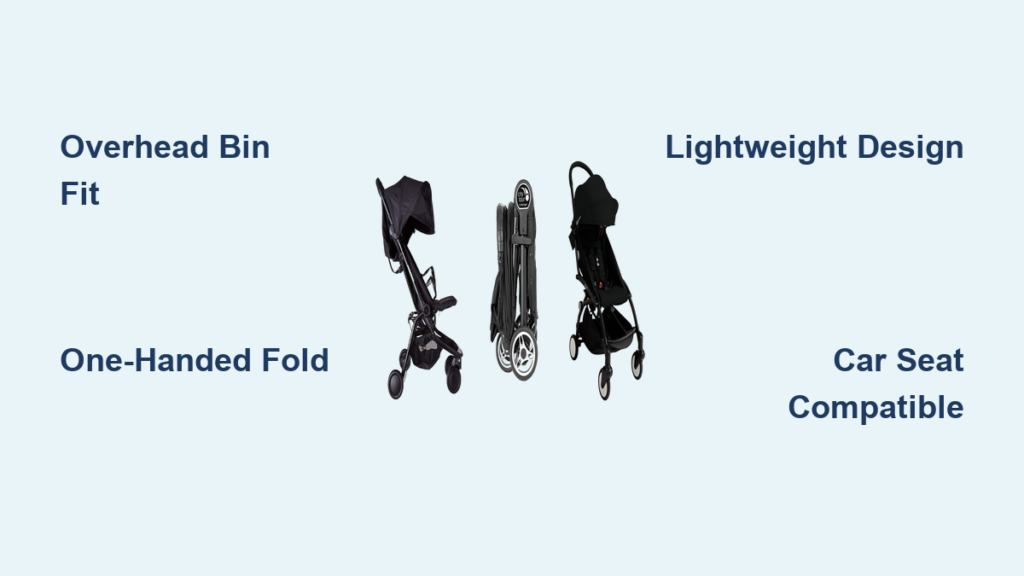
Navigating airports with a baby transforms even the simplest journey into a high-stakes logistics operation where your stroller becomes your most critical piece of equipment. Choosing the wrong stroller for air travel means risking damage, loss, or the nightmare scenario of landing without your child’s mobility solution—leaving you stranded with a tired toddler who can’t walk through the terminal. Gate-checked strollers regularly disappear into baggage systems, returning hours late or with broken wheels that render them useless. The solution? Selecting a truly portable stroller that fits in overhead bins and travels with you in the cabin. This comprehensive guide reveals exactly what to look for when choosing the best stroller for air travel, helping you avoid common pitfalls that turn family vacations into stressful ordeals. You’ll discover specific features that matter most, learn which stroller types actually meet airline requirements, and gain insider tips for ensuring your travel stroller performs flawlessly from check-in to baggage claim.
Why Overhead Bin Approval Transforms Your Travel Experience
The difference between gate-checked and overhead bin–approved strollers represents the single most critical factor determining your travel experience with children. Gate checking forces your stroller into the airline’s baggage handling system—where it joins thousands of suitcases subjected to rough tossing, misrouting, and unpredictable delays. Airlines routinely report damaged or lost strollers, leaving families stranded at destinations with no way to transport tired children through sprawling terminals. Parents who’ve experienced this know the panic of collecting luggage while their child grows increasingly exhausted and unable to walk.
Overhead bin–approved strollers eliminate these risks entirely by traveling with you in the cabin. Your child’s ride stays within arm’s reach throughout the entire journey, protected from baggage handling hazards and available immediately upon landing. This simple advantage compounds throughout your trip: navigate terminals with your child secured comfortably, board without separating them from their ride, and exit the plane ready to move without waiting at baggage claim. The peace of mind alone justifies the investment, and once you experience seamless travel with an approved stroller, you’ll never risk gate checking again.
Essential Features for Air Travel Strollers

Compact Folding Dimensions That Actually Fit Overhead Bins
The defining characteristic separating true travel strollers from standard options lies in their folded dimensions. Airlines generally accommodate carry-on luggage within approximately 22″ x 18″ x 10″, and strollers meeting these specifications can travel in the cabin without gate check. Before purchasing, verify IATA compliance indicators and confirm approved dimensions with your specific airline—American Airlines’ regional jets have smaller bins than international wide-body aircraft. Measure the folded stroller yourself when possible, as marketing claims often exaggerate compactness. A stroller that fits your airline’s overhead bin provides flexibility across your entire travel itinerary.
One-Handed Folding Mechanism for Real-World Chaos
Travel strollers must accommodate parents whose hands are constantly occupied. The ideal configuration involves a one-step, one-handed fold mechanism that allows collapsing the stroller while holding your child, managing luggage, or navigating crowded spaces. Premium travel strollers feature this functionality, while basic umbrella strollers typically require two hands for operation. Practice the folding motion before your trip to ensure it becomes second nature during stressful travel moments—gate areas with closing doors and boarding announcements create pressure that makes complex folding mechanisms frustrating.
UPF 50+ Canopy Protection for Terminal Transitions
Quality travel strollers incorporate UPF 50+ canopies providing comprehensive shade protection for young children. Airports often involve substantial walking through sunny terminals, outdoor ground transportation, and extended exposure during connections. The canopy should extend sufficiently to protect your child’s face and upper body from direct sunlight, with adjustable positioning to customize coverage based on the sun’s angle. Look for canopies with peek-a-boo windows that allow monitoring your child without compromising sun protection—essential during long layovers or unexpected outdoor transfers.
Storage Accessibility During Terminal Navigation
A well-designed travel stroller includes an easily accessible storage basket beneath the seat that remains usable regardless of recline position. Traveling with children requires substantial gear—diaper bags, changing supplies, snacks, and emergency entertainment all need secure storage. The basket should have wide openings for quick access and durable construction to withstand travel handling. Test the basket capacity with your typical travel gear before purchasing; many compact strollers sacrifice storage space for portability, forcing parents to carry additional bags that complicate navigation.
Infant Car Seat Compatibility for Seamless Transfers
For families with infants, car seat compatibility transforms a travel stroller into a complete travel system. This feature allows transferring a sleeping child between car and stroller without disruption, maintaining their nap through transportation transitions. However, not all travel strollers support this functionality—verify specific compatibility with your car seat model before purchase. Some manufacturers require separate adapter purchases, so factor this into your budget. The ability to move a sleeping infant between transportation modes without waking them proves invaluable during travel days filled with transitions.
Match Your Stroller to Your Travel Frequency

Frequent Flying Families Need Premium Durability
Parents who travel monthly benefit most from investing in premium overhead bin–approved strollers. These families typically prioritize durability, the most compact folding dimensions, and effortless operation above other features. Look for strollers with aircraft-grade aluminum frames that withstand frequent folding/unfolding without developing rattling handles or wobbly wheels. The upfront cost becomes justified through consistent performance across dozens of flights—premium models maintain smooth operation even after extensive use.
Occasional Travelers Should Prioritize Versatility
Families who fly only 2-3 times per year still benefit substantially from travel-specific strollers. These parents should evaluate their specific travel patterns to determine which features provide the greatest benefit—those visiting grandparents monthly have different needs than those taking a single annual vacation. Consider strollers that function well both as everyday urban strollers and travel companions, maximizing your investment. Verify that your chosen model meets airline size restrictions while offering sufficient comfort for daily use between trips.
Urban Families Gain Double Value from Travel Strollers
City dwellers who regularly navigate public transportation systems find travel strollers advantageous beyond airplane contexts. The compact folded dimensions accommodate crowded buses and trains, while lightweight construction makes carrying the folded unit manageable during transit transfers. These families often value maneuverability and ease of folding as highly as compact storage dimensions. Look for strollers with slim profiles that fit through narrow subway turnstiles and bus aisles, plus carry straps for hands-free transport during crowded commutes.
Avoid These Costly Stroller Selection Mistakes
Overlooking Actual Folded Dimensions Versus Marketing Claims
Many strollers marketed as “travel-friendly” don’t fold small enough for overhead bins. The term “travel stroller” encompasses products with varying capabilities—always verify specific dimensions rather than trusting marketing claims. Measure the folded stroller yourself when possible, and confirm approved dimensions with your specific airline before purchase. Airlines occasionally update policies, so check their current requirements even if you’ve flown with the same stroller before.
Sacrificing Quality for Maximum Compactness
The most compact strollers sometimes sacrifice durability and comfort to achieve small folded dimensions. A stroller that barely fits overhead bins but develops structural issues after minimal use provides poor value despite its travel-friendly size. Balance compactness with construction quality—test the stroller’s stability when unfolded and check for smooth wheel operation. Premium travel strollers maintain structural integrity even after repeated folding and unfolding.
Ignoring Weight Considerations for Airport Navigation
While folded dimensions receive deserved attention, the stroller’s weight significantly impacts travel convenience. Lifting a heavy stroller into overhead bins, carrying it through tight airplane aisles, or managing it during airport navigation becomes exhausting quickly. Consider your physical capabilities when evaluating weight specifications—strollers under 15 pounds provide the easiest handling during travel days filled with multiple transitions.
Maximize Your Stroller’s Travel Performance
Practice Folding Until It Becomes Instinctive
Once you’ve selected your travel stroller, practice the folding and unfolding process until it becomes automatic. In crowded airports and tight airplane aisles, you’ll need to collapse and deploy the stroller without thinking. Set up timed drills at home with your child in your arms to simulate real-world conditions. This preparation prevents frustrating delays during boarding when flight attendants are waiting and other passengers are watching.
Verify Airline Policies Before Every Flight
Before each trip, confirm that your stroller meets your airline’s current carry-on dimensions and policies. Airlines occasionally update requirements, and aircraft changes can affect overhead bin dimensions. Checking this information before arriving at the airport prevents unpleasant surprises and allows time to arrange alternatives if needed. Some airlines offer stroller gate-check bags at the counter—request one to provide added protection should overhead bin space become unavailable.
Quick Selection Checklist for Air Travel Strollers
When evaluating potential stroller purchases, confirm these critical features:
- Overhead bin dimensions: Verify folded size meets your airline’s current requirements
- One-handed folding: Test the mechanism with your child in your arms
- Car seat compatibility: Confirm specific model compatibility if needed
- Recline positions: Ensure suitable support for your child’s developmental stage
- Storage capacity: Load with typical travel gear to test accessibility
- Weight: Confirm manageable for your physical capabilities during travel
The best stroller for air travel balances compact folded dimensions with durable construction, practical features, and comfortable seating for your child. Prioritizing overhead bin approval ensures your stroller travels with you rather than risking the uncertainties of gate checking. Take time to evaluate your specific needs, verify compatibility with your travel patterns, and invest in quality gear that serves your family reliably across countless journeys. With the right preparation and equipment, air travel with children transforms from a stressful ordeal into a manageable adventure where your stroller becomes your most trusted travel companion rather than your biggest headache.