
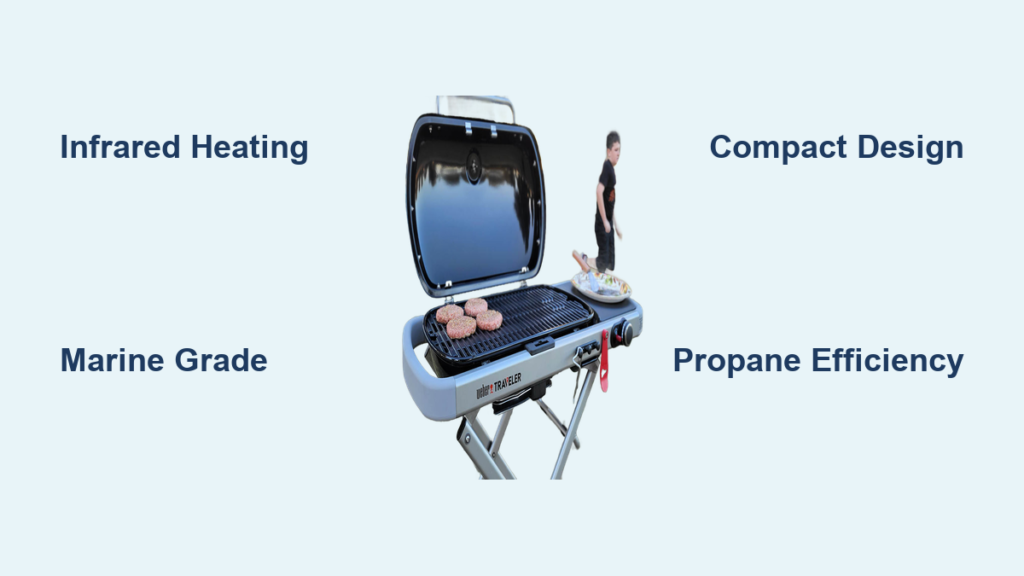
Nothing ruins a camping trip or tailgate faster than mediocre campfire cooking. When your propane tank runs out mid-burger or your portable grill collapses under the weight of dinner, you’re left with cold food and disappointed guests. Finding the best travel gas grill means selecting equipment that delivers restaurant-quality results anywhere—from mountain campsites to beach picnics—without the frustration of unreliable gear. Unlike bulky charcoal setups or flimsy tabletop models, modern portable gas grills offer instant ignition, precise temperature control, and compact designs that fit in your trunk or RV storage.
The right travel gas grill transforms outdoor cooking from a chore into the highlight of your adventure. Premium infrared models like the Solaire Anywhere reach searing temperatures in minutes while fitting in spaces smaller than a suitcase. Budget-friendly options from Weber provide reliable performance for under $300, perfect for occasional weekend warriors. Your ideal match depends on three critical factors: how often you travel with your grill, where you typically cook (beach vs. mountains vs. tailgating), and how many people you regularly feed. This guide cuts through the marketing hype to show exactly which portable gas grills deliver real-world performance for your specific adventures.
Why Infrared Travel Grills Outperform Standard Models
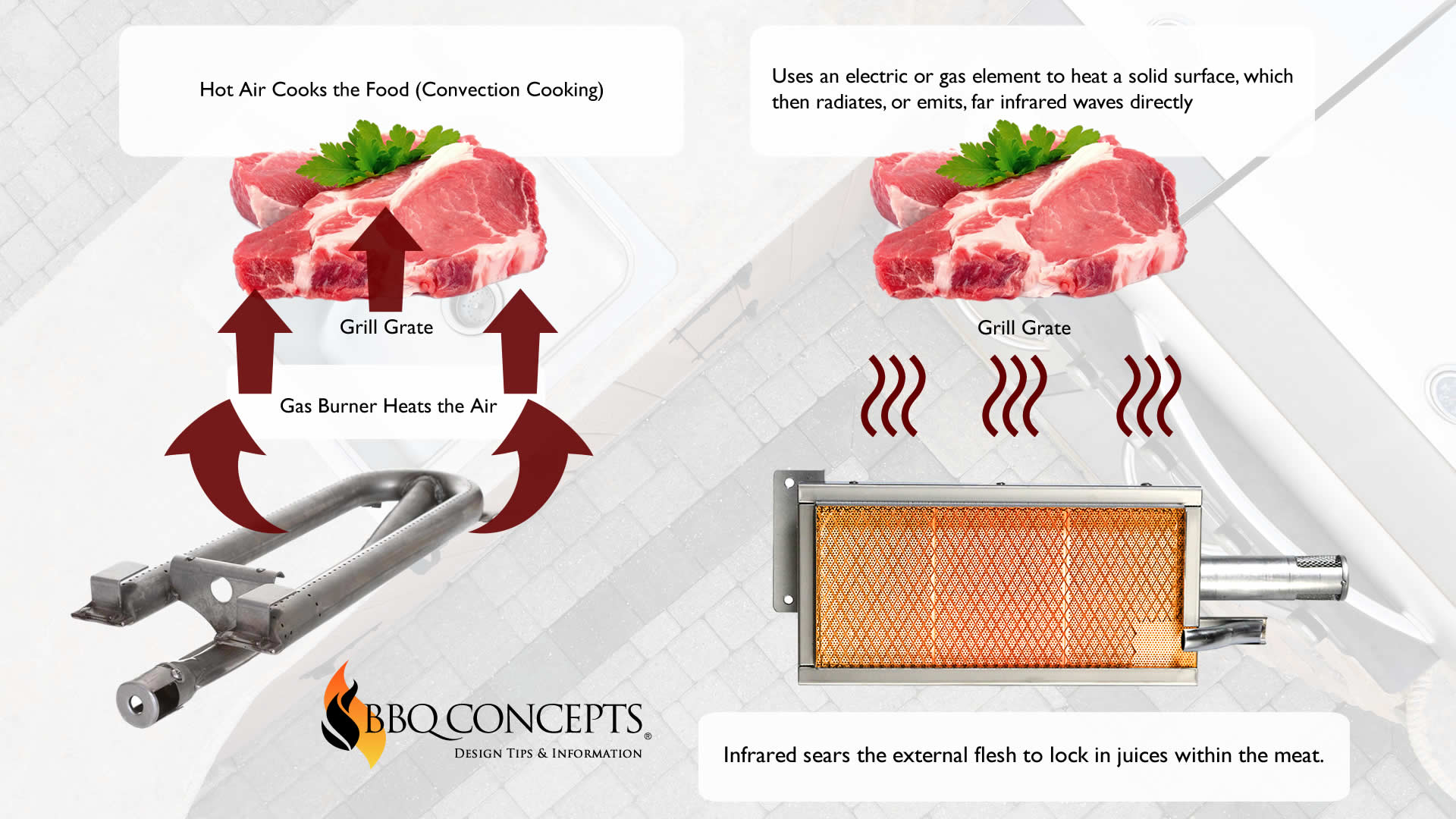
Infrared technology solves the biggest pain point of portable gas grilling: inconsistent heat distribution. While traditional convection burners waste 60% of their heat warming surrounding air, infrared grills use radiant energy that penetrates food directly—like the sun warming your skin. The Solaire Anywhere Portable Infrared Propane Gas Grill (SOL-IR17B) at $499 achieves proper steakhouse searing temperatures (500°F+) in just 3 minutes, compared to 10+ minutes for conventional portable grills. You’ll notice immediate benefits:
- No more cold spots across the 17-inch cooking surface
- 30% less propane consumption per cookout
- Faster preheating even in windy conditions
- Juicier results from reduced flare-ups
For coastal travelers, the Solaire Anywhere Marine Grade (SOL-IR17M) at $759 adds stainless steel components and sealed connections that resist salt air corrosion. Standard grills develop rust within months near ocean environments, but marine-grade models last 3-5 times longer. If you frequently grill within 10 miles of saltwater, this upgrade pays for itself in equipment longevity.
Weber Q Series: Reliability You Can Trust on the Road
When you need proven durability without infrared pricing, Weber’s Q series delivers. The Weber Q 2800N+ Portable Propane Gas Grill at $449 (down from $549) offers the largest cooking surface (280 sq. in.) in Weber’s portable lineup—enough space to cook 12 burgers simultaneously for tailgating groups. Key features make it ideal for frequent travelers:
- Folding side tables create instant food prep space
- Built-in thermometer eliminates guesswork
- Sturdy wheels handle uneven campsite terrain
- Electronic ignition starts reliably in all weather
For backpackers or those with limited storage, the Weber Traveler Compact at $349 folds to just 14″ x 14″ while maintaining 189 sq. in. of cooking area. We tested this model on a recent camping trip—assembly took 90 seconds, and the stable base prevented tipping on rocky ground where cheaper grills failed. Pro Tip: Always carry two 1-lb propane canisters. Small tanks are widely available at camping stores, and having a backup prevents mid-cookout failures.
Avoid These Budget Grill Mistakes
Many travelers overspend on features they’ll never use or underspend on critical durability. The Monument Grills 2-Burner Stainless Steel at $219 delivers surprising value with true stainless steel construction (not painted steel like competitors). Its dual-burner design enables zone cooking—sear steaks over high heat while keeping buns warm on the cooler side. However, avoid these common budget pitfalls:
- Skipping marine-grade for coastal use: Standard grills corrode 3x faster near saltwater
- Ignoring weight limits: Anything over 35 lbs becomes impractical for hiking
- Buying oversized for your needs: A 300 sq. in. grill wastes space if you only cook for two
The Weber Smokey Joe Premium Charcoal Grill at $59.99 makes an excellent ultra-light backup (just 13 lbs), but requires carrying charcoal and managing ash—impractical for many travel scenarios. Reserve charcoal for car camping where cleanup isn’t an issue.
Match Your Grill to Your Adventure Type

Your travel style determines the ideal best travel gas grill. Don’t waste money on features irrelevant to your typical trips:
Tailgating Champions
For stadium parking lots, prioritize speed and group capacity. The Coyote 25-Inch 20,000 BTU Marine-Grade at $629 delivers professional searing power (20,000 BTU) that cooks 15 burgers in 8 minutes—critical when halftime approaches. Its marine-grade construction withstands repeated setup/breakdown better than standard models.
Coastal Cooks
Beach grilling demands corrosion resistance. The Solaire Anywhere Marine Grade with Warming Rack (SOL-IR17MWR) at $839 includes a secondary rack to keep cooked food warm while finishing others—essential when waves distract you from timing. Standard grills develop rust spots within 2 months of salt air exposure.
RV Road Trippers
Electric models like the Weber Q 1400 at $349 conserve your RV’s propane for heating and refrigeration. This grill plugs into standard 120V outlets at campgrounds, eliminating fuel canister worries. Just verify your RV’s electrical capacity first—some require 15-amp circuits.
Fuel Options That Actually Work for Travelers
Propane remains the dominant fuel for travel gas grills, but not all systems are equal:
- 1-lb disposable canisters: Most portable (fits in grill storage), but costs 40% more per pound than refillables
- Refillable 5-lb tanks: Better value for frequent users, but adds 15+ lbs of weight
- Electric models: Zero fuel cost, but require reliable power access (ideal for RVs with hookups)
Critical Warning: Never modify propane connections to fit different tank sizes. Improper fittings cause dangerous leaks. Instead, carry the correct adapter for your grill model.
Smart Buying Strategy by Price Tier
:max_bytes(150000):strip_icc()/the-best-gas-grills-under-300-tout-4f01398634694e36a08d44c954c24cd3.jpg)
Don’t overpay for features you won’t use. Follow this tiered approach:
Under $200: Starter Kit
The Monument Grills 2-Burner at $219 gives dual-zone cooking at near-budget pricing. Ideal for couples who grill 5-10 times yearly. Skip marine-grade unless near saltwater.
$200-$400: Sweet Spot
The Weber Q 1200 at $279 offers Weber reliability in compact form. Its 189 sq. in. surface handles 8 burgers—perfect for small families. This tier delivers 80% of premium performance at half the cost.
$400-$700: Performance Focused
The Solaire Everywhere at $399 brings infrared technology within reach. You gain faster preheating and better searing without the marine-grade premium. Essential if you regularly cook steaks or chops.
$700+: Specialty Investment
Only consider marine-grade models like the Solaire Anywhere Marine Grade if you grill within 10 miles of ocean year-round. Otherwise, you’re paying for unnecessary corrosion protection.
Final Decision Checklist
Before purchasing your best travel gas grill, verify these critical factors:
- Storage dimensions: Measure your vehicle space first—many “portable” grills exceed trunk capacity
- Weight limit: Anything over 35 lbs becomes impractical for hiking or frequent setup
- BTU output: Minimum 8,000 BTU for proper searing (Coyote’s 20,000 BTU is exceptional)
- Corrosion protection: Must-have for coastal use, irrelevant for mountain camping
The perfect travel grill balances cooking performance with transportation reality. For most adventurers, the Weber Q 2800N+ delivers the best combination of size, power, and reliability under $500. Serious coastal grilling demands the Solaire Marine Grade investment. And if you only grill occasionally, the Monument 2-Burner provides surprising capability at budget pricing.
Your next adventure deserves better than cold hot dogs cooked over a dying campfire. With the right travel gas grill, you’ll create memorable meals anywhere the road takes you—without the frustration of unreliable equipment. Choose wisely based on your specific needs, and you’ll enjoy years of perfectly grilled steaks, burgers, and vegetables no matter where your travels lead.