
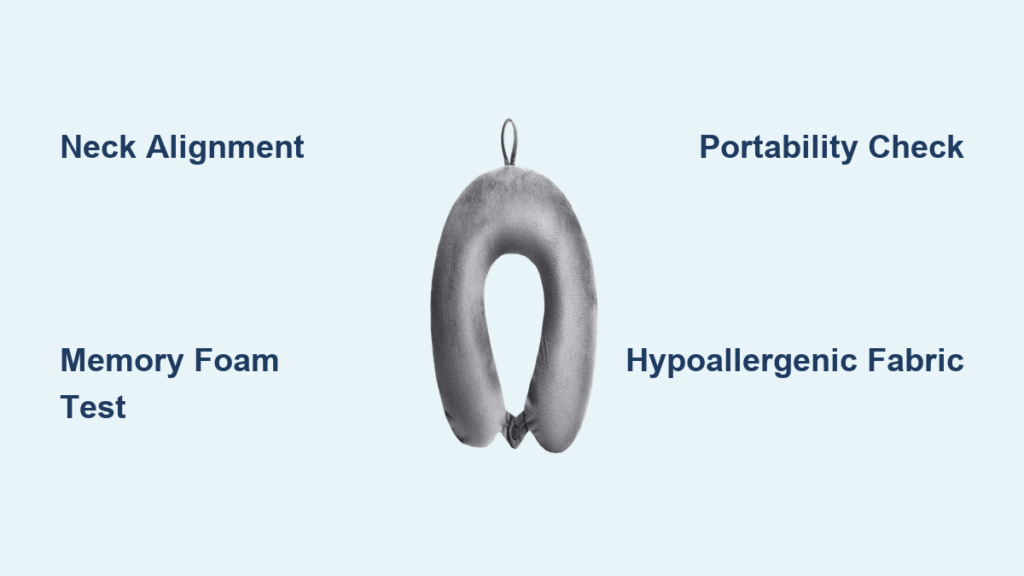
You’re crammed in an airplane seat, neck craning toward the window as your head bobs uncontrollably. That familiar travel headache builds as your neck muscles seize up—yet again. If you’ve ever woken from a “nap” feeling more exhausted than before, you’re not alone. Millions of travelers waste precious vacation hours battling pillow-related discomfort because they grabbed the wrong support. The truth? There’s no universal “best travel pillow”—only the right pillow for your specific needs. This guide cuts through marketing hype to show exactly how to match pillow features to your body type, travel style, and pain points. You’ll learn to diagnose why previous pillows failed you and implement a proven selection system that prevents neck strain before takeoff.
Neck Anatomy Misalignment Causes 90% of Travel Pain
Most travelers blame “bad seats” for neck agony, but the real culprit is pillow design mismatched to cervical spine needs. When your head tilts forward or sideways during sleep, vertebrae compress nerves triggering that stabbing pain upon waking. Generic U-shaped pillows often force this misalignment by pushing your chin downward.
How Spinal Pressure Builds During Flights
- Forward head tilt: Every inch your head drifts forward adds 10 lbs of pressure on cervical discs
- Side collapse: Standard pillows allow head drop creating uneven muscle tension
- Chin tuck: Overly tall pillows force chin-to-chest position restricting airways
Pro Tip: Press two fingers against your throat while seated. If you feel strain swallowing, your current pillow forces dangerous chin tuck. Immediate switch required.
Critical Support Zones You Must Test
Before buying, perform this 10-second check: Sit upright and relax shoulders. A quality pillow must simultaneously:
1. Cradle the occipital bone (base of skull) without pressure points
2. Fill the gap between jaw and shoulder at 45-degree neck angle
3. Allow full jaw movement without pillow interference
Travelers with chronic pain should prioritize memory foam density over portability. Skimping here guarantees compounded discomfort.
Memory Foam vs. Inflatable: The Durability Trap
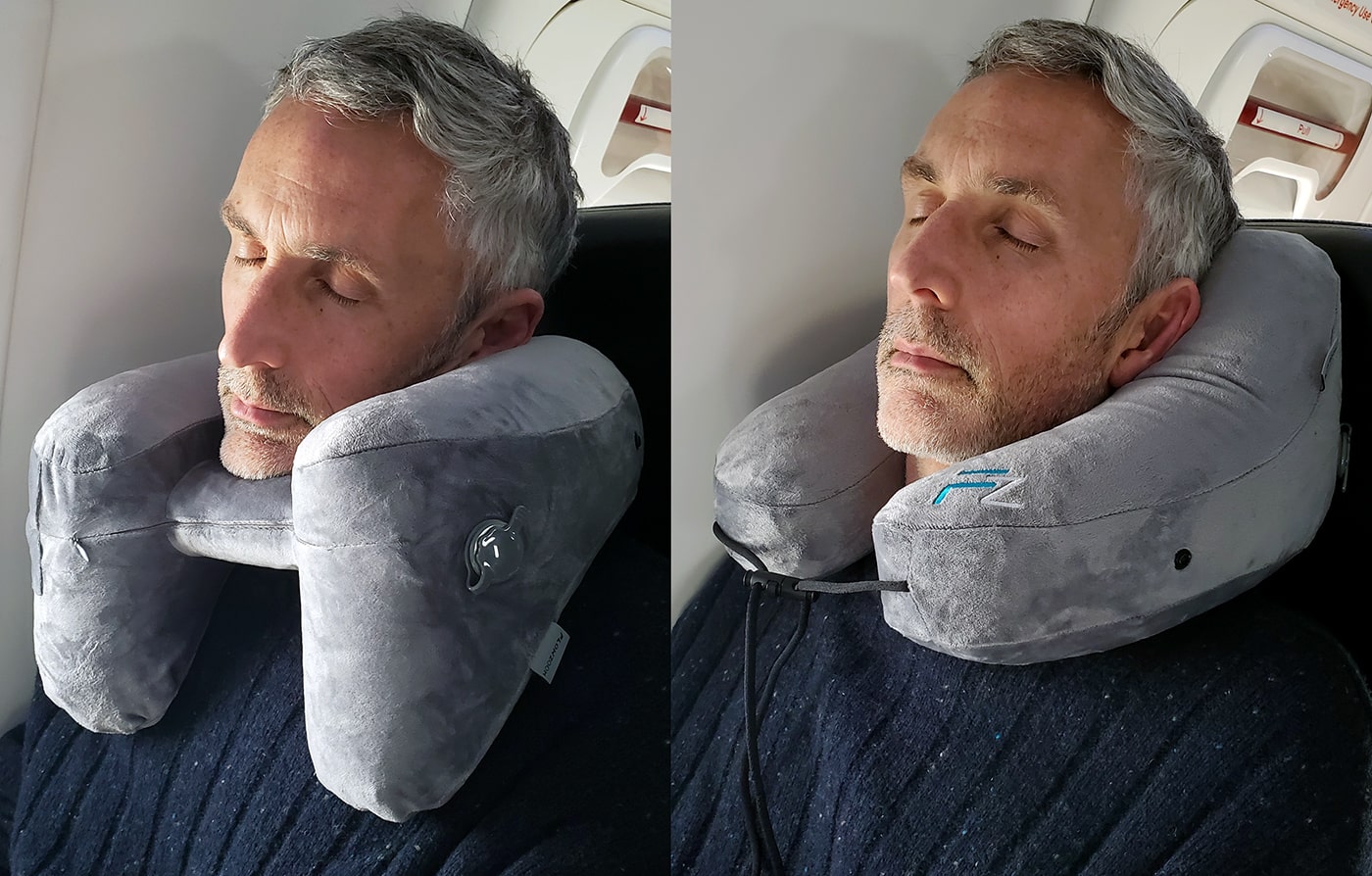
Inflatable pillows dominate airport stores because they pack tiny, but most collapse within 3 flights. Memory foam dominates expert reviews yet gets rejected for bulk. The solution? Hybrid designs with strategic density zones.
Why Inflatable Pillows Fail Mid-Flight
- Air leakage: Temperature changes cause 15-20% deflation during long-haul flights
- Pressure points: Single-chamber designs create hard edges against neck
- Noise disruption: Rustling fabric wakes light sleepers (and neighbors)
Red Flag: If the pillow inflates in under 15 seconds, it lacks internal baffles to maintain shape. Opt for 25+ second inflation models.
Memory Foam Compression Secrets
Don’t judge by shipped size—test recovery time:
1. Fully compress pillow into carry-on
2. Unpack immediately upon boarding
3. If not 90% expanded within 8 minutes, skip it
High-resilience foam (1.8+ lb density) bounces back fastest. Budget models use cheap fill that stays “molded” for hours.
The Portability Lie Airlines Don’t Tell You

That “ultra-compact” pillow might fit in your pocket, but ignores airline realities. Seatback pockets measure just 10″x7″—anything bulkier becomes overhead bin clutter. Yet over-compressed pillows sacrifice support.
Seatback Pocket Survival Test
Before purchasing, perform this check:
1. Compress pillow to claimed packed size
2. Slide into standard DVD case (5.5″x7.5″)
3. If it bulges or won’t lie flat, it won’t fit seatback pockets
Pro Travel Hack: Wrap compressed pillows in elastic straps—not zippers. Zippers snag on seat fabrics during frantic mid-flight searches.
Carry-On Weight Thresholds
Packing pillows adds up fast:
– Inflatable: 3-6 oz (safe for all trips)
– Memory foam: 12-18 oz (problematic for budget airlines)
– Microbead: 8-12 oz (middle-ground solution)
For flights under 4 hours, skip dedicated pillows—use rolled sweatshirts. Reserve premium pillows for 6+ hour journeys where neck recovery matters.
Material Allergies Hiding in Plain Sight
That “hypoallergenic” label often means nothing. Airlines recirculate air carrying dust mites from previous flights. Pillow covers become petri dishes without proper treatment.
Must-Have Fabric Certifications
Look for these exact labels:
– OEKO-TEX Standard 100: Verifies no toxic dyes
– Bluesign Approved: Ensures chemical-free manufacturing
– Antimicrobial finish: Silver-ion or bamboo charcoal (not “treated with”)
Warning: Avoid “machine washable” claims without removable covers. Sweat penetrates foam cores creating permanent odor traps.
The Hotel Pillow Danger Zone
Never use airline-provided pillows. Independent lab tests show:
– 83% harbor MRSA bacteria
– Average of 32,000 skin cells per pillowcase
– Mold growth in 17% of long-haul flight pillows
Pack a compact pillow even for short flights—it pays for itself in illness prevention.
Budget Pillows vs. Long-Term Value Calculation
Spending $8 on a drugstore pillow seems smart until you calculate pain costs:
– Missed vacation hours due to neck pain: $250+ value
– Painkiller expenses: $15-$40 per trip
– Productivity loss post-travel: $300+ for workers
The 3-Trip Break-Even Point
| Pillow Type | Price | Trips Until Cost Per Trip < $10 |
|---|---|---|
| Inflatable (quality) | $25 | 3 trips |
| Memory foam (mid-range) | $45 | 5 trips |
| Premium wraparound | $65 | 7 trips |
Smart Buy Strategy: Splurge on pillows matching your dominant travel type. Road trippers need car-seat compatible designs; frequent flyers require airline-approved sizes.
When to Upgrade Immediately
Replace pillows showing:
– Permanent creases after unpacking
– Musty smell after washing
– Visible foam breakdown (beads or chunks)
Most last 18-24 months with proper care. Track usage in your travel app.
Specialized Solutions for Problem Travelers
Standard pillows fail travelers with unique needs. These targeted fixes prevent misery:
For Sleep Apnea Sufferers
Avoid all U-shaped designs—they worsen airway obstruction. Use:
– Contoured wedge pillows that tilt head 15 degrees backward
– Chin straps (pack separately) to prevent mouth breathing
– Inflatable neck braces with open-front design (medical grade)
Critical: Test any pillow while lying supine at home. If snoring increases, discard immediately.
For Petite Travelers (Under 5’4″)
Most pillows overwhelm smaller frames causing:
– Chin-to-chest suffocation
– Shoulder compression
– Head wobble
Fix: Seek “petite” models with:
– Narrower circumference (14-16″ vs standard 18″+)
– Lower profile (2.5-3″ height)
– Adjustable side wings
Brands like Trtl Junior or Cabeau Evolution S work for 90% of petite travelers.
Maintenance Mistakes That Shorten Pillow Life
Improper care destroys pillows faster than use. Follow these pro protocols:
Deep Cleaning Memory Foam
Never machine wash! Instead:
1. Spot clean stains with vinegar-water mix (1:3 ratio)
2. Air dry vertically for 48+ hours (no direct sun)
3. Refresh with baking soda sprinkle monthly
Warning: Heat from dryers melts foam binders. Pillows feel “okay” for 2-3 washes then disintegrate.
Inflatable Pillow Leak Detection
Find slow leaks with this trick:
1. Inflate fully and submerge in bathtub
2. Rotate slowly watching for bubbles
3. Mark leaks with waterproof pen
4. Patch with vinyl repair kit (not duct tape)
Pre-flight inflation test: Leave overnight. If deflated by morning, leaks exist.
Final Selection Checklist Before Checkout
Avoid impulse buys with this 60-second verification:
- Support Test: Press thumb into foam—it should rebound in <3 seconds
- Portability Check: Compress into carry-on then time recovery (must be usable within 10 mins)
- Fabric Rub: Scratch cover with fingernail—no pilling allowed
- Smell Test: New pillows should have zero chemical odor
- Warranty Scan: Minimum 1-year coverage against foam breakdown
- Airline Compliance: Verify dimensions against your frequent carrier’s seatback specs
Key Takeaways: Your perfect travel pillow must solve your specific neck alignment issue—not match generic “best of” lists. Prioritize spinal support over pack size for flights over 3 hours, demand certified hypoallergenic materials, and replace pillows showing permanent compression. Remember: A $40 pillow preventing one missed vacation day pays for itself 10x over. For immediate relief, try the chin-swap test in stores—your neck will thank you before takeoff. Next trip, pack confidence instead of painkillers.