
Your snowboard represents a significant investment that deserves proper protection during transit—but choosing the best snowboard travel bags can feel overwhelming with so many options on the market. Whether you’re flying across the country for a dream trip or driving to your local hill for weekend sessions, the wrong bag can lead to chipped edges, loose bindings, or even complete board damage before you ever hit the slopes. Many riders learn this lesson the hard way after discovering costly damage upon unzipping a flimsy bag that promised more protection than it delivered.
Finding the right travel solution means understanding how different bag types perform under real travel conditions and matching features to your specific needs. This guide cuts through the marketing hype to help you identify which snowboard travel bags actually deliver on their promises based on construction quality, brand reputation, and practical functionality. You’ll discover exactly what to look for when shopping so you can confidently select a protective solution that keeps your board safe trip after trip.
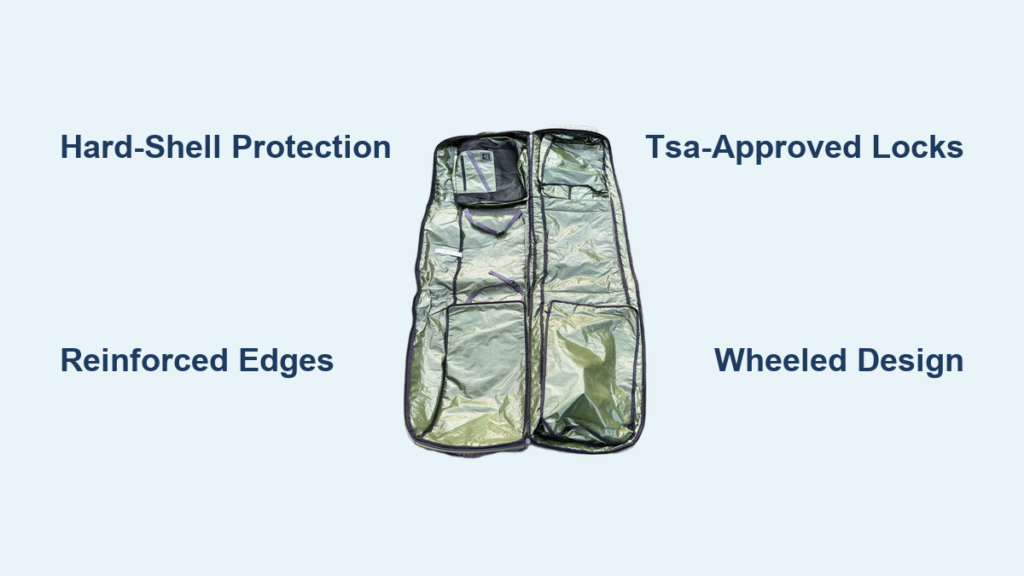
Hard-Shell Cases That Survive Airline Travel

When flying with your snowboard, nothing beats the protection of a rigid hard case—these are the best snowboard travel bags for frequent flyers who can’t risk equipment damage. Unlike soft bags that compress under stacked luggage in cargo holds, hard cases maintain their shape and absorb impacts that would crack a board inside a flimsier container. Look for cases with reinforced corners and internal suspension systems that prevent your board from shifting during transit.
Why Airlines Demand Rigid Protection
Airline baggage handlers toss, drop, and stack luggage with little regard for delicate equipment inside. A hard-shell case with 3-5mm thick walls creates an impenetrable barrier against crushing forces that commonly damage snowboards in transit. The rigid structure prevents the edges from contacting hard surfaces during handling, eliminating the most common cause of edge damage during air travel. For serious riders who fly multiple times per season, this level of protection pays for itself by preventing even a single repair bill.
Critical Hard Case Features to Verify
Before purchasing any hard case, check these essential elements that separate quality options from disappointing imitations:
– TSA-approved locks that allow security screening without forced entry
– Internal padding with binding cutouts to prevent hardware damage
– Wheeled designs with recessed wheels that won’t snag during handling
– Airline-compliant dimensions that fit standard checked baggage restrictions
Many travelers regret discovering their “perfect” case exceeds airline size limits after purchase—always measure your board plus packaging before committing to a specific model.
Specialty Snowboard Bags for Targeted Protection
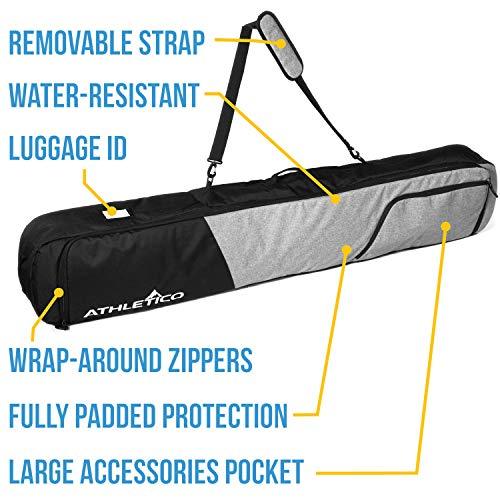
Purpose-built snowboard bags outperform generic sports duffels by addressing specific vulnerabilities unique to snowboard construction and dimensions. These specialized designs feature strategic reinforcement exactly where your board needs it most—along the edges, around binding inserts, and at nose/tail contact points. Most quality models incorporate separate compartments for bindings, boots, and accessories that keep everything organized without compromising board protection.
Binding-Friendly Padding Systems
Generic bags often have uniform padding that leaves binding hardware vulnerable to impact damage during transport. The best snowboard travel bags include contoured padding with binding cutouts or adjustable compartments that prevent metal components from pressing against the board surface. This specialized design prevents the dreaded “binding imprint” that can deform your board’s topsheet and affect performance.
Edge Protection That Actually Works
Examine how edge protection is implemented before buying—many bags feature thin fabric layers that do little to prevent edge damage during transit. Look for bags with extra-thick padding along the entire board perimeter, preferably with rigid piping that maintains its shape when compressed. This critical feature prevents the most common travel damage: chipped or dinged edges from impacts against hard surfaces.
Top Brands Delivering Real Protection
Not all snowboard bag manufacturers understand the unique stresses snowboards face during travel. Established brands with genuine snowboarding heritage consistently deliver better protection because they’ve tested their designs under actual travel conditions with input from professional riders.
Burton’s Travel-Tested Engineering
Burton leverages decades of snowboarding expertise to create travel bags that address real-world problems riders encounter. Their Flight Case series features patented binding protection systems that prevent hardware damage during transit, while their carry-on compatible models maximize protection within airline size restrictions. Burton’s focus on snowboard-specific design means their bags include thoughtful touches like external pockets sized perfectly for base repair kits and goggle storage.
Dakine’s Adventure-Ready Innovation
Dakine excels at creating versatile travel solutions that transition seamlessly from airport terminals to mountain parking lots. Their Mission series incorporates removable wheel systems that convert a wheeled bag into a streamlined backpack when needed—perfect for navigating narrow resort pathways after parking. Dakine’s signature reinforced stress points at handle attachments and zipper tracks prevent the common failure points that plague cheaper alternatives.
Wheeled vs. Non-Wheeled: Making the Right Choice
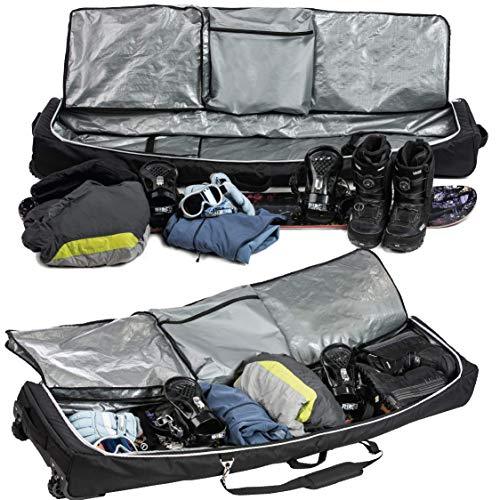
The decision between wheeled and traditional carry designs significantly impacts your travel experience—choose wisely based on your typical transportation scenarios rather than convenience alone.
When Wheeled Bags Save Your Trip
If you regularly navigate large airports, crowded resort parking lots, or long distances between transportation and lodging, wheeled bags dramatically reduce physical strain. Look for models with dual-trolley systems that allow upright rolling on smooth surfaces and horizontal dragging across snow or gravel. Quality wheels should rotate 360 degrees and feature sealed bearings that won’t freeze in cold conditions—cheap plastic wheels often fail in winter environments.
Non-Wheeled Advantages for Road Trippers
Travelers who primarily drive to resorts often prefer non-wheeled bags for easier vehicle loading and more flexible storage options. Without bulky wheel mechanisms, these bags compress more efficiently in car trunks and fit better in overhead compartments on buses or trains. They’re typically lighter weight and often cost less than comparable wheeled models, making them ideal for weekend warriors who prioritize value and simplicity.
Critical Features That Separate Quality Bags
Beyond basic protection, specific construction details determine whether a snowboard travel bag will perform reliably season after season or fail when you need it most.
Zipper Systems That Won’t Fail Mid-Trip
Cheap zippers represent the weakest link in many travel bags—quality best snowboard travel bags feature oversized, double-stitched zipper pulls that operate smoothly even when stuffed full. Look for reverse-coil zippers with protective flaps that prevent snags and keep moisture out. Test zippers in-store by fully loading the bag to ensure they operate smoothly under tension—many fail when overstuffed during actual use.
Strategic Padding That Maximizes Protection
Effective padding concentrates protection exactly where your board needs it most—not uniformly distributed throughout the bag. The best designs feature triple-layer protection along edges, reinforced binding zones, and extra-thick nose/tail padding where impacts most commonly occur. Avoid bags with thin, uniform padding that compresses quickly under pressure—quality padding should spring back immediately when compressed.
Smart Shopping Strategies for Lasting Value
Investing in the right snowboard travel bag requires matching features to your actual travel patterns rather than opting for maximum protection that may be unnecessary for your situation.
Match Protection to Your Travel Frequency
Frequent flyers (3+ trips per season) need hard cases or heavily padded specialty bags that withstand repeated airline handling. Occasional travelers (1-2 trips annually) often get better value from durable soft bags that provide adequate protection without the bulk and expense of maximum-security options. Be honest about your travel patterns—overspending on unnecessary protection wastes money, while under-protecting risks expensive board damage.
Test Bags Before You Buy
Whenever possible, visit a specialty retailer like Sun & Ski Sports to test bags with your actual equipment. Load your board into potential options to check fit, test zipper operation when fully stuffed, and evaluate handle comfort with weight applied. Pay attention to how easily you can maneuver the bag—many look good on the shelf but prove awkward to transport when loaded.
Final Decision Checklist Before Purchase
Before committing to any snowboard travel bag, verify these critical elements that determine real-world performance:
- Proper sizing for your specific board length and width
- Airline compliance if flying (check current size restrictions)
- Reinforced stress points at handles, straps, and corners
- Binding-specific protection that addresses hardware vulnerabilities
- Warranty coverage that reflects confidence in construction quality
The best snowboard travel bags deliver peace of mind by protecting your investment through countless journeys. Whether you choose a hard case for frequent air travel or a specialty soft bag for weekend trips, prioritize construction quality over flashy features and match protection levels to your actual travel needs. Your board deserves reliable protection that arrives ready to ride—every time you unstrap it from its travel home. Invest wisely in a purpose-built solution, and you’ll spend less time repairing travel damage and more time enjoying fresh powder on your next adventure.