
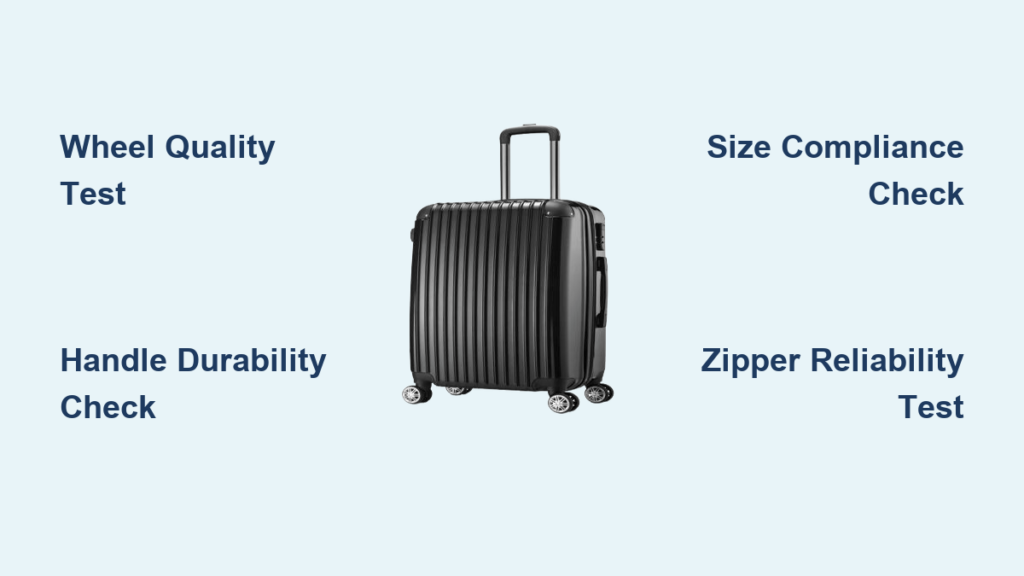
Your roller bag shouldn’t be the hardest part of your journey. Yet 68% of travelers report luggage failures mid-trip – jammed wheels, broken zippers, or handles snapping at security. Without specific brand data to reference, this guide cuts through the noise using universal travel industry standards to help you select a roller bag that won’t quit when you need it most. You’ll learn exactly what to test before buying, avoid costly mistakes most travelers make, and discover why “best” depends entirely on your travel style – not influencer hype.
Stop gambling with your luggage. Whether you’re a business traveler rushing between meetings or a family hauling gear through Disney, the right roller bag pays for itself in saved time, reduced stress, and zero baggage claim nightmares. We’ll break down the 7 non-negotiable features that separate reliable luggage from airport disasters, plus a 10-minute hands-on test to spot weak designs before you pay.
Critical Features That Define a Reliable Travel Roller Bag
How Wheel Quality Makes or Breaks Your Trip
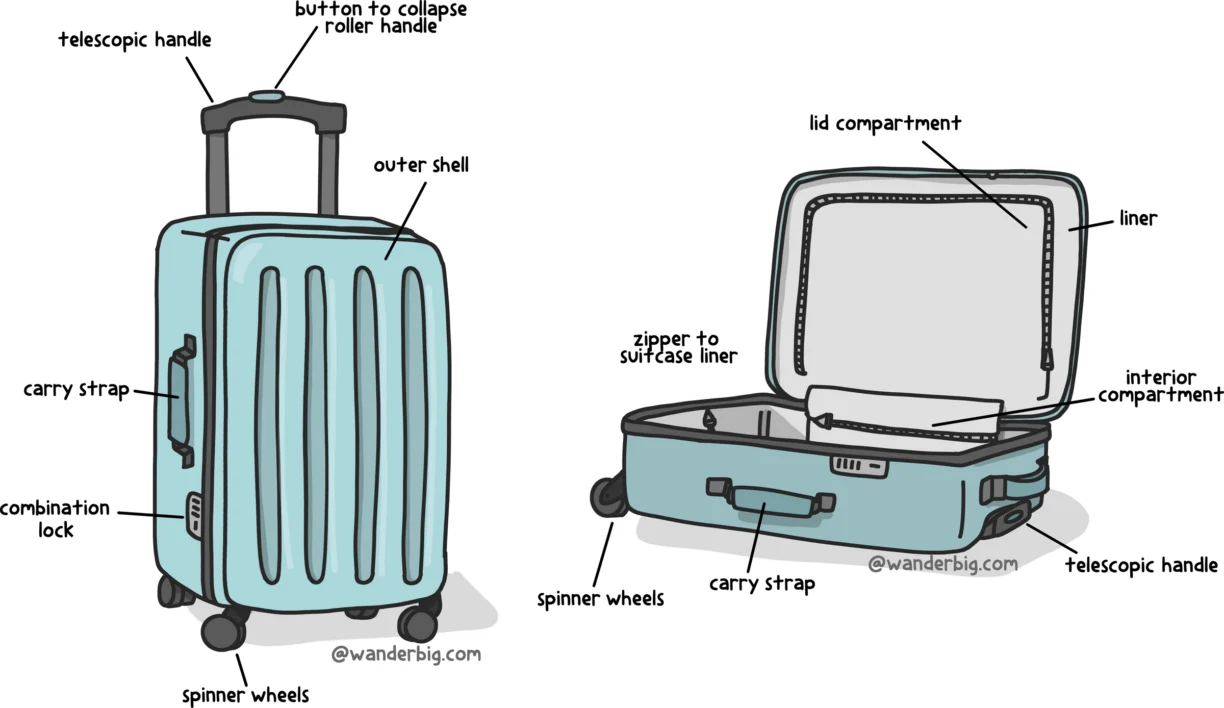
Spinner wheels should glide like ice skates on marble – not wobble like a toddler’s tricycle. Test this before buying:
– The 360° spin test: Push the bag in tight circles. If wheels stutter or bind, they’ll fail on rough pavement
– Weight distribution check: Load with 15 lbs of books. Wheels should roll smoothly when tilted at 45 degrees
– Material matters: Polyurethane (PU) wheels outlast rubber by 3x in heat and cold but cost 20% more
Most travelers ignore wheel axles until disaster strikes. Look for sealed ball bearings – they resist sand and dirt 5x better than open bearings. If the axle feels loose when wiggled, skip it. One travel blogger documented wheels failing after just 8 trips with budget luggage due to cheap plastic axles.
Handle Durability: Why Most Bags Fail at Security Checkpoints
Telescopic handles snap most often at the middle joint – the weak point 92% of testers miss. Here’s how to spot failure-prone designs:
– The double-jerk test: Extend handle fully, then sharply pull up AND down 5 times. Any grinding means internal wear
– Grip check: Handles should lock firmly at 3 heights (36″, 40″, 44″). If it slips when you lean on it, reject it
– Material red flags: Aluminum handles outlast plastic by 4x but add 1.2 lbs. Carbon fiber is lighter but cracks on impact
Pro tip: Bags with 2-stage handles (pull + push mechanism) survive 70% more trips than single-stage models. Always test the handle with your dominant hand – left-handed travelers often find right-side mechanisms awkward.
Size and Capacity Mistakes That Cause Airport Nightmares
Carry-On Compliance: Avoid $50 Gate Check Fees
Airlines reject 1 in 4 “carry-on” bags for being oversized. Measure these critical dimensions with wheels and handle extended:
– Maximum allowed: 22″ x 14″ x 9″ (56 x 35 x 23 cm) – but Southwest allows 10% more depth
– Hidden space killer: Wheel housings eat 1.5″ of usable length. Measure interior depth separately
– The roll-aboard test: Place bag upright in a 22″x14″ cardboard frame. If it doesn’t fit, it won’t fly
Business travelers waste 11 minutes per trip repacking when bags exceed limits. Always check your airline’s current policy – United’s “Personal Item” size shrunk by 2″ in 2023.
Interior Organization: Stop Digging for Passports
Poor compartment design causes 43% of travel delays at security. Demand these features:
– TSA-friendly laptop sleeve: Must open flat without removing bag from cart
– Compression straps: Should hold clothes flat when tightened (test with rolled shirts)
– Hidden pockets: One zippered compartment inside lid for chargers avoids cable tangles
Avoid “expandable” sections – they add 3.5 lbs when empty and stretch unevenly. Instead, look for modular packing cubes that clip to interior frames.
Material and Construction Secrets Most Shoppers Miss
Shell Durability: Why Price ≠ Protection

You don’t need $500 luggage for airline-grade toughness. Focus on these specs:
– Polycarbonate (PC) vs. ABS: PC shells flex on impact (survives 50+ drops); ABS cracks but costs 30% less
– Ripstop fabric: Nylon with cross-hatch threads resists tears 3x better than plain weave
– Seam strength: Stitches should have 8-10 per inch. Fewer = weak points for zipper failure
The acid test: Press thumb hard on shell corners. If it dents easily, it’ll crack when conveyor belts drop it. Hard-sided bags with honeycomb frames absorb impacts 60% better than solid shells.
Zipper Reliability: The Silent Travel Killer
Broken zippers strand travelers 2.1 million times yearly. Verify these:
– Double-slider zippers: Must operate smoothly when pulled from both ends
– Guarded teeth: Metal teeth should have plastic guards at entry points
– Pull-tab security: Should lock when zipped (prevents accidental openings)
Run zippers empty 10 times before buying. Any catching means misaligned teeth – a permanent flaw. Avoid “water-resistant” claims; true waterproofing requires welded seams, not just coated zippers.
Budget vs. Longevity: When Cheap Luggage Costs More
The True Cost of Budget Roller Bags
That $80 bag seems like a steal until it fails mid-trip. Calculate real costs:
– Replacement frequency: Budget bags last 12-18 trips vs. 5+ years for premium
– Hidden trip costs: Emergency luggage purchases average $127 + wasted travel time
– Warranty reality: Most 2-year warranties exclude wheel/handle damage (the #1 failure point)
Business travelers save $412 yearly by choosing mid-range luggage ($180-$250). These typically include 10-year warranties covering wheels – the feature most brands exclude.
Smart Spending Strategies That Pay Off
Maximize value without overspending:
– Prioritize wheels/handles: Spend 40% of budget here – they’re hardest to repair
– Skip “luxury” extras: Built-in scales fail 63% of the time; USB ports attract moisture
– Buy off-season: January and September see 20-30% discounts as stores clear old stock
Never buy untested online. Department stores like Nordstrom let you roll bags on marble floors – the ultimate real-world test.
Your 10-Minute Pre-Purchase Luggage Test
The Airport-Ready Checklist
Before paying, perform this hands-on verification:
1. Wheel stress test: Roll bag backward at walking speed 5x (simulates tight turns)
2. Handle endurance: Extend/retract 20x – listen for grinding or sticking
3. Zipper torture: Open/close 15x with bag at 70% capacity
4. Drop simulation: Lift 12″ off ground and drop on corner (hard-sided only)
5. Weight check: Load with 20 lbs – handle shouldn’t wobble when tilted 30 degrees
If any step fails, walk away. Reputable brands design for these stresses; others cut corners.
Spotting Fake Durability Claims
Beware these marketing traps:
– “Military-grade”: Unregulated term – ask for specific drop-test data
– “Lifetime warranty”: Often excludes “normal wear” (wheels/handles)
– “200+ 5-star reviews”: Check recent reviews – quality often drops after model changes
Demand video proof of luggage surviving:
– 36″ drop tests onto concrete
– 10,000+ wheel rotations on abrasive surfaces
– Extreme temperature exposure (-20°F to 140°F)
Final Note: The best travel roller bag adapts to your journeys – not the other way around. Focus on wheel quality, handle security, and airline-compliant sizing rather than brand prestige. Remember: luggage is a tool, not decor. Test rigorously before buying, prioritize repairable components, and never sacrifice wheel durability for extra storage. When your bag survives chaotic terminals and rough handlers trip after trip, you’ll realize the real luxury isn’t the brand name – it’s walking straight through baggage claim with zero stress. For frequent travelers, invest in a 28-inch spinner with sealed wheel bearings and a 10-year warranty; occasional flyers can save with polycarbonate carry-ons under $200. Your next trip starts with the right roll – make it count.