
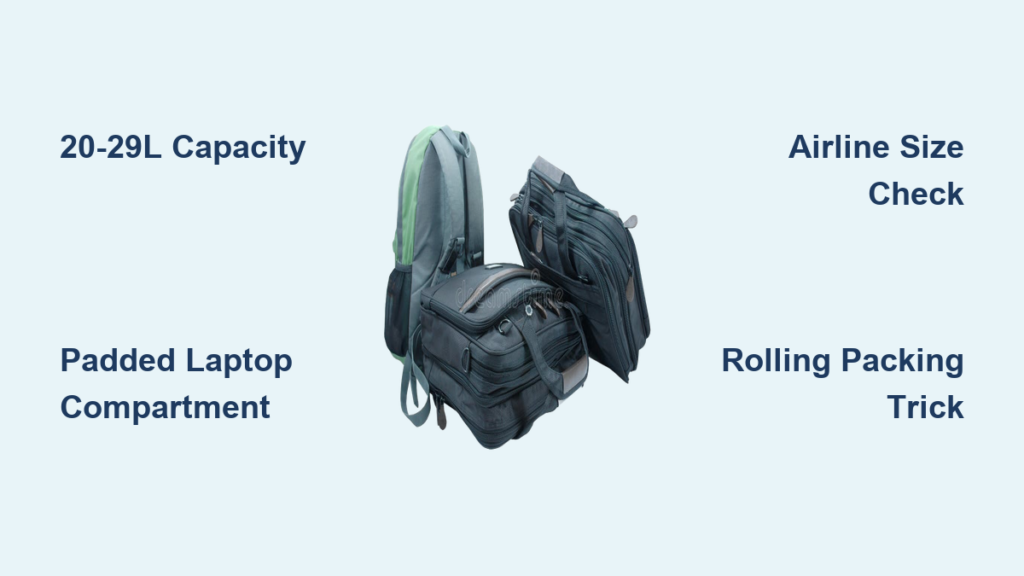
Choosing the right luggage backpacks for travel transforms your journey from stressful to seamless—get it wrong, and you’ll face gate-checked bags, damaged electronics, and back pain before your trip even begins. Most travelers waste money on oversized bags that trigger airline rejections or undersized packs that force painful compromises on essentials. This guide cuts through the marketing hype to show you exactly which capacity, features, and price points deliver real value based on your specific travel patterns. You’ll discover how to select a bag that fits airline restrictions while protecting your gear and keeping you comfortable through long travel days.
Modern luggage backpacks have evolved far beyond basic carrying solutions—they’re sophisticated travel systems designed to streamline your journey from curb to cabin. Whether you’re a business traveler navigating daily security lines, an adventure seeker exploring remote destinations, or a minimalist packing for weekend getaways, the perfect bag exists if you know what to look for. This guide breaks down exactly what to prioritize based on your travel style and budget, with specific recommendations that solve real-world problems you’ll face on the road.
20-29L: The Perfect Carry-On Capacity for 3-5 Day Business Trips
Most airline carry-on restrictions max out at 22 x 14 x 9 inches, making 20-29L backpacks the sweet spot for business travelers who refuse to check bags. The Klettersack at 25L exemplifies this range, offering enough space for 3-5 days of business attire without triggering size rejections. Warning: Oversized backpacks in this category often have expandable compartments that push them over airline limits when fully packed—always measure your loaded bag before traveling.
How to Verify True Carry-On Compatibility
- Check specific airline dimensions—budget carriers like Ryanair enforce stricter limits than major airlines
- Measure when fully packed with your typical load, not empty
- Test at home by fitting your loaded bag into a 22x14x9 inch box
- Choose streamlined designs without external pockets that add bulk
Business Traveler Packing Strategy
Place heaviest items (laptop, toiletries) against your back for balanced weight distribution. Store suits in garment folders vertically in the main compartment to minimize wrinkles. Keep business documents in a top-access pocket that doesn’t require removing your laptop during security screening.
Laptop Compartment Fixes: Prevent Damaged Electronics During Security

Over 40% of travel backpack damage occurs during security screening when laptops aren’t properly protected. Quality luggage backpacks for travel include padded compartments with soft linings that prevent scratches and absorb impacts, but many travelers still make critical mistakes with their electronics.
Essential Laptop Protection Checklist
- Padded thickness: Minimum 10mm foam padding around all sides
- Quick-access design: Should unzip fully without removing other items
- Size specificity: Match compartment to your exact laptop dimensions (13″, 14″, or 15″)
- Water-resistant lining: Prevents damage from accidental spills in other compartments
Pro Tip: Keep your laptop in its sleeve even when stored in the backpack compartment for double protection against impacts during baggage handling.
Roller Backpacks vs Standard: When Hybrid Designs Actually Save Airport Time
The Global Travel Bag Roller at 44L demonstrates where convertible designs deliver real value—when navigating between smooth airport terminals and uneven terrain at your destination. Don’t waste money on roller backpacks if you primarily travel through modern airports with escalators and smooth flooring; the added weight and complexity aren’t worth it.
When to Choose a Hybrid Roller Backpack
- Multi-modal travel days (plane → train → taxi → walking)
- Frequent stair navigation at older airports or train stations
- Long terminal walks on uneven surfaces
- Carrying heavy loads (over 15 lbs) for extended periods
Avoid if: You travel exclusively through modern airports with moving walkways and elevators—pure backpacks in the 25-30L range will be lighter and more maneuverable.
$50-$150: Best Value Luggage Backpacks That Beat Premium Brands

You don’t need to spend $300+ for a reliable travel backpack. The Mountain Utility Tote at $99 and Rover Pack Tech at $149 deliver premium features at mid-range prices, making them ideal for travelers taking 5-10 trips annually. Critical mistake: Buying ultra-cheap backpacks under $50 that fail after 2-3 trips—this actually costs more per use than investing in quality gear.
Top Value Picks by Travel Frequency
| Travel Frequency | Recommended Price Range | Best Models |
|---|---|---|
| 1-3 trips/year | $50-$80 | Mountain Essential Tote ($59) |
| 4-10 trips/year | $80-$150 | Rover Pack Tech ($149), Klettersack ($159) |
| 10+ trips/year | $150-$250 | Global Travel Backpack 27L ($189) |
Pro Tip: Look for sales on previous year’s models—many retailers discount last season’s Global Travel line by 30-40% when new versions launch.
Airline-Specific Dimensions: Avoid Gate Check Fees With These Measurements
Southwest Airlines allows larger personal items than Delta, and budget carriers like Spirit enforce stricter limits than major airlines. The Global Travel Backpack 27L fits within most major carrier restrictions but exceeds Spirit’s 18x14x8 inch limit—always verify dimensions against your specific airline before purchasing.
Critical Airline Size Limits (Personal Item)
- Delta, United, American: 18x14x9 inches
- Southwest: 18.5×13.5×8.5 inches (more generous)
- Spirit, Frontier: 18x14x8 inches (strictly enforced)
- International Carriers: Vary significantly—check before booking
Visual Cue: If your backpack’s base extends beyond a standard airline tray table (17×11 inches), it likely won’t fit under the seat in front of you.
Adventure Traveler Essentials: 40L+ Backpacks That Handle Rough Terrain

The Mountain Duffel 40L solves the extended trip dilemma—enough capacity for 7-10 days without checking luggage while maintaining backpack functionality for rugged destinations. Key feature: Reinforced protective bases that withstand frequent setting down on rough surfaces, unlike standard travel backpacks that quickly show wear.
Must-Have Adventure Features
- Abrasion-resistant recycled nylon construction (Global Travel line standard)
- Water-resistant zippers and coatings that protect against mountain rain
- External attachment points for trekking poles or climbing gear
- Compression straps that stabilize loads on uneven terrain
Pro Tip: For hiking-intensive trips, choose backpacks with sternum straps and hip belts that distribute weight effectively—features often missing on standard travel backpacks.
Tech Nomad Must-Haves: Cable Management That Prevents Travel Chaos
Digital nomads waste an average of 12 minutes per trip searching for cables and adapters—fix this with strategic organization. The Global Pro Tech Case at $69 provides dedicated slots for every connector type, but you can achieve similar organization in most quality luggage backpacks for travel with these techniques.
Cable Management System
- Dedicated internal pocket for power bank and main charger
- Separate mesh compartment for cables by device type
- Key-ring attachment point for frequently used adapters
- RFID-blocking pocket for credit cards and passport protection
Warning: Never store loose cables directly against clothing—frayed wires from movement can damage fabrics and create electrical hazards.
Pro Packing Strategy: Fit 7 Days in a 30L Carry-On Backpack
The Global Travel Bag 30L achieves its “week-long trip” promise through strategic packing, not just capacity. Most travelers waste 30% of space by folding clothes instead of rolling them—a simple technique that reduces bulk and prevents wrinkles.
Rolling Technique for Maximum Space
- Lay each item flat and fold sleeves inward
- Start rolling from the bottom hem upward tightly
- Place heaviest items (jeans, shoes) at the bottom against your back
- Store rolled clothes vertically like files for easy access
Pro Tip: Wear your bulkiest items (jacket, shoes) during travel to save significant space in your luggage backpacks for travel.
Extend Your Backpack’s Life: 3 Maintenance Steps Travelers Skip
Most travelers replace backpacks every 18-24 months due to preventable wear, but proper care extends lifespan to 5+ years. The #1 failure point is zipper separation from repeated stress—prevent this with these simple maintenance steps.
Essential Maintenance Routine
- After every trip: Wipe down exterior with damp cloth to remove airport grime
- Monthly: Lubricate zippers with silicone-based lubricant (never wax)
- Before storage: Loosen all straps to prevent permanent tension damage
- Seasonally: Check seam integrity at stress points (strap attachments, bottom corners)
Pro Tip: Store your backpack stuffed with tissue paper to maintain shape—never compress it tightly for long periods.
Selecting the right luggage backpacks for travel means matching capacity to your actual trip length, prioritizing features that solve your specific pain points, and investing in quality that delivers long-term value. The perfect travel backpack disappears into your journey—never causing size rejections, equipment damage, or physical discomfort. By focusing on airline-specific dimensions, proper tech protection, and strategic packing, you’ll transform how you move through the world with confidence that your gear supports rather than hinders your adventures. Remember: the best luggage backpack for travel isn’t the most expensive one—it’s the one perfectly calibrated to your unique travel patterns and priorities.