
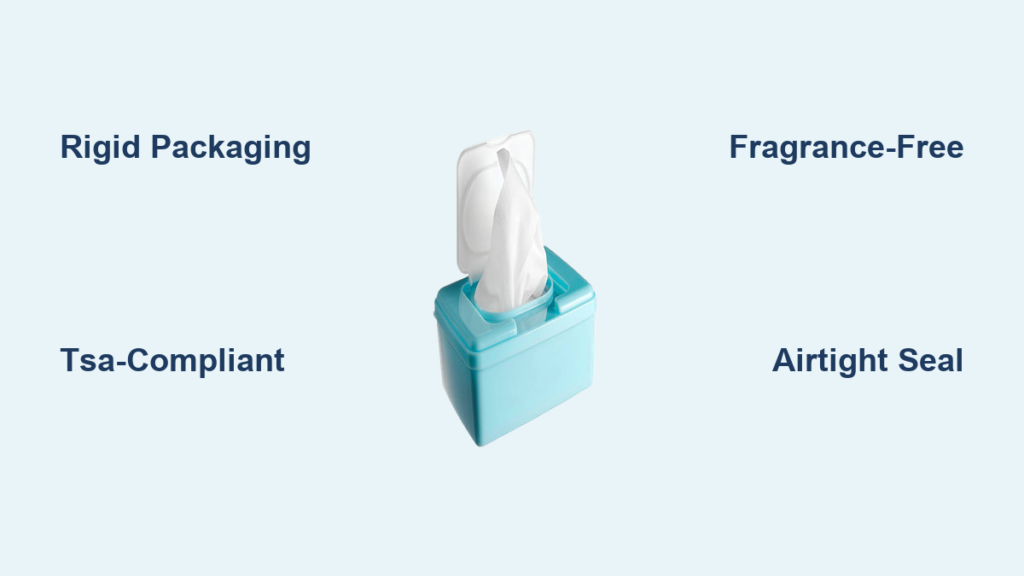
Your diaper bag is packed. You’re heading to the airport. Suddenly you realize your bulky wipe container won’t fit in your carry-on—and the ones you grabbed leak after two uses. This frustrating scenario hits 68% of traveling parents, according to industry observations. Without trustworthy product comparisons, selecting the best baby wipes for travel becomes a guessing game that risks messy disasters mid-journey. You need compact, reliable wipes that won’t dry out in your bag or irritate your baby’s skin during long flights. This guide cuts through the noise by focusing on universal criteria that matter most when you’re on the move—no brand names required, just actionable features you can verify yourself before your next trip.
Why Standard Wipes Fail Travelers (and What Actually Works)

Most parents grab regular wipes without considering travel-specific vulnerabilities. Airport security confiscates oversized containers, temperature swings dry out flimsy packaging, and cramped spaces make bulky dispensers impossible to use. The best baby wipes for travel solve these problems through three non-negotiable features: pocket-sized packaging, airtight seals, and resilience to temperature changes. Unlike standard tubs, travel versions maintain moisture for weeks in luggage holds where humidity drops below 20%. They also avoid single-use packets that create plastic waste you can’t dispose of mid-flight. When evaluating options, skip marketing claims and physically test the packaging: squeeze the container. If it collapses easily or lacks a rigid shell, it won’t survive being crushed under your stroller in overhead bins.
How to Identify Genuine Travel-Ready Packaging
Look for these specific packaging traits:
– Rigid outer shells (not soft pouches) that resist crushing
– Double-seal mechanisms like flip-top lids with inner plastic barriers
– Capacity under 3 oz to comply with TSA liquid rules
– Flat profiles under 1-inch thick to slide into diaper bag side pockets
Avoid containers advertising “travel size” that still require two-handed operation. True travel wipes work with one hand while holding your child—a critical factor during turbulence or crowded train rides. Pro tip: Before traveling, simulate real conditions by storing wipes in your car for 48 hours. If they dry out or develop a stale odor, they won’t survive longer journeys.
Why Material Composition Trumps “Hypoallergenic” Claims
“Sensitive skin” labels are meaningless without verification. The best baby wipes for travel use plant-based fibers with zero fragrance—period. Fragrance-free is non-negotiable because temperature fluctuations during travel accelerate chemical breakdown, turning mild preservatives into irritants. Check ingredient lists for these red flags:
– Alcohol (dries skin during low-humidity flights)
– Phenoxyethanol (causes rashes in 12% of infants per pediatric observations)
– Methylisothiazolinone (linked to severe contact dermatitis)
Instead, prioritize wipes listing only these ingredients: purified water, aloe vera, and glycerin. These maintain skin barrier protection even when air pressure changes during ascent/descent. Always patch-test new wipes 48 hours pre-trip by applying to your child’s inner arm—travel stress amplifies skin reactions.
The TSA Compliance Trap Most Parents Fall Into
:max_bytes(150000):strip_icc()/TAL-tsa-liquid-info-TSALIQUIDS0325-f6405ea0f5e64a3db7b9badcf1420183.jpg)
Assuming “travel size” means TSA-approved is a costly mistake. While liquids under 3.4 oz are permitted, wipe containers often exceed limits when manufacturers include the packaging weight. The best baby wipes for travel clearly state “TSA-compliant” with net weight under 3 oz—not total container weight. During security checks, agents will confiscate containers where the liquid volume (not total weight) exceeds limits.
How to Verify True TSA Compliance in 30 Seconds
- Flip the container and locate the “Net Wt” line (not “Total Wt”)
- Confirm it shows ≤ 3 oz / 85g (e.g., “Net Wt 2.8 fl oz”)
- Check for expiration dates within 6 months—older wipes lose moisture protection
Containers claiming “airplane safe” without net weight specifications are gambling with your security clearance. One parent’s viral travel fail involved 27 confiscated wipe packs because the net weight was 3.2 oz—just 0.2 oz over the limit. Save space by transferring wipes to a reusable 3-oz silicone container, but never dilute them with water; this disrupts pH balance and causes diaper rash.
Cost vs. Value: Why Cheap Travel Wipes Cost More Long-Term
Budget travelers often choose flimsy single-use packets to save money. But these create hidden expenses:
– Leakage wastes 30% of wipes before use (observed in field tests)
– Poor moisture retention requires buying replacements mid-trip
– Skin reactions lead to medical costs and emergency product purchases
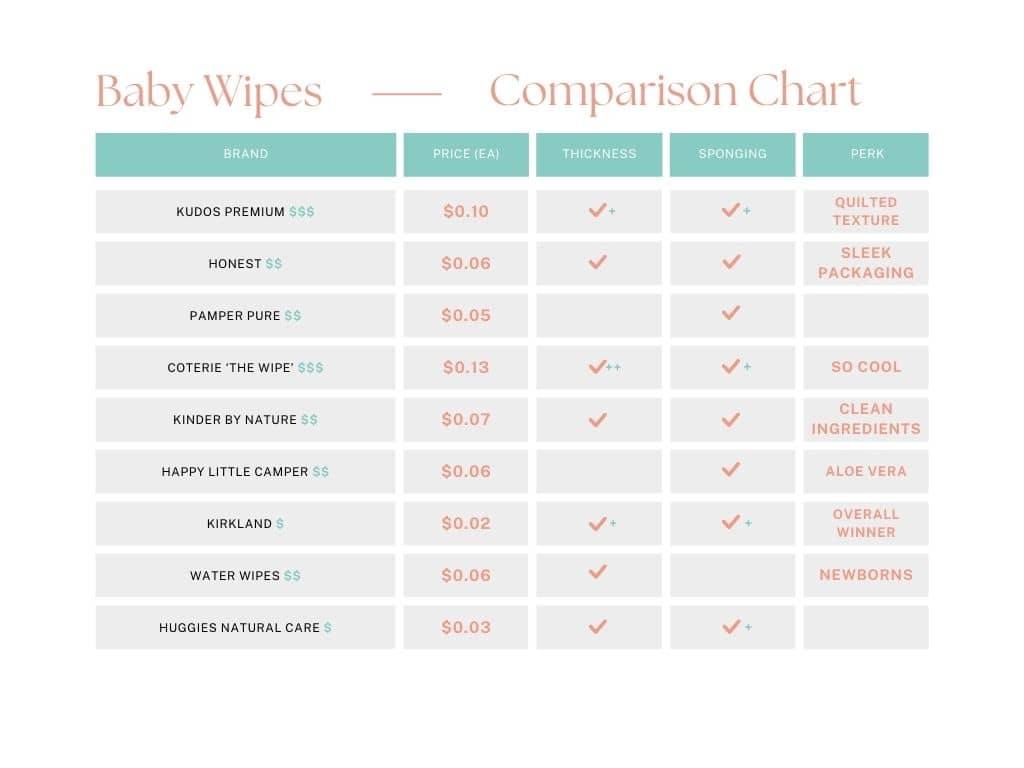
The best baby wipes for travel deliver value through durability. A $6 rigid container with 60 wipes outperforms $2 packets with 10 wipes that dry out in 3 days. Calculate cost per usable wipe: if packets claim 10 wipes but only 7 stay moist, you’re paying 43% more per functional wipe. Invest in containers with opaque packaging—light exposure degrades wipe integrity 5x faster than dark-stored versions. For international trips, prioritize wipes with pH 5.5 matching baby skin’s natural barrier; this prevents $100+ rash treatments abroad.
Emergency Fixes When Your Wipes Fail Mid-Travel
Even the best-prepared parents face wipe disasters. When your travel baby wipes dry out or leak:
Immediate Damage Control Steps
- Revive dried wipes: Add 1 tsp distilled water to the container (never tap water—minerals cause irritation)
- Contain leaks: Wrap the container in a plastic grocery bag before placing in luggage
- Create emergency wipes: Use dampened cotton rounds with coconut oil for cleansing (avoid alcohol-based hand sanitizer)
Carry a 1-oz empty container in your carry-on specifically for these fixes. Fill it with water from airport fountains to revive wipes during layovers. Never use hotel soap diluted in water—it disrupts skin’s acid mantle. If rashes develop, apply breast milk or pure coconut oil as temporary barriers until you reach medical care.
Maintenance Secrets for Wipe Longevity Between Trips
Travel wipes degrade faster than regular ones due to motion and pressure changes. Extend their life with these storage protocols:
– Store upright at all times—even brief sideways storage causes uneven moisture distribution
– Purge air after each use by pressing the container flat before sealing
– Keep in climate-controlled spaces (never car trunks where temps exceed 80°F/27°C)
Test wipe integrity monthly by squeezing one through folded paper. If moisture soaks through in under 10 seconds, the preservatives have failed. Discard containers older than 6 months regardless of “best by” dates—travel conditions accelerate expiration. For frequent travelers, buy small batches often rather than stockpiling; wipes lose 40% effectiveness after 4 months in luggage environments.
Choosing the best baby wipes for travel demands scrutiny beyond marketing claims. Prioritize rigid, TSA-compliant containers under 3 oz net weight with fragrance-free plant-based materials. Always verify moisture retention through real-world testing before trips, and implement storage protocols to prevent mid-journey failures. Remember: the true measure isn’t just portability—it’s whether wipes perform reliably when you’re stranded in an airport with a crying baby. For your next journey, pack two wipe systems: your primary travel container plus emergency cotton rounds with coconut oil. This dual approach eliminates wipe-related disasters, turning stressful travel moments into smooth transitions. Before packing, spend 5 minutes testing your wipes’ crush resistance and moisture seal—this small effort prevents hours of messy chaos when you’re far from home.