
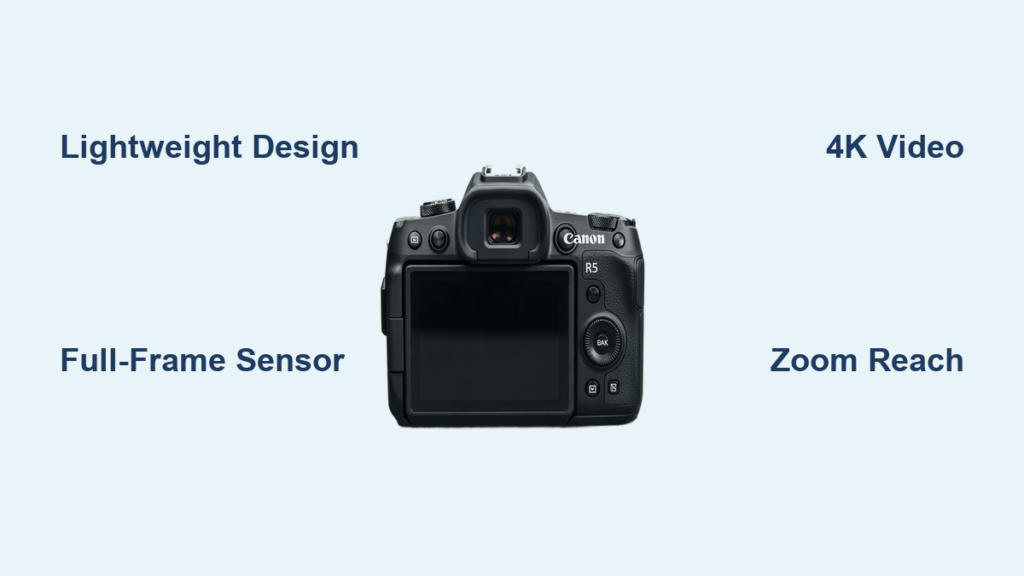
Finding the best Canon camera for travel means balancing image quality, portability, and versatility without breaking your back or bank. Whether you’re navigating crowded markets in Marrakech, capturing alpine landscapes in the Swiss Alps, or documenting street food adventures in Bangkok, your camera must deliver professional results while fitting seamlessly into your journey. This guide cuts through the noise to identify the exact Canon models that excel in real-world travel scenarios—saving you from carrying unnecessary gear or missing once-in-a-lifetime shots.
Mirrorless Powerhouses: Top Canon Travel Cameras Without the Bulk

Canon’s mirrorless lineup delivers DSLR-quality imaging in featherlight bodies that won’t weigh down your daypack. These cameras eliminate bulk while providing access to Canon’s growing RF lens ecosystem, making them ideal companions for travelers who refuse to compromise on image quality.
EOS R50: Lightweight Champion for First-Time Travel Photographers
The EOS R50 stands as the ultimate entry-level travel camera, delivering 24.2 megapixel APS-C resolution in a body weighing just 375 grams—barely more than your smartphone. When you’re hiking through ancient ruins or navigating crowded train stations, this camera disappears into your pocket yet captures stunning detail in every shot. Its Dual Pixel CMOS AF II system automatically tracks people, animals, and vehicles across the frame, so you never miss spontaneous moments like street performers or wildlife encounters.
You’ll appreciate the 4K video capability at 30fps that preserves wide-angle perspectives essential for establishing shots, while 1080p at 120fps creates silky smooth slow-motion footage of waterfalls or bustling markets. The intuitive touch interface feels familiar if you’re transitioning from smartphone photography, yet offers manual controls that grow with your skills. For travelers seeking their first “real” camera that won’t become a burden, the R50 delivers professional capabilities in a package so light you’ll forget you’re carrying it.
EOS R6 Mark II: Full-Frame Low-Light Mastery for Serious Travelers
When traveling through dimly lit European cathedrals, evening festivals in Thailand, or atmospheric night markets in Taipei, the EOS R6 Mark II becomes your secret weapon. Its 24.2 megapixel full-frame sensor captures significantly more light than APS-C alternatives, delivering clean images at high ISO settings where smaller sensors produce noisy, unusable results. You can confidently shoot at ISO 6400 or higher without sacrificing image quality—critical when tripods are prohibited or impractical.
This camera’s autofocus system identifies and tracks subjects with uncanny accuracy, maintaining sharp focus even in challenging lighting conditions. The 5-axis in-body stabilization compensates for 5 stops of camera shake, enabling handheld shots at shutter speeds as slow as 1/4 second. At 680 grams, the R6 Mark II represents the sweet spot between full-frame performance and travel-friendly weight—professional enough for demanding assignments yet compact enough for all-day shooting.
EOS R7: High-Resolution APS-C Perfection for Landscape Travelers
For landscape photographers who need maximum detail without full-frame weight, the EOS R7 delivers 32.5 megapixels of APS-C resolution that reveals subtle textures and distant details your smartphone would miss. When photographing intricate architecture in Kyoto or sweeping vistas in Patagonia, this resolution enables aggressive cropping during editing—effectively giving you multiple compositions from a single shot when reshooting isn’t possible.
The 5-axis in-body stabilization lets you capture sharp handheld shots in low light, while 4K video at 60fps preserves every detail of your travel experiences. Weighing 515 grams, the R7 demands only a modest weight commitment in exchange for substantial capability increases. Travel photographers who prioritize image detail and flexibility find this camera the optimal balance between professional performance and portability.
Pocket-Sized Travel Companions: Canon’s Best Compact Cameras

For travelers who prioritize absolute portability over lens flexibility, Canon’s PowerShot compact cameras deliver professional imaging in pocketable form factors that ensure constant camera availability—no more missing shots because your gear was too bulky to carry.
PowerShot G7 X Mark III: Vlogger’s Dream in Your Pocket
The PowerShot G7 X Mark III fits in your jacket pocket yet delivers image quality that dwarfs smartphone photography, thanks to its 20.1 megapixel 1-inch sensor. When you’re documenting food tours in Mexico City or self-recording adventures through Southeast Asia, the flip-out touchscreen enables perfect framing for vlogs without awkward arm extensions. The integrated 24-100mm equivalent zoom lens covers everything from tight food details to environmental establishing shots—eliminating the need for multiple lenses while maintaining pocketable dimensions.
You’ll capture 4K video at 30fps with rich detail and 1080p slow-motion at 120fps for dramatic water effects or bustling street scenes. At 400 grams, this camera offers unmatched portability among Canon’s advanced options. Travelers who prioritize constant availability without accepting smartphone-level image quality find the G7 X Mark III the perfect compromise.
PowerShot SX740 HS: Extreme Zoom Reach Without the Lens Bag
The PowerShot SX740 HS solves a specific travel photography pain point: capturing distant subjects without carrying heavy telephoto lenses. Its remarkable 40x optical zoom provides 24-960mm equivalent coverage, letting you photograph wildlife from safe distances, capture architectural details from street level, or document distant landmarks with startling clarity. When you spot that eagle perched on a canyon rim or want to photograph intricate temple carvings from the ground, this camera delivers professional results without lens changes.
Optical image stabilization combined with digital correction keeps your telephoto shots sharp even at maximum zoom. Weighing 450 grams, the SX740 remains sufficiently portable for travel despite its sophisticated optical assembly. Wildlife enthusiasts and architecture photographers find this camera uniquely suited to their needs—delivering extreme reach without the weight penalty of professional telephoto systems.
Match Your Camera to Your Travel Style: Urban, Landscape, or Adventure?
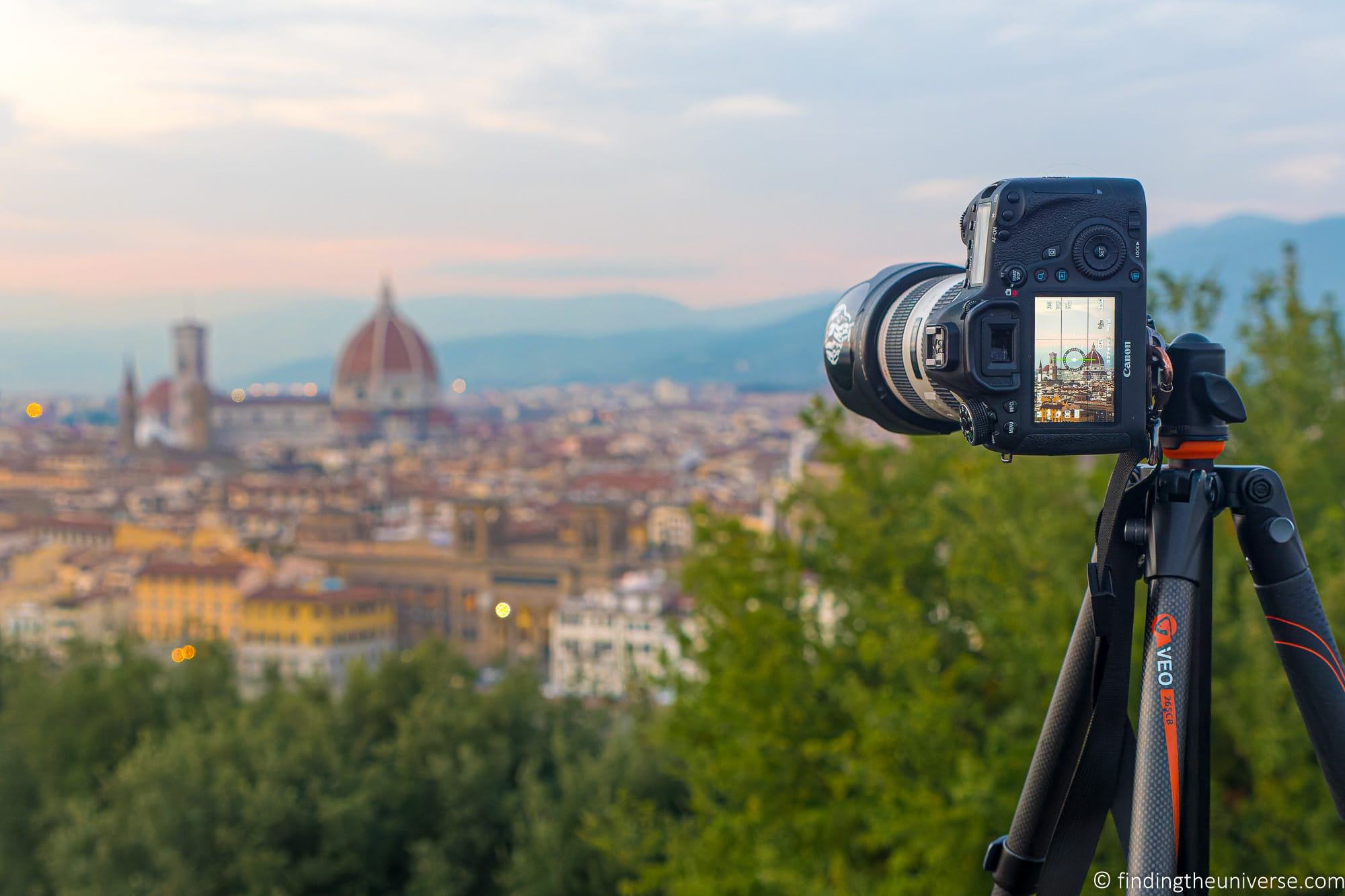
Different travel styles demand different camera capabilities. Understanding your primary photography goals helps identify the best Canon camera for travel that perfectly matches your journey.
Street Photography in Bustling Cities: What Canon Camera Wins?
Urban explorers navigating crowded markets in Istanbul or vibrant neighborhoods in Tokyo need cameras that balance portability with rapid autofocus. The EOS R50 and EOS R10 excel here, offering compact dimensions that facilitate movement through tight spaces while sophisticated autofocus handles unpredictable subject motion. The APS-C sensor’s 1.6x crop factor effectively extends focal length, giving you extra reach for candid portraits without lens changes.
For maximum stealth, the PowerShot G7 X Mark III provides pocketable convenience with sufficient capability for most street photography scenarios. The fixed lens eliminates street-level dust exposure and lens change delays that might cause you to miss decisive moments.
Landscape Photography: Finding the Right Resolution for Your Travel Prints
Landscape photographers documenting national parks or coastal vistas need resolution, dynamic range, and color accuracy that enable beautiful prints. The EOS R7 delivers 32.5 megapixel APS-C resolution with excellent dynamic range in a portable package, while the EOS R5’s 45 megapixel full-frame sensor provides maximum detail for large-output applications.
Both cameras benefit from Canon’s expanding RF lens lineup, including compact wide-angle primes perfect for travel. The weather sealing on full-frame R-series cameras provides confidence when working in challenging environmental conditions common to landscape photography destinations.
Nighttime Travel Photography: Why Sensor Size Matters Most
Travel photographers documenting evening urban scenes or indoor cultural events benefit most from full-frame sensor technology. The EOS R6 Mark II excels in low-light through its 24.2 megapixel full-frame sensor and advanced image processing, with usable image quality extending to remarkably high ISO settings. The combination of sensor size advantage and in-body stabilization enables handheld night photography that would otherwise require tripods—preserving spontaneity during evening exploration.
Critical Travel Camera Specs You Can’t Afford to Ignore
Understanding which specifications directly impact travel photography helps prioritize features when selecting your camera.
Weight Realities: How Much Camera Can You Comfortably Carry All Day?

Camera weight directly impacts travel comfort during long shooting days. Consider these categories:
- Ultra-Lightweight (<400g): EOS R50 (375g) and PowerShot G7 X Mark III (400g) minimize burden for extensive hiking
- Lightweight (400-500g): EOS R10 (400g) and PowerShot SX740 HS (450g) offer enhanced features with modest weight
- Mid-Weight (500-700g): EOS R7 (515g) and EOS R6 Mark II (680g) deliver pro capability with manageable travel weight
Pro Tip: Add 200-400g for your primary lens when calculating total carry weight—this often doubles your camera body weight.
Sensor Size Showdown: Full-Frame vs. APS-C vs. 1-inch for Travel
- Full-Frame (EOS R6 Mark II, EOS R5): Superior low-light performance and dynamic range, ideal for challenging lighting
- APS-C (EOS R50, R10, R7): Favorable balance between image quality and compact dimensions, with 1.6x crop extending telephoto reach
- 1-inch (PowerShot G7 X Mark III, SX740 HS): Pocketable designs with meaningful quality improvements over smartphones
Choose full-frame for maximum image quality when weight isn’t critical, APS-C for the best balance, or 1-inch for absolute portability.
Final Recommendations: The Best Canon Travel Camera for YOUR Needs
Selecting the best Canon camera for travel ultimately depends on your specific priorities:
- Maximum portability: PowerShot G7 X Mark III ensures constant camera availability without sacrificing quality
- Best APS-C balance: EOS R7 delivers high resolution and advanced video in a travel-friendly package
- Best full-frame quality: EOS R6 Mark II provides exceptional low-light performance for demanding conditions
- Maximum zoom reach: PowerShot SX740 HS captures distant subjects without lens changes
Remember: The perfect travel camera is the one you’ll actually carry and use throughout your journey. Consider your typical travel style, primary photography subjects, and willingness to manage additional gear before making your selection. Canon’s comprehensive lineup ensures you can find equipment precisely matched to your requirements—whether prioritizing minimum weight, maximum quality, specialized features, or budget constraints. Your next adventure deserves the right tool, not just the fanciest spec sheet.