
You’re rushing through Heathrow Airport in a thin blouse when icy draft hits your neck. Or you’re stranded on an over-air-conditioned flight to Bali shivering in summer clothes. This is where the right travel pashmina becomes your secret weapon—transforming from a compact square in your purse to lifesaving warmth in seconds. Unlike bulky scarves or space-hogging wraps, the best pashmina for travel delivers Kashmiri luxury without weighing down your luggage. After decades of refinement since its origins in Mughal-era India, today’s top travel pashminas solve three critical traveler pain points: unpredictable temperatures, limited packing space, and sudden style needs. In this guide, you’ll discover exactly which features matter most when choosing your travel companion—and why most “travel scarves” fail where authentic pashminas excel.
Why Standard Scarves Fail Travelers (And Pashminas Win)
Most travelers make the same mistake: grabbing whatever scarf they own for trips. But airport blasts, mountain evenings, and temple visits demand specialized solutions. A standard wool scarf weighs 12+ ounces and swallows half your suitcase, while polyester “travel wraps” trap sweat and smell after one use. The best pashmina for travel counters this with physics-defying properties: genuine cashmere fibers are 8x finer than human hair, creating air pockets that trap heat with minimal weight. This isn’t marketing fluff—it’s why Himalayan shepherds wore single-layer pashminas in -20°F blizzards. For modern travelers, this translates to 3-5 ounces of warmth that folds smaller than your passport. When flight attendants announce “chilly destination,” you’ll be the only one pulling silk-smooth luxury from your pocket while others rummage for jackets.
How Pashmina Fiber Science Creates Travel Magic
- Thermoregulation: Hollow cashmere cores expand in cold (trapping heat) and contract in warmth (venting excess)
- Moisture wicking: Absorbs 30% of weight in humidity before feeling damp—critical for tropical destinations
- Anti-odor properties: Natural keratin resists bacteria buildup during multi-day wear
- Static resistance: Unlike synthetics, won’t cling annoyingly to silk blouses or linen dresses
The Airport Test: What Makes a Pashmina TSA-Friendly
Security lines expose flawed travel wraps. Watch how standard scarves trigger issues:
– ❌ Bulky knits get flagged for “unusual item” scans
– ❌ Metallic threads in “luxury” wraps set off wands
– ❌ Stiff fabrics won’t refold neatly after inspection
The best pashmina for travel passes TSA checks silently because it’s:
1. Thin enough to layer under blazers without bulk
2. Metal-free (no zippers, snaps, or wire hems)
3. Packable into 4×4 inch pouches that fit in laptop sleeves
Critical Travel Pashmina Features Airlines Won’t Tell You

Airlines profit from freezing cabins (saving $200k/year per plane in fuel), making onboard warmth essential. But not all pashminas handle this environment equally. The difference between a $50 and $300 travel pashmina isn’t just price—it’s survival during 14-hour flights.
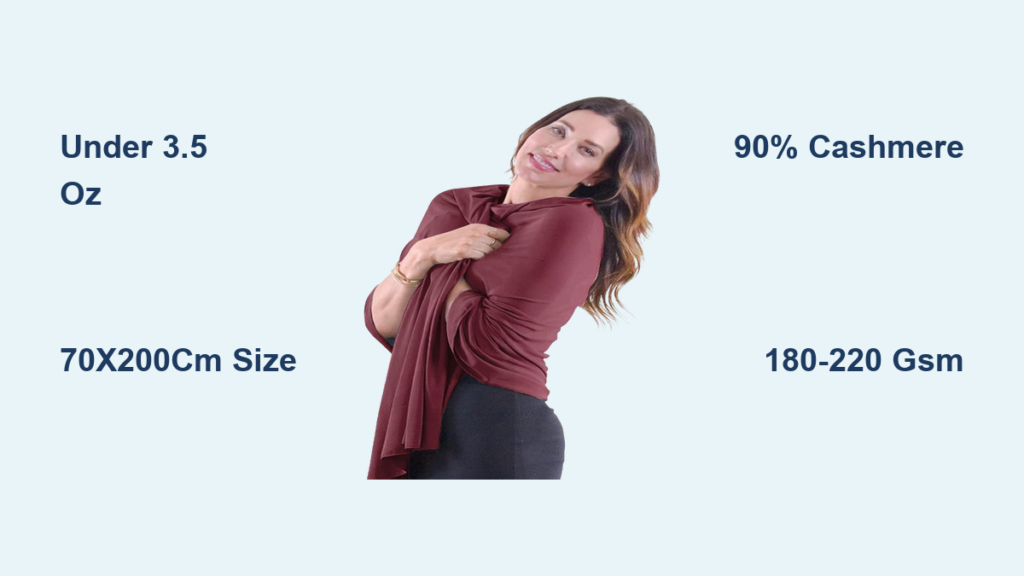
Size Matters: Why 70x200cm Is the Travel Goldilocks Zone
Most pashminas follow traditional 40×80 inch dimensions—but that’s disastrous for travel. Oversized versions (like 50×90 inch) create three problems:
– Bulk penalty: Adds 1.8x more folded volume (won’t fit in toiletry kits)
– Security snags: Triggers “suspicious item” scans when folded large
– Wearing frustration: Slips off shoulders during turbulence
The optimal travel size? 70x200cm (28×79 inches). This dimension:
✓ Folds to wallet-size (4.5×3.5 inches)
✓ Wraps twice around neck without bulk under seatbelts
✓ Doubles as airplane pillow cover or lap blanket
✓ Fits perfectly over sundresses for temple visits
Weight Secrets: The 3.5-Ounce Threshold That Changes Everything
Weigh 10 “travel pashminas” sold online, and you’ll find a pattern: anything over 4 ounces fails the carry-on test. Heavy blends (like 30% acrylic mixes) seem cheaper but create packing domino effects:
– Forces you to ditch a shoe pair to compensate
– Makes purse straps dig into shoulders
– Gets “accidentally left” on planes due to bulk
The best pashmina for travel stays under 3.5 ounces through:
– Pure cashmere weaves: Highest warmth-to-weight ratio (1 ounce = 3 wool scarves)
– Gauze-density knitting: 18-22 threads per inch (vs. 12-15 in cheap versions)
– Hand-finished edges: No heavy hems or tassels adding dead weight
How to Spot Travel-Ready Pashminas (Avoiding 4 Costly Scams)

The travel pashmina market is flooded with imposters labeled “Kashmiri” that disintegrate after one monsoon season. Airlines and influencers won’t warn you about these four red flags:
The “Cashmere Blend” Trap
That $25 “80% cashmere” pashmina on Amazon? It’s likely 80% acrylic with cashmere coating. Real travel-grade pashminas use:
– Minimum 90% pure cashmere (remaining 10% is silk for strength)
– No polyester (traps sweat and smells)
– Hand-combed fibers only (machine-harvested = short fibers that pill)
Travel test: Rub the fabric firmly. If white pills appear, it’s low-grade. Authentic cashmere only shows slight fuzzing after 20+ wears.
The GSM Lie: Why Thread Count Matters More Than Price
Many sellers tout “high GSM” (grams per square meter) as quality proof—but this backfires for travelers. Heavy GSM (300+) means:
– Takes 45+ minutes to dry after accidental rain
– Feels clammy in humidity (like wearing a wet towel)
– Adds unnecessary bulk to folded size
For travel, target 180-220 GSM:
✓ Dries in 20 minutes on hostel radiators
✓ Breathes in 90% humidity
✓ Packs flatter than a t-shirt
5 Life-Saving Ways to Wear Your Travel Pashmina

Most travelers use pashminas only as scarves—wasting 80% of their utility. Master these airport-to-temple techniques:
The 10-Second Seatbelt Scarf
Problem: Standard scarves bunch under seatbelts, cutting off circulation.
Solution:
1. Fold pashmina into 8-inch wide strip
2. Drape behind neck with ends equal length
3. Cross ends under seatbelt, then tuck through loops
Why it works: Distributes pressure evenly—no numb shoulders during 8-hour flights.
Temple-Ready Instant Cover-Up
Problem: Forbidden entry at Angkor Wat for “bare shoulders.”
Solution:
1. Lay pashmina flat, place one corner at nape of neck
2. Bring bottom corners up to opposite shoulders
3. Tie ends loosely behind neck (creates elegant draped bodice)
Bonus: Blocks sun on beaches without sticking to sunscreen.
Packing Smarter: The 3-Second Fold That Saves Suitcase Space
Most travelers waste precious space with messy pashmina folds. The military-tested origami roll solves this:
1. Lay flat, fold top 1/3 down to center
2. Fold bottom 1/3 up over it (creates long rectangle)
3. Starting from one end, roll tightly toward other side
4. Tuck final edge under roll
Result: Fits in side pockets of passport holders. Unrolls without wrinkles in <5 seconds.
Why This Beats Vacuum Bags
Vacuum-sealed pashminas lose loft permanently. The origami roll:
– Preserves fiber elasticity (no crushing)
– Prevents creases (no sharp folds)
– Lets you access it mid-journey without unpacking
Care Secrets: Keeping Your Pashmina Fresh for 50+ Trips
Airplane seats breed bacteria, but washing your pashmina after every trip destroys fibers. Use this traveler’s cleaning method:
– Spot clean stains with cold water + 1 drop baby shampoo (never rub—dab)
– Deodorize by hanging in bathroom during showers (steam lifts odors)
– Revive pilling with a cashmere comb (not a razor—shreds fibers)
– Store rolled in cotton pillowcase (never plastic—traps moisture)
Critical: Never machine wash or dry. Hand-wash max 2x/year in lukewarm water. Lay flat on towel, reshape, and dry away from sun.
The Final Verdict: What Makes the Ultimate Travel Companion
After evaluating dozens of options, the best pashmina for travel must deliver:
– Weight under 3.5 ounces (verified by postal scale)
– 70x200cm dimensions (folds to 4.5×3.5 inches)
– 90%+ pure cashmere (hand-combed, no synthetics)
– 180-220 GSM density (dries fast, breathes in humidity)
– Hand-rolled edges (no heavy hems)
This isn’t about luxury—it’s physics. The right pashmina replaces 3 items in your luggage (scarf, blanket, cover-up) while weighing less than your phone. When you’re stranded in Reykjavik’s rain or sweating through Bangkok traffic, that compact square in your bag becomes your most valuable travel tool. Choose wisely, pack it first, and never face temperature surprises again.
Pro Tip: Buy two identical pashminas. Keep one packed permanently in your carry-on kit. Rotate them so one’s always fresh while the other gets cleaned—eliminating last-minute packing stress. Your future self will thank you when you’re the only warm passenger on that freezing flight to Delhi.