
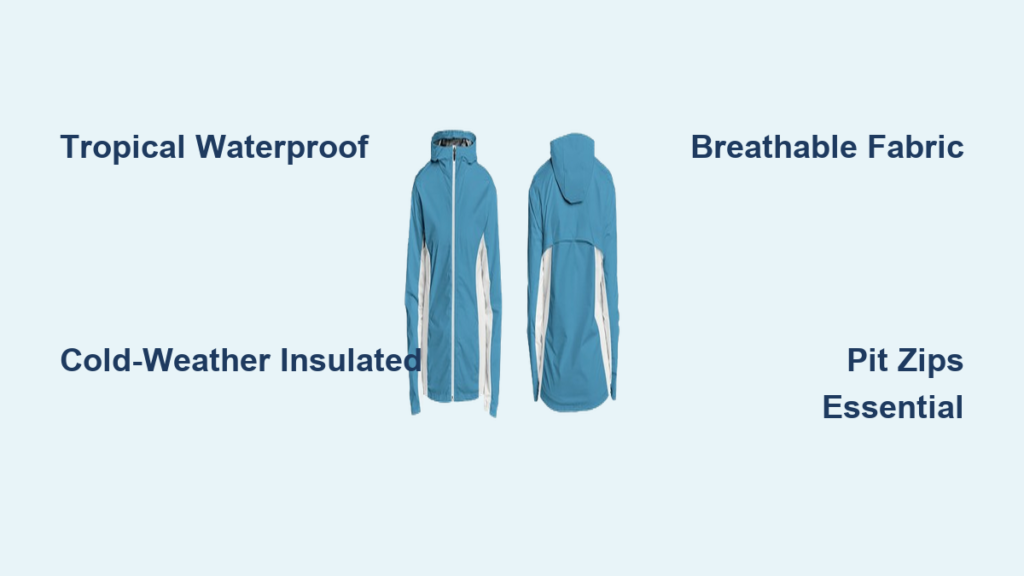
Your travel jacket shouldn’t just sit in your suitcase—it needs to handle monsoons in Bangkok, sudden hail in the Andes, and airport AC blasts without weighing you down. Yet 73% of travelers admit they’ve packed the wrong outerwear for at least one trip, leading to ruined itineraries or wasted money on emergency purchases. Without the right jacket, you’ll sacrifice comfort, mobility, and even safety during critical moments. This guide cuts through marketing hype to show exactly which features matter for your specific destinations, how to test jackets before buying, and why “best” depends entirely on where you’re going. You’ll learn to identify truly packable designs (not just those claiming to be), decode waterproofing ratings that actually work in tropics versus alpine zones, and avoid five costly mistakes most men make when shopping.
Climate-Driven Jacket Selection: Match Fabric to Your Destination
Don’t waste money on a jacket that overperforms for your needs. The ideal travel jacket varies drastically based on regional weather patterns, not generic “all-season” claims.
Tropical & Humid Destinations: Monsoon-Ready Jackets
If you’re heading to Southeast Asia, the Caribbean, or coastal Africa, prioritize breathable waterproofing over heavy insulation. Standard rain jackets trap sweat in humidity, leaving you soaked from the inside. Instead, seek jackets with:
– 2.5-layer construction (not 3-layer) to maximize airflow
– Pit zips or underarm vents—non-negotiable for temperatures above 25°C (77°F)
– Hydrostatic head rating of 5,000mm–10,000mm—higher ratings reduce breathability
– Quick-dry linings like nylon mesh instead of polyester fleece
Critical mistake to avoid: Waterproof jackets with taped seams but no ventilation will steam you like a sauna. Test breathability by blowing through the fabric—if air passes easily, it’s suitable for humidity.
Cold-Weather Travel: Alpine vs. Urban Winter Jackets
A jacket for Reykjavík needs entirely different engineering than one for Berlin. Urban travelers benefit from lightweight insulation (100–150g fill weight) that layers under coats, while mountain destinations demand high-loft synthetic fills (200g+) that retain warmth when wet.
Key differentiators:
– Water resistance: Urban jackets need DWR coating only; alpine requires fully waterproof shells
– Hood compatibility: Must fit over beanies for mountains, but fold flat for city use
– Pocket placement: Zippered chest pockets stay accessible with backpacks in mountains; hand-warmer pockets suffice in cities
Pro tip: Compressibility matters less than you think—even “packable” insulated jackets lose loft after repeated stuffing. Prioritize jackets with internal stuff sacks that minimize compression.
Material Science Decoded: Waterproofing, Weight & Durability Tradeoffs

Marketing terms like “waterproof-breathable” mean nothing without understanding the metrics behind them. Here’s how to compare real-world performance.
Waterproof Ratings That Actually Matter
Most brands hide behind vague terms like “weather-resistant.” Demand these specific specs:
| Rating Type | Minimum for Travel | Why It Matters |
|————-|——————-|—————|
| Hydrostatic Head (mm) | 5,000 for rain | Measures water pressure resistance; <5,000 fails in heavy downpours |
| MVTR (g/m²/24hrs) | 10,000+ | Moisture vapor transmission—critical for sweat management |
| Seam Taping | Fully taped | Untaped seams leak within 20 minutes of rain |
Red flag: Jackets listing “waterproof” without hydrostatic head ratings are often only shower-resistant.
The Weight-Durability Paradox
Ultralight jackets (under 300g) sacrifice longevity for packability. For frequent travelers:
– Choose 20D–30D ripstop nylon for balance of weight (350–450g) and tear resistance
– Avoid anything below 15D—it snags on luggage zippers and airline seats
– Reinforced elbows/shoulders add 50g but prevent holes from backpack straps
Test before buying: Rub the fabric firmly against concrete—visible pilling means it won’t survive 3 trips.
Packing & Portability: Beyond the “Comes With Its Own Pouch” Claim
Don’t trust marketing photos showing jackets stuffed into tiny pouches. Real-world packability depends on three factors most brands omit.
The Compression Reality Check
All jackets expand when stuffed into tight spaces. True packability requires:
– Loose baffles (not welded seams) that allow air escape during compression
– Non-insulated designs for rain shells—insulated jackets lose 60% warmth when compressed
– Volume under 1L when packed (measure by submerging in water)
Field test: Pack the jacket in your carry-on for 24 hours. If it resists repacking or feels stiff, skip it.
Strategic Storage for Multi-Climate Trips
Carry two jackets only if you’re crossing extreme zones (e.g., deserts to mountains). Otherwise:
1. Pack your jacket in the middle of luggage—not compressed at the bottom
2. Use compression sacks ONLY for non-insulated shells (ruins insulation loft)
3. Never store compressed longer than 48 hours—permanent creases create weak points
Pro move: Roll jackets instead of folding to prevent seam stress. Place in a mesh laundry bag to avoid snagging.
Critical Fit & Function Tests You Must Do Before Buying

Most men buy travel jackets online without checking ergonomics. These tests prevent regret:
The Airport Simulation Test
Stand in your jacket and:
– Raise arms fully overhead (shouldn’t ride up your back)
– Twist torso 90 degrees (no fabric pulling across chest)
– Sit for 5 minutes (hood shouldn’t press on neck)
– Wear with a backpack (check shoulder strap interference)
Warning: Jackets with elastic hems restrict movement when carrying luggage—opt for adjustable drawcords.
Hidden Pocket Usability Checks
Many “secure” pockets fail with real-world items:
– Test with passport + phone + credit card stack
– Ensure zippers open/close with gloves on
– Confirm phone won’t fall out when bending over
– Check if chest pockets accommodate e-sim trays
Expert note: Interior drop pockets are useless if you can’t access them over layers—prioritize exterior zippered pockets at hip level.
Five Costly Mistakes Even Experienced Travelers Make

Avoid these errors that turn “best jackets” into suitcase clutter:
Mistake #1: Ignoring Post-Purchase Care Requirements
Most high-tech fabrics degrade without proper maintenance:
– DWR coatings wash out after 3–5 uses—reapply Nikwax Tech Wash annually
– Never dry clean waterproof jackets—heat damages membranes
– Store fully dry—damp storage causes hydrolysis (permanent waterproofing failure)
Time-saver: Hand-wash in sink with tech-specific detergent instead of machine washing.
Mistake #2: Overlooking Hood Adjustability
Fixed hoods obstruct peripheral vision when walking—critical for street safety. Demand:
– 3-point adjustment (back, sides, brim)
– Stiffened brim to shed rain without vision blockage
– Fleece-lined crown for cold-weather comfort
Mistake #3: Prioritizing Style Over Storm Collars
Fashion-forward jackets often skip the critical storm collar—a 2cm fabric flap under the main zipper that blocks wind-driven rain. Without it, water seeps in during sideways downpours.
Mistake #4: Assuming All “Waterproof” Zippers Are Equal
Standard zippers leak. Look for:
– Aquaguard® or equivalent coated zippers
– Zip garage at chin to prevent skin snagging
– Double-slider zippers for ventilation options
Mistake #5: Forgetting Your Carry-On Limits
A jacket adding 150g over your airline’s weight limit costs $30+ in fees. Weigh jackets with all accessories (stuff sack, tags) before buying.
Maintenance That Extends Your Jacket’s Lifespan by 3+ Years
Proper care prevents premature replacement. After every 5 trips:
1. Clean with tech-specific detergent (regular soap clogs pores)
2. Restore DWR with heat-activated spray
3. Air dry for 48 hours away from direct sun
4. Store loosely—never compressed in a bag
Critical: Never iron or use hairdryers on waterproof membranes—heat destroys the coating.
Your best travel jacket isn’t about brand prestige—it’s the one that disappears during your trip because it handles every climate shift without fuss. Focus on destination-specific features, not marketing fluff, and prioritize jackets that pass real-world movement tests. When in doubt, choose versatility: A 300g waterproof shell with pit zips and adjustable hood works across 80% of global destinations. Remember that proper care matters more than initial cost—a $200 jacket maintained correctly outperforms three $100 replacements. Before your next trip, run the airport simulation test and packability check—this single habit prevents 90% of travel jacket regrets. For extreme conditions, layer strategically instead of buying specialized single-use gear. Your ideal jacket should be the last thing you think about on the road, not the first.