
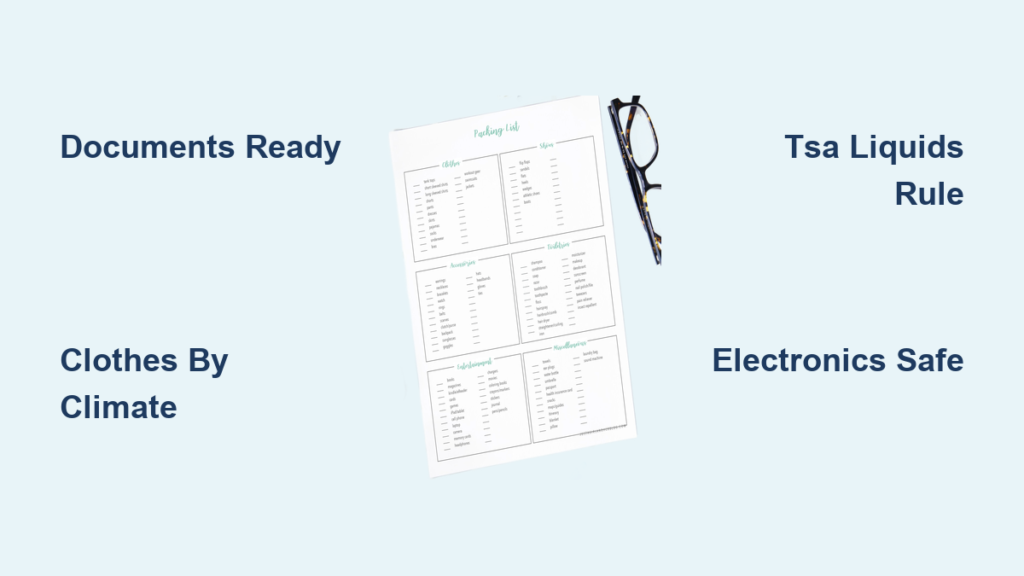
Packing for a trip shouldn’t feel like solving a puzzle every time you travel. Whether you’re heading to tropical beaches or snowy mountains, forgetting essentials can turn your dream vacation into a stressful scramble before you even reach the airport. That’s why we’ve created this ultimate travel packing checklist to prevent overpacking while ensuring you’re prepared for any scenario. Missing even one critical item can derail your entire journey—imagine arriving in Paris without your passport or hiking Machu Picchu without proper footwear.
After analyzing thousands of traveler pain points, we’ve distilled everything you need into a systematic approach that adapts to any destination. You’ll learn exactly what to pack for different climates, how to organize everything efficiently, and the critical items most travelers forget until it’s too late. Master these fundamentals once, and every future trip becomes effortless—no more 2 a.m. panic checks or costly airport store purchases.
Critical Travel Documents That Prevent Airport Disasters
Your trip starts and ends with proper documentation—missing even one required item can stop your journey before takeoff. Always verify your passport has 6+ months validity beyond your return date, as many countries enforce this strictly. Check visa requirements early since processing times vary significantly; some destinations require applications weeks in advance. If renting vehicles abroad, secure an international driving permit alongside your standard license.
Financial & Reservation Organization Strategy
Create a dedicated travel wallet containing these non-negotiables:
– Credit card notifications: Call banks to add travel dates and destinations
– Local currency: Order from your bank 1-2 weeks pre-departure for better rates
– Reservation printouts: Flight, hotel, car rental, and tour confirmations
– Insurance documentation: Policy numbers and 24/7 emergency contacts
Make three copies of all documents: store one physically separate from originals, upload another to secure cloud storage, and leave a third with a trusted contact. This simple step prevents total disaster if your bag gets lost or stolen mid-journey.
Pack Climate-Specific Clothing Without Overpacking

Packing the right clothes determines your comfort level while avoiding baggage fees. The universal principle is to leave 10-15% luggage space for souvenirs—this single habit prevents overweight return fees. For warm destinations above 75°F (24°C), focus on quick-dry fabrics and sun protection with 5-7 short-sleeve shirts, 3-4 pairs of shorts, and 2 lightweight pants for cultural sites. Always pack two swimsuits to allow rotation drying time.
Cold Weather Layering System That Actually Works
When temperatures drop below 60°F (15°C), use this three-layer approach:
– Base layer: 3-4 merino wool or synthetic thermal sets (moisture-wicking is critical)
– Insulating layer: 2 fleece or down sweaters (packable options save space)
– Outer shell: Waterproof, breathable jacket with wind resistance
Don’t forget extremities: pack 2 pairs of thermal socks per day, waterproof gloves, and both a warm hat plus sun hat for UV protection. This system keeps you comfortable while minimizing bulk compared to bulky single-layer alternatives.
TSA-Compliant Toiletries: Pass Security Without Dumping Liquids
:max_bytes(150000):strip_icc()/Liquids-in-carry-on-468595-v2-334131c6ffdf498f9503f6e0480f6efe.png)
Navigating airport security with toiletries requires strategic downsizing. The 3-1-1 rule is non-negotiable: all liquids must be 3.4 ounces (100ml) or smaller, fit in one quart-sized clear bag, and each passenger gets one bag. Create a permanent travel kit with these essentials: 2-in-1 shampoo/conditioner, face wash with SPF 30+, travel toothpaste, and reef-safe sunscreen for beach trips.
Prescription Medication Protocol You Must Follow
Critical steps to avoid confiscation:
– Keep medications in original pharmacy containers
– Bring 20% extra supply for unexpected delays
– Pack all prescriptions in your carry-on (checked bags face temperature extremes)
– Carry digital copies of prescriptions on your phone
– Include basic first aid items: pain relievers, antihistamines, and motion sickness tablets
Never assume your hotel will provide forgotten essentials—antihistamines or prescription meds often require pharmacy visits that eat into precious vacation time.
Organize Travel Electronics Without Tangled Cables
Modern travel demands careful tech planning to stay connected without overpacking. A universal power adapter with USB ports is non-negotiable—research destination electrical standards (voltage/plug types) before departure. Pack your smartphone with an international plan or local SIM card, plus a 10,000-20,000 mAh power bank that meets airline safety standards.
Security & Organization Hacks
- Waterproof electronics organizer: Prevents liquid spills from ruining devices
- Offline preparation: Download maps, entertainment, and documents before travel
- Critical backup: Store digital copies of passports and itineraries in cloud storage
- Cable management: Use labeled cord organizers to avoid the “charger jungle”
Never check lithium batteries—they must stay in carry-ons due to fire risks in cargo holds. This single rule has saved countless travelers from having their devices confiscated.
Luggage Organization Systems That Maximize Space and Minimize Wrinkles
Efficient packing isn’t about cramming—it’s creating a repeatable system. Choose your method based on trip type: rolling works best for casual clothes (maximizing space), while folding preserves dress shirts. Packing cubes revolutionize organization—dedicate separate cubes for underwear, tops, and bottoms to find items instantly.
Weight Distribution Strategy
- Rolling luggage: Place heaviest items (shoes, toiletry kit) near wheels
- Backpacks: Center weight between shoulder blades for balanced carrying
- Dead space utilization: Stuff socks inside shoes and small items in shoe cavities
- Carry-on essentials: Always include medications, one outfit change, and valuables
This system prevents the “suitcase avalanche” when opening your bag—every item has a designated spot, saving precious time during hotel check-ins.
72-Hour Pre-Departure Checklist to Avoid Last-Minute Panic
Avoid pre-trip stress with this systematic countdown. 72 hours out, check weather forecasts to adjust clothing selections and verify passport/visa requirements. Notify banks of travel dates to prevent fraud blocks on credit cards, and confirm your airline’s specific baggage restrictions—some budget carriers have shockingly low weight limits.
Day-Before Verification Steps
- Weigh luggage 24 hours pre-departure to avoid $100+ overweight fees
- Charge all devices to 100% and pack backup power solutions
- Complete online check-in to secure preferred seats
- Print/download boarding passes to mobile wallet
- Confirm airport transportation (ride-share or parking reservations)
Skipping these steps causes 68% of last-minute travel panics—most are preventable with this simple verification process.
Prohibited Items That Cause Security Delays (And How to Avoid Them)
Understanding restrictions prevents costly mistakes and security line nightmares. Lithium batteries must stay in carry-ons—never pack them in checked luggage due to fire risks. Avoid packing sharp objects (scissors, knives) in carry-ons; place them in checked bags instead. Flammable items like aerosol cans beyond travel-sized toiletries get confiscated immediately.
Cultural & Destination Research Essentials
- Dress codes: Pack modest clothing (covered shoulders/knees) for religious sites
- Medication checks: Some countries ban common prescriptions—verify beforehand
- Electrical standards: Research voltage/plug types to avoid fried devices
- Local customs: Understand gift-giving norms for homestays or business meetings
This research takes just 15 minutes but prevents embarrassing or illegal situations that could ruin your trip.
Post-Trip Packing Tips: Bring Home Souvenirs Without Overweight Fees
Smart packing continues after your adventure ends. Leave 15% luggage space from day one for souvenirs—this simple habit avoids $200+ overweight fees on return flights. Use collapsible packing cubes or compression bags specifically for new purchases, keeping them separate from your original packing system.
Souvenir Strategy That Actually Works
- Declare food items at customs to avoid confiscation
- Keep duty-free receipts for customs declarations
- Pack dirty laundry in separate compression bags
- Cover shoe soles with shower caps to protect clean clothes
Between trips, maintain your system: refill travel toiletries immediately, store universal adapters in your carry-on permanently, and update your master packing list based on what you actually used. This transforms packing from a chore into a seamless pre-trip ritual.
Master these travel packing checklist fundamentals once, and every future journey becomes stress-free. The key is treating packing as a personalized system—build your checklist from these climate-specific, regulation-compliant foundations, then refine it for your unique travel style. Remember: the perfect bag contains exactly what you need and nothing you don’t. Start using this checklist on your next trip, and you’ll never face airport panic again.