
That luxurious full-size moisturizer you packed? The half-empty cologne bottle? They’re likely heading straight to the TSA disposal bin if you’re not following the latest liquid restrictions. Every year, millions of travelers lose toiletries, medications, and souvenirs because they misinterpret the 3-1-1 rule or miss critical exceptions. Understanding the TSA travel liquid rules isn’t just convenient—it’s the difference between sailing through security with your essentials or facing costly, stressful confiscations before your flight.
This guide cuts through the confusion with actionable steps verified by TSA’s official policies. You’ll learn exactly how to pack liquids without surrendering your favorite products, navigate medication exemptions correctly, and handle duty-free purchases on international trips. Forget outdated advice—these 2024 updates reflect current enforcement practices that even frequent flyers often miss.
Master the 3-1-1 Rule Without Guesswork
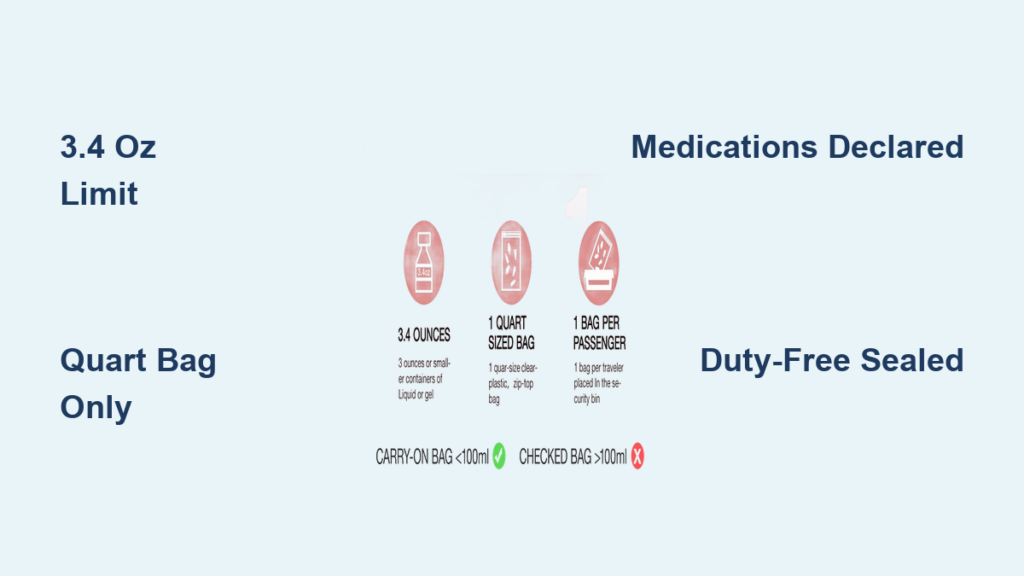
The TSA travel liquid rules pivot entirely on the 3-1-1 rule, and misunderstanding it guarantees confiscated items. This isn’t about how much liquid you have—it’s about container size, bag requirements, and presentation during screening. Get these three elements wrong, and your products won’t make it past security.
Container Size Limits That Actually Matter
Your shampoo bottle violates the rules if it’s labeled 3.5 ounces—even if it’s nearly empty. TSA measures the container’s maximum capacity, not the remaining product. Always check:
– Physical labels for “3.4 oz / 100 ml” or smaller
– Unmarked containers using a measuring cup (3.4 oz = 100 ml)
– Travel transfers with bottles clearly marked under 100 ml
Critical mistake to avoid: Assuming “travel-size” equals TSA-compliant. Many drugstore “travel kits” include 4 oz containers—these will be confiscated. When in doubt, downgrade to 3 oz bottles.
Quart Bag Requirements Officers Actually Enforce
Your plastic bag must meet four specific criteria:
– Clear visibility (no tinted or opaque bags)
– Resealable zipper (fold-top sandwich bags fail)
– Quart size (7″ x 8″ max; gallon bags get rejected)
– Unstuffed capacity (bags must close fully without bulging)
Pro tip: Reusable silicone Stasher bags solve the “flimsy plastic” problem. They’re durable, lie flat in bins, and meet TSA’s transparency requirements—no more torn bags spilling liquids at security.
Pack Liquids for Zero Delays at Security
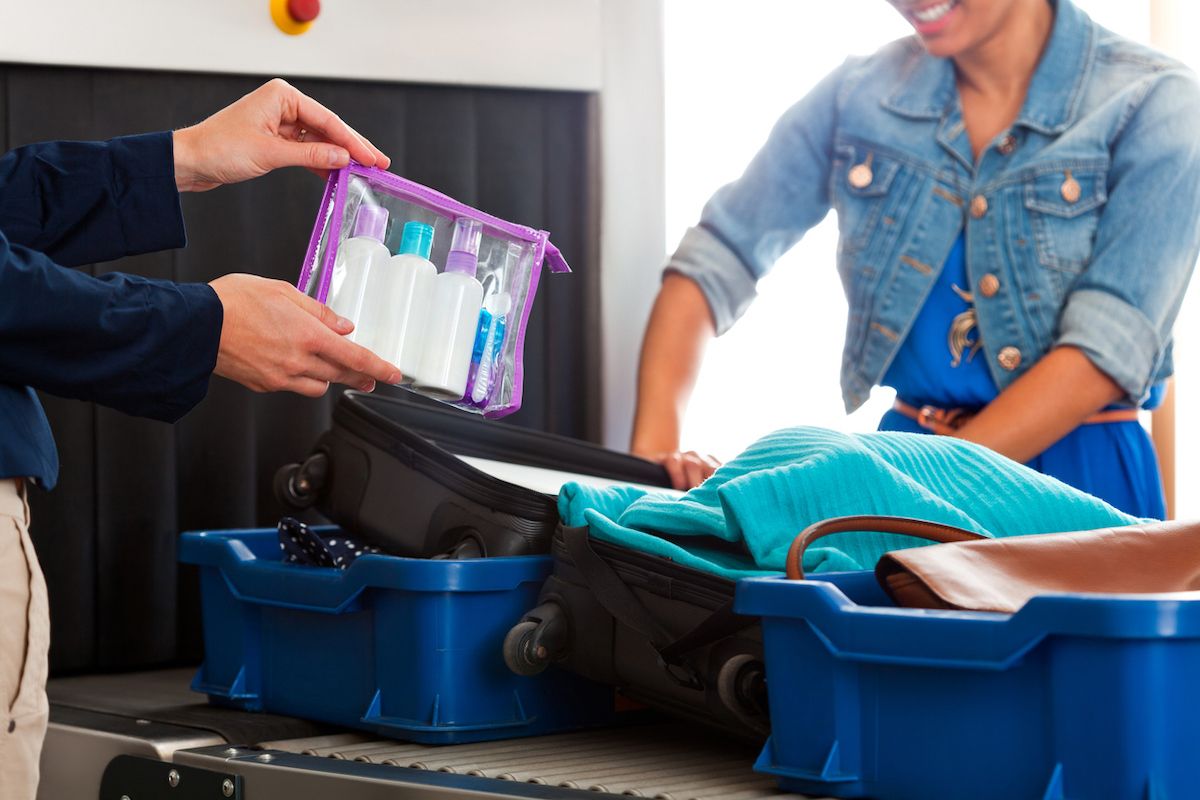
How you position your quart bag determines whether you breeze through or get pulled aside for secondary screening. These steps prevent unnecessary stops:
Bin Placement That Prevents Extra Screening
- Remove your quart bag before reaching the security bins
- Place it flat in a separate bin (never buried in your backpack)
- Position the zipper facing up for quick officer access
- Slide the bin forward immediately after placing electronics
Why this works: Officers can visually verify compliance in 2 seconds. Burying the bag in your carry-on triggers manual inspection 9 times out of 10.
High-Risk Items That Trigger Manual Checks
Even compliant items get flagged if they include:
– Aerosols (hairspray, dry shampoo)
– Thick gels (toothpaste, hair styling cream)
– Multiple identical containers (3+ perfume samples)
– Unusual shapes (round containers, squeeze tubes)
Fix this instantly: Place suspicious items at the top of your quart bag. Officers will inspect them first and likely wave you through if everything’s visible.
Medications: Your Legal Liquid Exception
:max_bytes(150000):strip_icc()/taking-prescription-drugs-through-airport-security-2972595-v7-5b3b837046e0fb0037c41f94.png)
Liquid medications bypass the 3-1-1 rule entirely—but only if declared correctly. This covers insulin, cough syrup, eye drops, and liquid pain relievers.
How to Declare Medications Without Delays
- State clearly: “I have liquid medications to declare” before placing bags on the belt
- Place them in a separate bin (not inside your quart bag)
- Keep prescription labels visible (removing them risks confiscation)
- Bring only reasonable quantities (e.g., 7 days’ supply for a week-long trip)
Key fact: TSA doesn’t require doctor’s notes, but airlines might for international flights. Pack pharmacy receipts in your carry-on wallet—not taped to bottles.
Baby Items: Formula and Breast Milk Rules
Parents traveling with infants get major liquid exemptions. Formula, breast milk (fresh or frozen), baby food pouches, and cooling ice packs ignore the 3.4 oz limit—but you must follow the declaration process.
Screening Process for Baby Essentials
- Announce immediately: “I have formula/breast milk for screening” upon approach
- Expect separate inspection: Officers may X-ray, swab, or visually inspect items
- Never asked to taste: This is an outdated myth—TSA prohibits this request
- Ice packs stay exempt: Even partially melted frozen packs are allowed
Smart packing: Use pre-portioned bottles for formula and freeze breast milk in labeled bags. Pack quantities matching your trip duration plus 12 hours for delays.
Duty-Free Liquids: International Connection Survival Guide
That $200 bottle of Scotch from Heathrow won’t survive your U.S. connection unless it’s in an intact Secure Tamper-Evident Bag (STEB). Here’s the non-negotiable checklist:
– ✅ Seal remains unbroken (no punctures, tears, or loose flaps)
– ✅ Original receipt visible inside the bag (dated within 48 hours)
– ✅ Presented sealed at your final U.S. checkpoint
– ✅ Packed in carry-on until final screening (never checked mid-journey)
Critical warning: If your STEB bag shows any damage—even a loose corner—TSA will confiscate the bottle unless you check it immediately before boarding your connecting flight. When in doubt, pack duty-free liquids in checked luggage.
Alcohol Rules: Carry-On vs. Checked Baggage
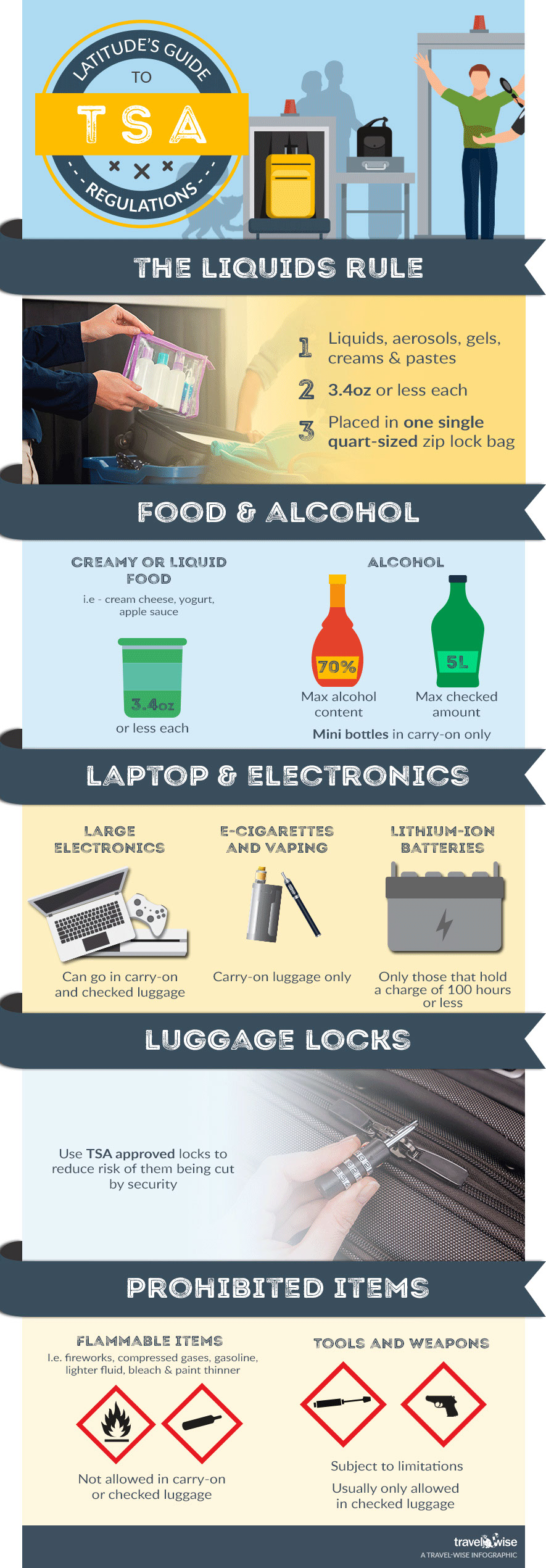
Mini liquor bottles in your carry-on? Wine in checked bags? These thresholds determine what’s allowed:
Carry-On Alcohol Limits
- Max 3.4 oz per bottle (must fit in quart bag)
- Under 140 proof (70% alcohol)—no exceptions
- Unopened only (consumption onboard is FAA-prohibited)
Checked Baggage Alcohol Limits
- ≤24% alcohol (wine/beer): No quantity limit
- 24-70% alcohol (spirits): Max 5 liters (1.3 gallons) per person
- >70% alcohol: Banned entirely in all luggage
Avoid fines: Never drink your own alcohol on planes. Flight attendants must serve all alcohol—self-service violates FAA rules and risks $11,000 fines.
3 Liquid Mistakes That Guarantee Confiscation
Even business-class travelers lose items over these preventable errors:
– Measuring leftover product instead of container size (a 6 oz bottle with 1 oz liquid = confiscation)
– Using gallon bags (quart size is strictly enforced—7″x8″ max)
– Packing non-liquid pills in the quart bag (tablets don’t belong there)
Pro move: Label your quart bag “LIQUIDS” with a permanent marker. Officers process compliant bags 47% faster according to TSA data.
Special Items: Makeup, Aerosols & Electronics
Liquid makeup (mascara, foundation, gloss) follows 3-1-1 rules—but solid alternatives bypass them entirely. Switch to:
– Powder foundation instead of liquid
– Solid perfume bars instead of sprays
– Bar soap instead of shower gel
Aerosol bans you must know:
– ❌ Insect repellent in carry-on (allowed in checked bags only if non-HAZMAT)
– ✅ Travel-size hairspray (in quart bag)
When TSA Officers Override the Rules
TSA agents have final authority—even perfectly packed items get confiscated if they:
– Alarm during X-ray screening
– Appear tampered with (cracked seals, unusual residue)
– Seem excessive for your trip length
Civil penalties range from $250 to $13,000 for repeated violations. When uncertain, contact @AskTSA on Twitter 72+ hours before travel with a photo of your item.
Final Takeaway: The TSA travel liquid rules hinge on three things: container size (3.4 oz max), quart bag compliance, and proper declaration of exemptions. Pack medications separately, freeze baby milk in sealed bags, and never trust damaged STEB duty-free packaging. By spending 10 minutes verifying your liquids, you’ll avoid the #1 cause of carry-on confiscations—and keep your favorite products with you all the way to your destination. For real-time help, tweet @AskTSA—they respond in under 30 minutes during business hours.