
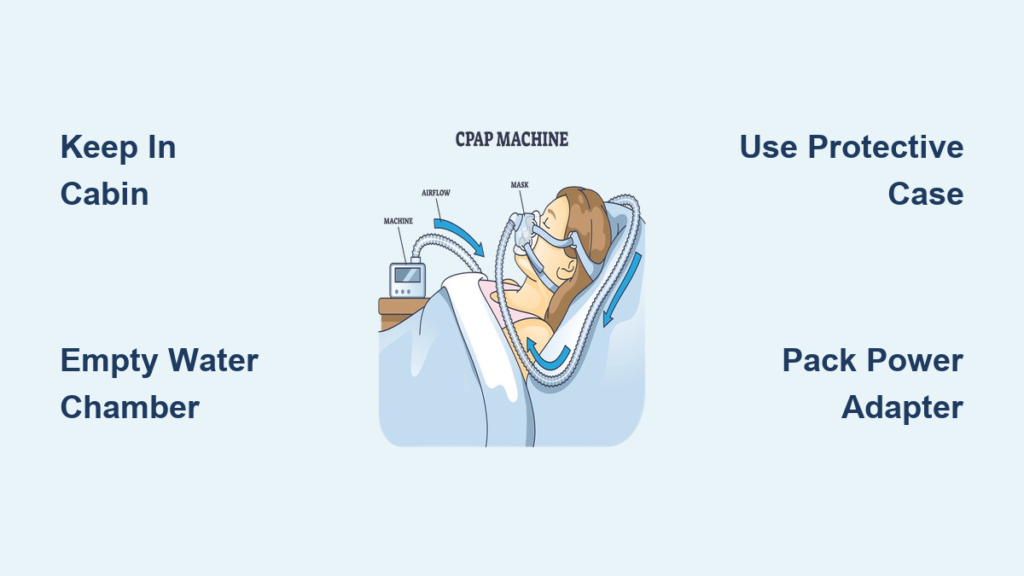
Navigating airport security with your CPAP machine doesn’t have to be stressful. Thousands of travelers successfully bring their sleep therapy equipment through TSA checkpoints every day, but those who haven’t mastered how to pack a CPAP for air travel often face unnecessary delays and anxiety. The key difference between smooth sailing and travel nightmares comes down to proper preparation—knowing exactly what to pack, how to organize it, and what to expect during security screening.
This guide cuts through the confusion with actionable steps based on current TSA regulations. You’ll discover the exact packing sequence that prevents damage, the security screening shortcuts that save time, and the critical mistakes that could derail your travel plans. Whether you’re a frequent flyer or taking your first trip with CPAP therapy, these proven strategies ensure you never compromise your sleep treatment while traveling.
TSA Rules That Determine Your Packing Strategy

Understanding these regulations before you start packing prevents last-minute scrambling at the airport. Your CPAP machine receives special consideration as medical equipment, but you must follow specific protocols to benefit from these allowances.
Why Your CPAP Must Ride in the Cabin
Never check your CPAP machine in luggage. While TSA technically permits CPAPs in checked baggage, your device faces significant risks including damage, loss, or theft. More critically, CPAP machines with lithium batteries—which includes most modern models—must travel in the cabin according to FAA regulations. This isn’t a recommendation; it’s a legal requirement that applies whether batteries are built-in or removable.
Pro tip: Carry your CPAP as a separate item. Airlines don’t count medical devices against your carry-on limit, so you can bring your regular luggage plus your CPAP case without penalty.
Security Screening: What Actually Happens
Your CPAP stays in its case during X-ray screening under standard TSA procedures. Unlike laptops and other electronics, PAP devices don’t require removal from their carrying cases for initial screening. However, be prepared for TSA officers to request removal for additional inspection—this happens randomly and doesn’t indicate suspicion about your device.
What to say at security: Simply state “This is my CPAP machine for sleep apnea treatment” when placing your bag on the belt. No doctor’s note is required for domestic flights, though having one can speed up international travel.
The Essential CPAP Travel Packing List
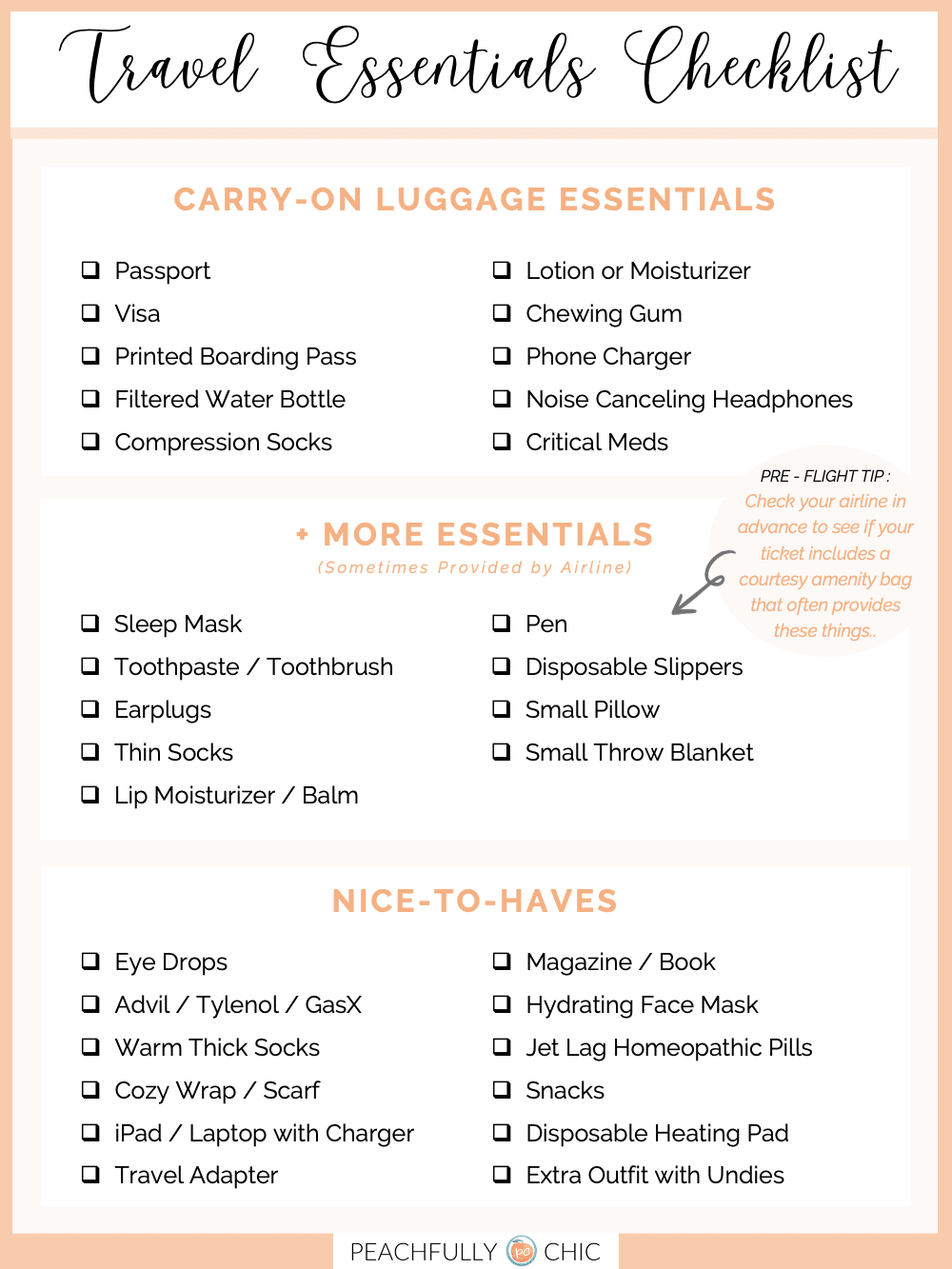
Packing efficiently means including only what’s necessary while ensuring you have critical backups. This exact list covers everything you need without adding unnecessary bulk to your carry-on.
Must-Have Core Components
- CPAP machine in its protective case (never loose in your bag)
- Mask and headgear (include a backup mask if possible)
- Tubing (standard 6-foot length works for travel)
- Power cord (verify compatibility with destination outlets)
- Filters (pack 2-3 extras—small but critical)
Critical Power Components
- Universal power adapter (for international trips)
- Spare battery if your model supports removable batteries
- Extension cord (hotel outlets are rarely conveniently located)
Liquid Strategy for Water Chambers
Empty your water chamber completely before packing. TSA allows empty CPAP humidifier chambers through security, but any liquid inside—even distilled water—must comply with 3-1-1 rules. Wait until after security to fill your chamber with purchased water, as you’re permitted to carry larger quantities of medically necessary liquids after screening.
Security Screening Process: Step-by-Step
Knowing exactly what happens during screening eliminates surprises and speeds up your checkpoint experience. These procedures apply to all travelers but offer special advantages if you qualify for TSA Precheck.
Standard Screening Protocol
Place your CPAP case directly on the X-ray belt without removing it from your carry-on bag. Under standard TSA procedures, your machine can remain inside its carrying case during initial screening. Mask components and tubing also stay packed inside the case.
Be prepared for random additional screening. TSA officers may swab your device for explosive residue or request visual inspection, which typically adds only 2-3 minutes to your screening time. Remain cooperative—resistance only prolongs the process.
TSA Precheck Traveler Advantages
Keep everything packed with Precheck status. Travelers with TSA Precheck enjoy significant benefits: your CPAP can remain in its case inside your carry-on throughout the entire screening process. This eliminates the most time-consuming aspect of standard screening—unpacking and repacking your device.
Precheck saves 5-10 minutes per screening. For frequent travelers, this adds up to hours of saved time annually while reducing stress and the risk of damaging your equipment during repeated unpacking.
International Travel: Critical Pre-Departure Checks
Crossing borders requires additional preparation beyond standard domestic travel protocols. These steps ensure smooth passage through foreign airports and customs checkpoints.
Voltage Compatibility Verification
Confirm your machine accepts 100-240V input before international travel. Most modern CPAPs automatically handle global voltage ranges, but verify this on your power adapter label. You’ll need plug adapters for different outlet shapes, but voltage converters are unnecessary and potentially damaging.
Never use voltage converters. These can damage your CPAP and void warranties. A simple plug adapter that matches your destination’s outlet type is sufficient for most modern machines.
Documentation for Smooth Customs Passage
Carry a doctor’s letter for international trips. While not required by TSA for domestic flights, many countries request documentation for medical devices. A simple letter stating “Patient requires CPAP machine for sleep apnea treatment” on letterhead with your doctor’s signature prevents delays.
Declare your CPAP at customs. Proactively mentioning your medical device avoids complications—most countries waive duties on personal medical equipment when properly declared.
Common CPAP Packing Mistakes That Cause Travel Delays
Learning from others’ errors prevents you from repeating costly mistakes that could disrupt your therapy and travel plans.
The Water Chamber Trap
Never pack your water chamber with liquid. Even small amounts of water violate TSA liquid restrictions and can leak during flight, damaging your machine. Empty the chamber completely before packing, then purchase distilled water after security. You’re permitted to carry medically necessary liquids in reasonable quantities once past the checkpoint.
Battery Mismanagement
Remove lithium batteries from checked luggage. Any CPAP with lithium batteries—whether built-in or removable—must travel in the cabin. This isn’t optional; it’s an FAA safety regulation. If your machine has a non-removable lithium battery, the entire device must stay in your carry-on.
Smart Packing Techniques for Damage Prevention

How you arrange your CPAP components in your case determines whether your equipment arrives intact and ready for immediate use.
Protective Case Requirements
Use the manufacturer’s carrying case whenever possible. These cases feature custom foam inserts designed specifically to protect your machine during travel. Generic electronics cases lack the precise fit needed to prevent internal movement that damages sensitive components.
Secure loose components with soft packing material. Place small items like filters and mask clips in separate padded compartments or wrap them in soft clothing to prevent rattling during transit.
Final Pre-Flight Checklist
Complete these critical steps 24 hours before departure to ensure a seamless travel experience with your CPAP.
24-Hour Verification Process
- Confirm your machine’s voltage compatibility for destination
- Empty and thoroughly dry your water chamber
- Pack 2-3 extra filters and mask components
- Verify your universal power adapter matches destination outlets
- Download your CPAP manufacturer’s mobile app for troubleshooting
Last-Minute Security Prep
Place your CPAP case in an easily accessible location in your carry-on. You’ll need to place it directly on the X-ray belt, so having it near the top of your bag saves time during screening. Keep power cords in external pockets for quick access if requested.
Your CPAP machine travels as essential medical equipment, not standard luggage. By following these specific packing protocols and understanding current TSA regulations, you transform potential travel stress into a seamless experience. Pack smart, know the rules, and enjoy restful sleep wherever your journey takes you—without compromising your vital sleep therapy. Remember, proper preparation turns what many consider a travel headache into just another part of your routine, ensuring you arrive at your destination well-rested and ready for adventure.