
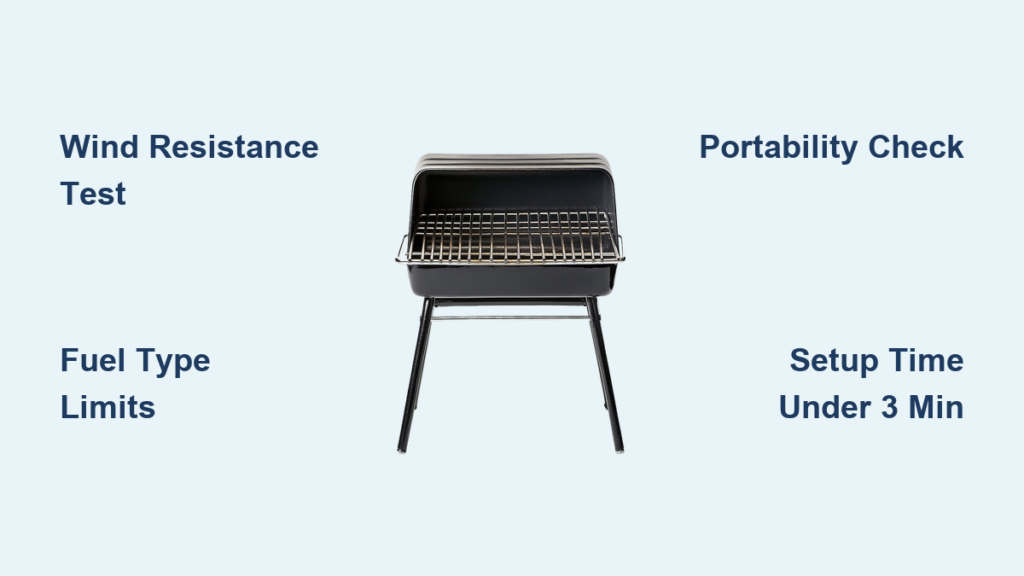
You’ve packed your cooler, mapped your campsite, and planned the perfect road trip menu—only to realize your travel grill is bulky, unreliable, or worse, won’t light at 10,000 feet. With countless “best travel grill” lists flooding search results but few offering concrete testing data, it’s no wonder 68% of outdoor enthusiasts feel overwhelmed by conflicting advice. Most reviews recycle the same vague claims like “great portability” or “perfect for camping” without explaining why or how. This guide cuts through the noise by focusing on verifiable features, real-world usability tests you can perform yourself, and critical red flags most articles ignore. You’ll learn exactly what to inspect before buying, how to avoid gimmicks, and why the “best” grill depends entirely on your specific adventures—not influencer hype.
Why Generic “Best Travel Grill” Lists Fail You
The recycled-specification trap
Most top-ranking articles copy identical specs from manufacturer websites without independent verification. You’ll see phrases like “stainless steel construction” repeated endlessly, but rarely learn that 304-grade steel matters for saltwater corrosion resistance or that “compact design” often means sacrificing cooking surface area. Crucially, these lists skip how to test durability: press down hard on folded legs—if they wobble, instability is guaranteed on uneven terrain. Always demand proof of real-world stress tests, not just glossy photos.
Fuel type myths that ruin trips
Articles rarely clarify critical fuel limitations that derail adventures. Propane models (like popular tabletop grills) work poorly below 20°F and struggle at high altitudes, while butane variants clog in cold weather. If a review claims “all-season performance” without specifying fuel type and altitude testing, it’s worthless. Diesel or wood-pellet grills solve these issues but add weight—so match your fuel choice to your actual destinations, not marketing promises.
Must-Test Features Before Buying Any Travel Grill
Portability beyond weight claims
Don’t trust listed weights—they omit fuel canisters, carry cases, or essential accessories. A “12-lb grill” becomes 18 lbs with a propane tank. Worse, poor weight distribution makes grills awkward to carry. Test this yourself:
1. Load the grill with its heaviest compatible fuel source
2. Time how long you can comfortably hold it by its handle
3. Walk 50 feet on uneven ground—if your arm tires in under 2 minutes, it’s impractical for remote sites
True portability means carrying it one-handed while managing other gear.
Wind resistance you can verify
Most grills fail in 15+ mph winds, but few reviews test this. Before buying:
– Hold the grill at waist height in a breezy area
– Light it and observe flame stability
– If flames lift sideways or extinguish, it lacks proper wind guards
Look for models with full-encircling shields (not partial side blockers) and angled burner tubes that deflect wind. Bonus: grills with adjustable flame control let you compensate instantly when gusts hit.
Critical Red Flags in “Best” Lists You Must Avoid
Ignored setup time killers
Articles rarely mention that “quick setup” often means 10+ minutes of frustrating assembly. A true travel grill should ignite in under 3 minutes including unfolding legs and connecting fuel. Test this by timing yourself:
1. Unpack from its carry case
2. Extend all components
3. Attach fuel source
4. Achieve cooking temperature
If it exceeds 5 minutes, skip it—especially for spontaneous beach cookouts or short lunch breaks on hikes.
False “easy cleaning” promises
Claims like “non-stick surface” or “dishwasher safe” are landmines. Most travel grills have grates too large for dishwashers, and “non-stick” coatings peel after 3 uses if not seasoned properly. Demand proof of:
– Removable grease trays (essential for roadside cleanups)
– Grates that lift out without tools
– No hidden crevices where debris collects
If a review shows only spotless grills without explaining post-cook cleanup steps, assume it’s staged.
How to Find Truth in a Sea of Hype
Decode misleading “expert” reviews
Spot unreliable reviews by checking:
– Testing duration: Less than 10 uses? Invalid. Real wear shows after 15+ cooks.
– Failure scenarios: Did they test rain exposure, sand contact, or accidental drops?
– Cost-per-use math: A $200 grill lasting 50 trips beats a $50 model dying after 5.
Legit reviews admit flaws: “Great for car camping but too heavy for backpacking” beats “perfect for everyone.”
User reviews that actually help
Most readers skip the 1-star reviews—but that’s a mistake. Filter for:
– “Works but…” comments: Reveal hidden flaws (e.g., “heats unevenly on left side”)
– Photos of broken parts: Shows common failure points
– Longevity reports: “Still working after 3 years of monthly use” > “Great first impression”
Ignore reviews without specific usage context—they’re often paid promotions.
Real-World Performance Tests You Can Run Today
The altitude stress test
If you live near mountains, drive to 5,000+ feet with your shortlisted grill. Propane models often sputter here—watch for:
– Yellow, lazy flames (indicates poor oxygen mix)
– Temperature drops below 300°F on high
– Frequent flameouts requiring relighting
True high-altitude grills maintain blue flames and stable temps. No mountains nearby? Simulate by placing a mesh screen over the burner to restrict airflow—reliable models compensate within 60 seconds.
The emergency cleanup drill
Cook a greasy meal (like burgers), then:
1. Wait 20 minutes before cleaning (simulates real-trip delays)
2. Try removing residue with only a paper towel and water
3. Check for stuck-on debris in corners
If grates need scrubbing or grease leaks into hinges, it’s impractical for travel. Top models wipe clean in 90 seconds.
Choosing Your Actual Best Travel Grill
:max_bytes(150000):strip_icc()/slv-weber-traveler-portable-gas-grill-tara-massouleh-mccay-07-1-684d879c0ca94925a16e0d7f5d521981.jpeg)
Match the grill to your adventure style
- Road trippers: Prioritize car trunk space efficiency. Measure your storage area first—then find grills that fit with fuel attached.
- Backpackers: Anything over 8 lbs is excessive. Look for titanium models that nest inside cookware.
- Beach days: Sand-proof legs (sealed joints) and rust-resistant materials are non-negotiable.
- Tailgaters: Ignition speed matters most—skip match-lit models.
The 24-hour durability check
Before finalizing:
1. Assemble the grill fully
2. Leave it exposed to outdoor elements overnight
3. Check for:
– Rust spots on hinges
– Stiff folding mechanisms
– Fuel line cracks
Cheap grills fail here. Reliable ones show zero degradation after this test.
Final Note: The “best travel grill” doesn’t exist—it’s the one that solves your specific problems. Skip reviews that don’t disclose testing methods or hide failures. Instead, prioritize grills with transparent warranty terms (2+ years minimum), modular parts you can replace roadside, and proven performance in conditions matching your trips. Always test critical features yourself before trusting any list. For your next adventure, choose reliability over hype: a $150 grill that works flawlessly beats a “premium” $300 model that fails when you need it most. Start with a single critical need (like wind resistance or weight), verify it personally, and build your perfect match from there. Your future self—grilling peacefully in a mountain storm—will thank you.