
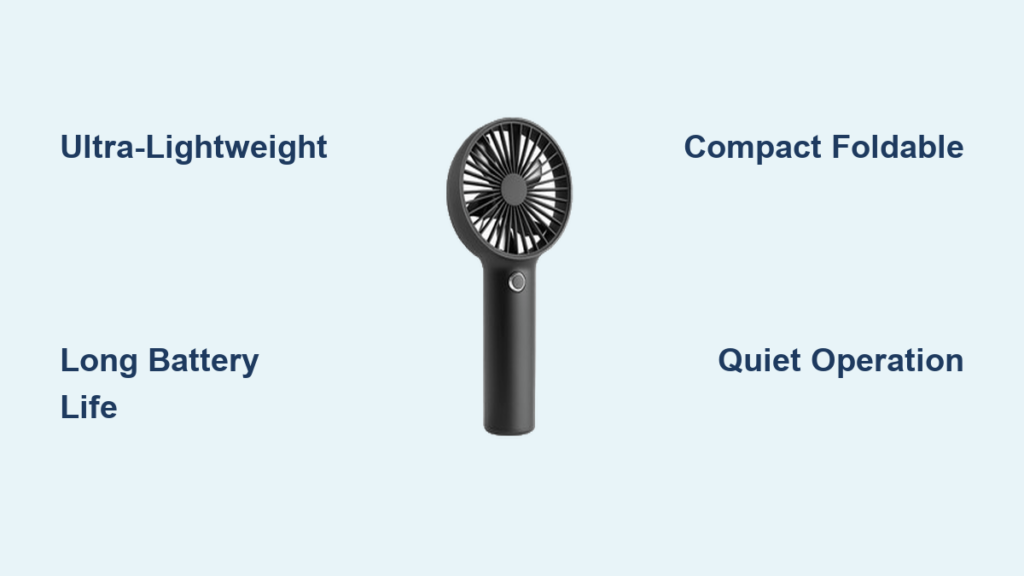
Finding the perfect handheld fan can transform your travel experience, especially when navigating crowded airports, enduring long train rides, or exploring destinations with sweltering heat. A quality portable fan keeps you cool without adding bulk to your luggage, ensuring comfort throughout your journey. This guide examines the key factors to consider when selecting the best handheld fan for travel, helping you make an informed decision that matches your specific needs and travel style.
The ideal travel fan balances powerful airflow with lightweight design, extended battery life with convenient charging options, and quiet operation with durable construction. Whether you’re a frequent flyer seeking relief during cramped flights, an outdoor enthusiast planning summer adventures, or simply someone who wants reliable cooling during daily commutes, understanding what distinguishes exceptional travel fans from mediocre options will save you money and frustration.
Portability and Weight Considerations
When selecting the best handheld fan for travel, portability ranks among the most critical factors. A fan that weighs more than eight ounces becomes cumbersome during extended use, particularly when carrying additional luggage or navigating through crowded spaces. Ultra-lightweight models typically weigh between four and six ounces, making them barely noticeable in a backpack or purse pocket.
Consider the fan’s folded dimensions as carefully as its weight. Some handheld fans collapse into compact shapes smaller than a smartphone, while others maintain rigid structures that consume valuable packing space. Look for designs featuring carrying loops or lanyards, which allow hands-free operation—a valuable feature when carrying bags, checking in at hotels, or photographing scenic destinations. The best handheld fans for travel fold down to less than one inch thick, sliding effortlessly into side pockets of luggage or daypacks without taking up precious space.
How to Test Portability Before Buying
Before purchasing, simulate real travel conditions by carrying the fan for 15-20 minutes to assess comfort. Pay attention to grip design—ergonomic handles reduce hand fatigue during extended use. For backpack travelers, test how the fan fits in various compartments and whether it rattles or shifts during movement. If possible, compare multiple models side-by-side to identify subtle differences in size and weight that specifications alone won’t reveal.
Battery Life and Charging Options
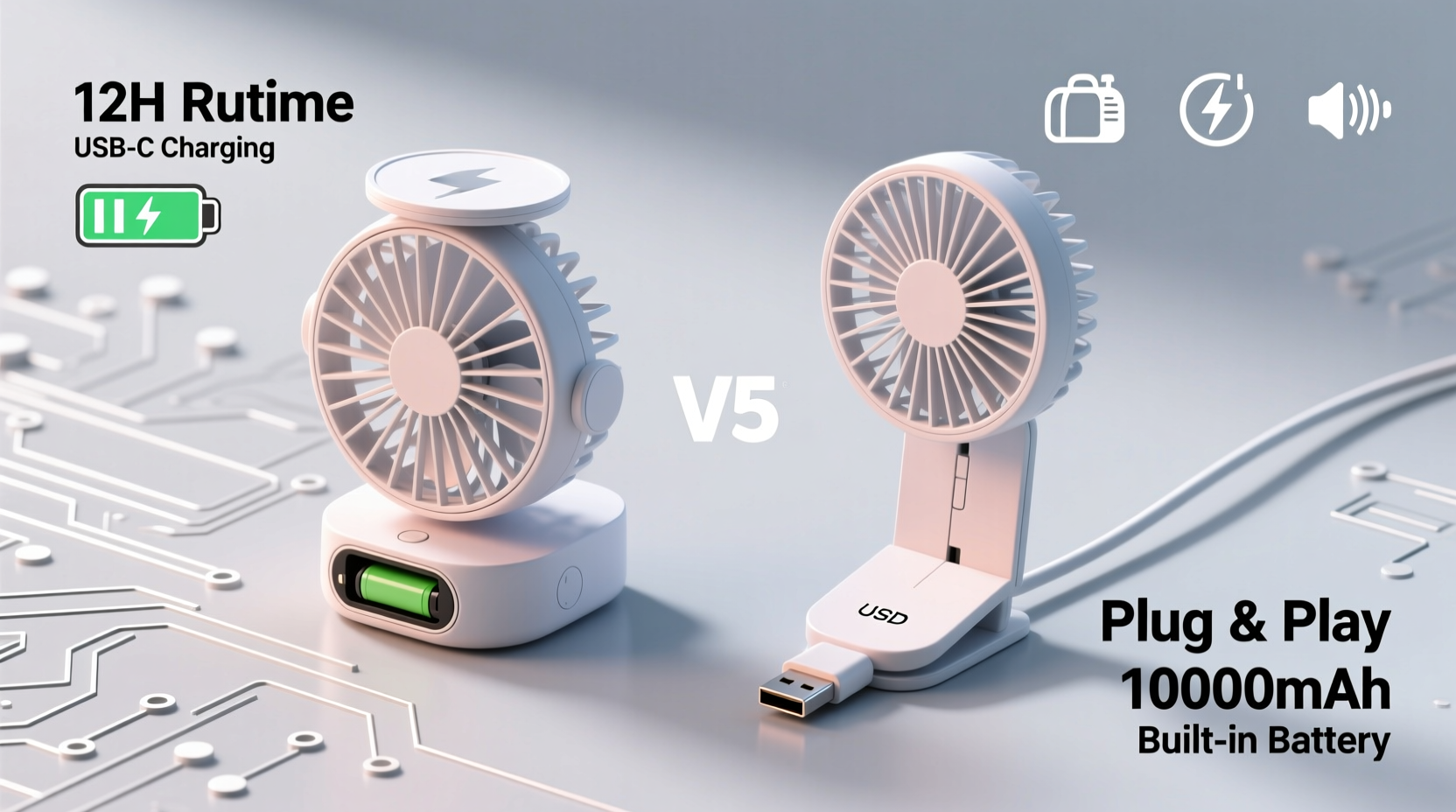
Battery performance fundamentally shapes your travel fan experience. Most handheld fans offer between three and twelve hours of runtime, with premium models providing extendable battery life through removable or rechargeable cells. Consider your typical travel duration when evaluating battery specifications—international travelers benefit from models offering eight or more hours on a single charge, while day-trippers may find shorter runtime sufficient.
Charging flexibility deserves equal attention. USB-C charging has become the standard for modern travel electronics, enabling convenient recharging from laptops, power banks, or airplane seat power outlets. Some fans offer solar charging capabilities, though this feature typically adds cost and bulk. Verify that your chosen fan’s charging port is protected by a rubber cover when traveling near water or through humid environments. The best handheld fans for travel incorporate smart battery management that displays remaining charge through LED indicators, preventing unexpected shutdowns during critical moments.
Charging Strategies for International Travel
When traveling across time zones or through regions with limited power access, implement these battery-saving techniques: use medium speed settings instead of maximum power, turn off the fan during air-conditioned transit segments, and carry a small power bank specifically for fan recharging. For extended outdoor adventures, select models compatible with portable solar chargers that can recharge both your fan and other devices simultaneously during daylight hours.
Airflow Power and Speed Settings
Not all handheld fans deliver equivalent cooling performance despite similar appearances. Airflow power, measured in feet per minute or miles per hour, determines how effectively the fan cools your skin from a distance. Travel fans typically produce airflow between 150 and 350 feet per minute, with higher numbers indicating stronger, more refreshing breezes.
Multiple speed settings allow you to customize cooling intensity based on environment and activity level. Low settings conserve battery during mild warmth, while high settings provide powerful relief during extreme heat or physical exertion. The best handheld fans offer at least three speed options, enabling precise comfort control without sacrificing battery efficiency. Consider how the airflow pattern distributes across your body—some fans create focused streams ideal for personal cooling, while others produce wider dispersion better for group settings.
Traditional Bladed Fans vs. Bladeless Options
Why Bladed Fans Still Dominate Travel Markets
Conventional bladed handheld fans remain popular due to their familiar operation and typically lower price points. These fans use rotating blades to generate airflow, offering reliable performance and straightforward maintenance. Modern blade designs feature flexible or rounded edges that reduce injury risk, making them safer for children traveling with families.
Bladed fans generally produce stronger maximum airflow than their bladeless counterparts, making them preferable for users prioritizing cooling power over aesthetics. However, they require more careful handling and cleaning, as debris can become lodged in blade housing. Travel-specific models often include protective grilles that prevent finger contact with moving components, addressing safety concerns while maintaining performance.
Bladeless Advantages for Noise-Sensitive Travel
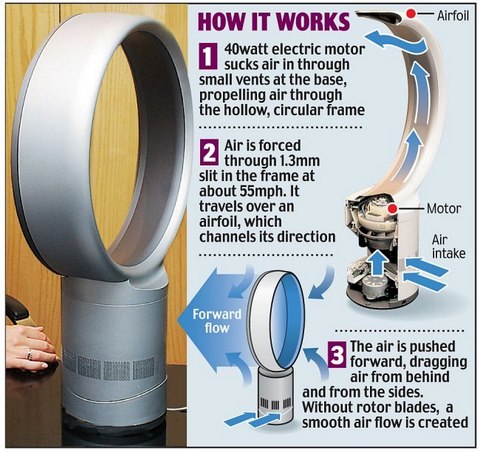
Bladeless handheld fans represent a newer technology category, using impeller systems to draw air through base ports and expel smooth, uninterrupted airflow streams. These designs eliminate exposed moving parts, reducing cleaning complexity and improving safety for households with curious children or pets.
The aesthetic appeal of bladeless designs appeals to style-conscious travelers, though this technology typically commands premium pricing. Without physical blades, these fans often produce quieter operation—a significant advantage for library visits, theater performances, or other noise-sensitive environments. Some bladeless models incorporate oscillation functions, automatically sweeping airflow across wider body areas without requiring manual adjustment.
Matching Fans to Specific Travel Scenarios
:max_bytes(150000):strip_icc()/tal-jisulife-handheld-fan-life7-jackie-cucco-11-1-76a3ea454ed24a8687a6ec3bfc38000d.jpeg)
Airplane and Airport Travel Solutions
Air travel presents unique challenges for handheld fan use, including limited power outlet access, confined spaces, and noise sensitivity during long flights. The best handheld fans for air travel feature airline-approved battery capacities (under 100 watt-hours), quiet operation under 50 decibels, and compact profiles fitting under seat storage.
Consider charging options when evaluating airplane-compatible fans. USB-C fans recharge conveniently from seatback outlets or personal power banks, while models with removable batteries allow carrying spares through security without restriction. Some travelers prefer battery-free manual fans for flights, eliminating power concerns entirely, though these require continuous hand operation and provide less consistent airflow.
Outdoor Adventures and Sightseeing Essentials
Active travel exposes handheld fans to conditions absent from typical use—dust, moisture, vibration, and physical impacts. Outdoor-focused fans benefit from rugged construction, water resistance, and secure grip designs preventing drops during movement. Lanyard or wrist strap attachment proves essential for activities involving physical exertion or uneven terrain.
Battery capacity matters significantly for extended outdoor activities without access to power sources. Full-day hiking or sightseeing demands fans offering eight or more hours runtime, with solar charging capability valuable for multi-day wilderness excursions. Consider how fan operation interacts with other outdoor equipment like backpacks, walking sticks, or camera gear—some models feature clip attachments that integrate seamlessly with outdoor gear.
Maintenance and Care During Travel
Cleaning and Hygiene Practices
Regular cleaning maintains fan performance and prevents bacterial growth, particularly important when sharing fans between travelers or using devices in dusty environments. Disconnect power sources before cleaning, then use soft brushes or compressed air to remove debris from blade housing or air intake vents.
For bladed fans, damp cloths safely clean external surfaces without saturating electrical components. Misting function users should empty water tanks after each use, preventing standing water that breeds mold and bacteria. Some fans feature removable grilles enabling thorough interior cleaning, while others require professional servicing for deep cleaning. Travelers should carry small cleaning tools like a soft-bristled brush in their kit for on-the-go maintenance.
Battery Preservation Strategies
Extreme temperatures degrade battery performance and longevity, making climate-conscious storage essential during travel. Avoid leaving fans in parked vehicles, direct sunlight, or checked luggage during temperature extremes. Room-temperature storage preserves battery health between uses.
Partial discharge actually benefits lithium-ion battery longevity compared to full discharge cycles. Recharging fans before batteries completely drain extends overall battery lifespan. For extended storage periods, maintain batteries at approximately 50% charge and store separately from the fan in cool, dry conditions. When traveling through multiple climate zones, allow your fan to acclimate to room temperature before charging to prevent condensation damage.
Making Your Final Selection
Selecting the best handheld fan for travel requires balancing multiple factors against your specific needs and travel patterns. Prioritize the features most critical for your typical journeys—whether that’s maximum battery life for remote adventures, whisper-quiet operation for shared accommodations, or rugged durability for outdoor expeditions.
Consider purchasing from retailers offering satisfaction guarantees or flexible return policies, allowing field testing before committing to your choice. Reading recent user reviews reveals real-world performance insights that specifications sheets cannot capture, particularly regarding long-term durability and actual battery life under various conditions. The ideal travel fan becomes an essential companion, providing reliable cooling comfort wherever your journeys lead. By carefully evaluating your requirements against available options, you invest in a tool enhancing travel comfort for years of adventures ahead.
When comparing final contenders, test them side-by-side if possible, focusing on how they feel in your hand, the quality of airflow, and noise levels at different speeds. The best handheld fan for travel ultimately becomes one you’ll actually use consistently—a perfect blend of performance, portability, and personal preference that makes every journey more comfortable.