
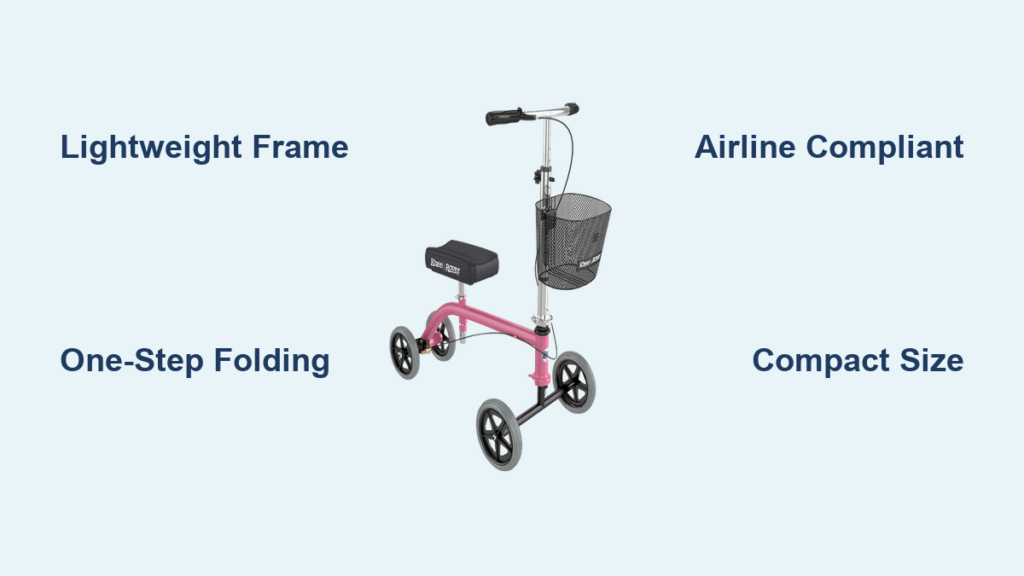
Recovering from a foot or ankle injury shouldn’t derail your travel plans. When you need mobility without putting weight on your injured foot, a knee scooter offers significant advantages over traditional crutches—better stability, reduced upper body strain, and greater independence. But standard knee scooters often prove too bulky and heavy for travel, turning what should be a relaxing vacation into a logistical nightmare. The best knee scooter for travel solves these problems with lightweight construction, compact folding capabilities, and airline-friendly dimensions that keep you moving through airports and unfamiliar destinations with confidence.
Traveling with a standard knee scooter means struggling with 25+ pound equipment that won’t fit in overhead bins, requires disassembly for transport, and leaves you exhausted from constant lifting. The right travel-specific model transforms this experience, weighing 40-50% less while maintaining stability and safety. You’ll navigate crowded terminals, hotel corridors, and tourist attractions without drawing unwanted attention or compromising your recovery. This guide details exactly what to look for in a travel-ready knee scooter, including airline regulations, top models for different scenarios, and practical tips that make your journey seamless.
Why Standard Knee Scooters Fail During Travel
Size and Weight Limitations
Most standard knee scooters weigh between 25-35 pounds with folded dimensions exceeding airline carry-on limits. Trying to lift this weight repeatedly—into car trunks, up stairs, or onto buses—creates significant strain on your uninjured leg and upper body. The average traveler walks 1.5 miles through airports alone, making every extra pound feel heavier with each step. Standard models also typically require complete disassembly (removing wheels, handlebars, and platforms) to achieve compact storage, a process that takes 5-10 minutes and requires tools you likely won’t have at the airport.
Airport Navigation Challenges
Attempting to maneuver a full-size knee scooter through security checkpoints, crowded gate areas, and narrow airplane aisles creates constant obstacles. The wider turning radius of standard models makes navigating tight spaces difficult, while the extended length prevents smooth boarding on regional jets with limited cabin space. Many travelers report having to gate-check standard scooters only to discover they don’t fit in the aircraft’s cargo hold, resulting in damaged equipment or being stranded without mobility assistance upon landing.
Critical Features for Travel-Ready Knee Scooters
Weight That Won’t Weigh You Down
The most important specification for travel is weight, with optimal models weighing 15-18 pounds—nearly half the weight of standard versions. Aluminum alloy frames deliver the necessary strength without unnecessary bulk, while strategic component reduction (without compromising safety) achieves these dramatic weight savings. When evaluating options, prioritize models that maintain structural integrity despite the weight reduction; some ultra-light designs sacrifice stability for minimal weight, creating dangerous tipping hazards on uneven surfaces.
One-Step Folding Mechanisms
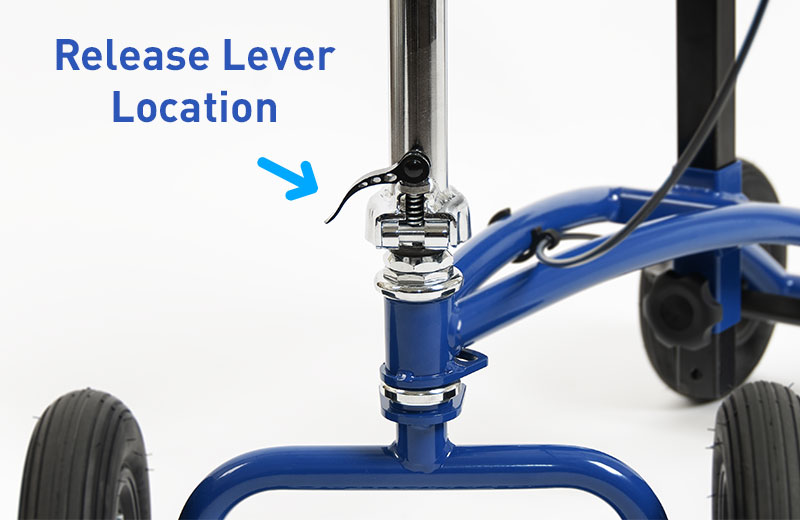
Look for knee scooters with single-lever or push-button folding systems that collapse the entire unit in under 10 seconds without tools. The best travel models transform from riding position to transport size with one smooth motion—no removing wheels, disconnecting parts, or hunting for storage pins. Verify that the folded scooter stands upright independently, as models requiring wall support become impractical in airports, restaurants, or hotel lobbies where wall space is limited.
Airline-Compliant Dimensions
For true travel readiness, your knee scooter must fit within standard airline carry-on dimensions (typically 45 linear inches combining length, width, and height). Top travel models fold to approximately 28″ x 14″ x 10″—small enough for overhead bins on most commercial aircraft. Measure your preferred model against these dimensions before purchasing, as some manufacturers advertise “folded size” without including critical protrusions like brake levers or wheel extensions that add crucial inches during security screening.
Air Travel Specific Considerations
Navigating TSA and Airline Policies
While TSA allows mobility devices through security checkpoints without disassembly, you’ll still need to remove personal items from the scooter’s platform. Arrive 90 minutes before domestic flights (2+ hours for international) to accommodate additional screening time. Most major airlines permit knee scooters as carry-on items if they meet size requirements, but policies vary significantly—Delta requires advance notification for devices over 20 pounds, while Southwest has no weight restrictions but enforces strict size limits.
Battery Regulations for Electric Models
If your travel scooter includes electronic components like LED lights or power-assist features, you must comply with airline battery regulations. Lithium batteries under 100 watt-hours typically travel in carry-on luggage only, with terminals protected from short-circuiting. For manual scooters (recommended for travel simplicity), confirm that no battery-powered components exist that could trigger additional screening requirements or travel restrictions.
Top Travel Knee Scooter Recommendations

Best All-Around Travel Model
The Drive Medical Nitro stands out as the most balanced travel option with its 16.5-pound weight, one-second folding mechanism, and 8-inch pneumatic tires that handle varied surfaces. Its aircraft-grade aluminum frame supports up to 350 pounds while folding to 27″ x 13″ x 9″—perfect for overhead bins. The adjustable knee platform accommodates users from 5′ to 6’4″, and the responsive braking system provides reliable stopping power on inclines. At approximately $350, it delivers exceptional value without compromising essential features.
Best Ultra-Lightweight Option
For travelers prioritizing minimal weight above all else, the KneeRover All-Terrain Compact weighs just 14.8 pounds while maintaining impressive stability. Its patented folding system collapses the entire unit with one hand in under five seconds, achieving dimensions of 26″ x 12″ x 9″. The trade-off comes in reduced wheel size (6 inches versus standard 8-inch), making it less suitable for gravel paths or uneven terrain. Ideal for frequent flyers and city travelers who primarily navigate smooth surfaces, this $420 model includes a custom travel bag and lifetime frame warranty.
Best Budget Travel Choice
The Vive Knee Walker delivers remarkable travel functionality at an accessible $270 price point. Weighing 17 pounds with a fold size of 28″ x 14″ x 10″, it meets most airline requirements while supporting up to 400 pounds. The four-wheel design provides exceptional stability on varied surfaces, though the folding mechanism requires two separate steps (handlebar collapse followed by main frame fold). Despite its lower price, it includes essential travel features like a padded knee platform, adjustable height settings, and airline-compliant dimensions.
Essential Travel Preparation Checklist
Pre-Departure Testing and Maintenance
Test your knee scooter’s folding mechanism 5-10 times before travel to ensure smooth operation under pressure. Charge any batteries fully and verify brake responsiveness on both smooth and slightly inclined surfaces. Pack a small toolkit containing allen wrenches for adjustments, tire inflation tools for pneumatic models, and spare brake pads. Apply lubricant to folding joints to prevent sticking during critical moments in airports.
Protective Storage Solutions
Invest in a padded travel bag specifically designed for your knee scooter model—most manufacturers offer these as accessories. Look for bags with exterior pockets for storing instruction manuals and maintenance tools, plus reinforced corners for impact protection. When gate-checking your scooter, attach a bright luggage tag clearly marked “Fragile Medical Equipment” with your contact information and flight details. Never check a knee scooter as standard luggage, as baggage handling systems will almost certainly damage it.
Airport Navigation Strategies
Request wheelchair assistance during booking to receive priority boarding and terminal navigation help. This service allows you to keep your knee scooter until the aircraft door, rather than surrendering it at the gate. When going through security, keep your folded scooter upright and maintain physical contact with it at all times—TSA agents cannot require you to relinquish mobility devices. For connecting flights, confirm that your gate-checked scooter will be available at your connecting gate rather than in baggage claim.
Smart Travel Habits for Knee Scooter Users
Daily Maintenance Routine
Perform a quick safety check each morning: verify wheel tightness, test brake responsiveness, and inspect knee platform padding for wear. Wipe down the frame with a disinfectant cloth to maintain hygiene, especially after airport use. Carry a small towel to place on the knee platform in public restrooms or when using rental scooters that may have hygiene concerns.
Strategic Packing for Extended Trips
Pack lightweight, slip-on shoes that accommodate your injured foot without laces or tight closures. Include a compact folding seat (available as phone-sized devices) for unexpected waiting periods. When traveling internationally, research medical facilities at your destination in case of equipment failure, and carry manufacturer contact information for potential repairs.
Making Your Final Decision
Choosing the best knee scooter for travel requires balancing weight, foldability, terrain capability, and budget based on your specific needs. If you’ll primarily navigate airports and city streets, prioritize minimal weight and compact folding. For beach destinations or rural areas, slightly heavier models with larger wheels may serve you better despite the trade-offs in portability. Test multiple models if possible—many medical supply stores allow brief demonstrations—and pay attention to how easily each folds with one hand while you’re carrying other items.
Remember that your recovery comes first—don’t sacrifice essential stability for marginal weight savings. The ideal travel knee scooter becomes an invisible extension of your mobility rather than a constant source of frustration. With proper preparation and the right equipment, you can maintain your travel plans without compromising your healing process.