
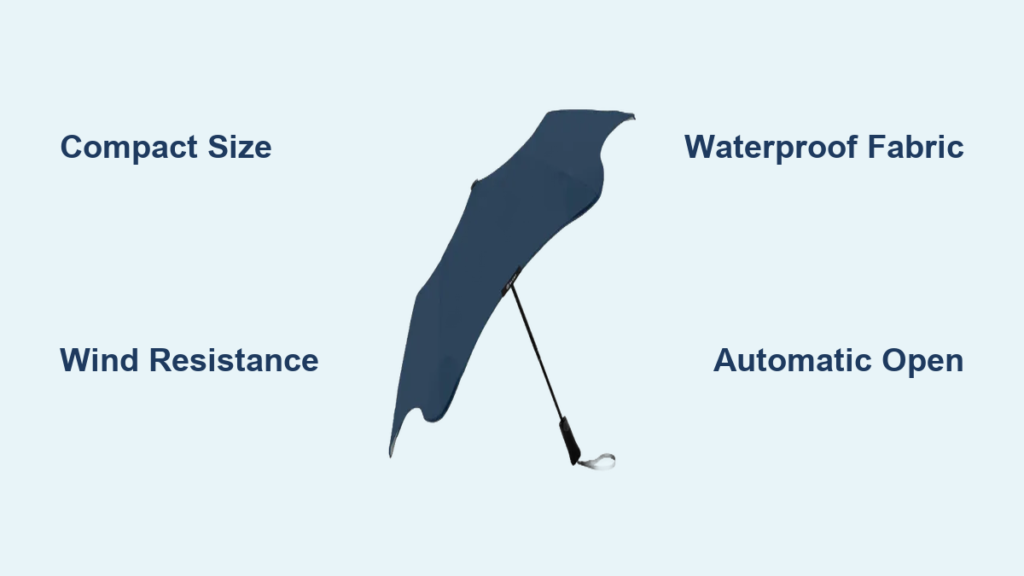
Rain shouldn’t derail your travel plans or turn a simple commute into a soggy disaster. Yet most travelers make the same mistake—grabbing whatever flimsy umbrella they find without considering how it will perform when they actually need it. The right travel umbrella transforms from an afterthought into your most trusted travel companion, providing reliable protection that fits seamlessly into your journey. After testing dozens of models and analyzing what separates dependable performers from disposable disappointments, we’ve discovered that the best travel umbrellas balance three critical elements: compact size, wind resistance, and genuine coverage. Skip the marketing hype and discover exactly what features matter most for your specific travel needs.
Compact Size Meets Full-Size Coverage
When evaluating potential travel umbrellas, don’t fall for the “mini” marketing trap that sacrifices actual protection for extreme portability. True travel-ready umbrellas deliver 35-42 inches of canopy coverage when open while collapsing to just 8-10 inches long—comparable to a standard water bottle. This sweet spot ensures your shoulders stay dry during sideways rain while still slipping easily into carry-on luggage or a large pocket. Pay attention to the closed diameter too; some models achieve short length but maintain a bulky profile that won’t fit in tight spaces.
What to look for when assessing compactness:
– Measure the closed length against common items (smartphone, water bottle)
– Check the collapsed diameter—should be no wider than 1.5 inches
– Ensure the canopy opens to at least 35 inches for proper coverage
– Test the weight in your hand—should feel substantial but not heavy
Many travelers discover too late that ultra-compact umbrellas measuring 5-7 inches when closed often feature canopies under 30 inches, leaving you partially exposed during heavy rain. The best travel umbrellas use telescoping shafts with 3-4 sections that lock securely without wobbling. Carbon fiber and fiberglass shafts deliver the ideal strength-to-weight ratio, typically weighing 8-14 ounces—lighter than most smartphones yet sturdy enough to withstand regular use.
Wind Resistance and Durability Engineering

Most travel umbrellas fail catastrophically the first time they encounter moderate wind, leaving you with a tangled mess of inverted fabric and bent ribs. Genuine wind resistance comes from thoughtful engineering, not just marketing claims. Quality travel umbrellas withstand 25-40 mph winds through flexible rib systems that bend without breaking. Look for models with fiberglass or carbon fiber ribs instead of rigid steel—these materials provide the “give” needed to survive gusty conditions without permanent damage.
The frame architecture makes all the difference in challenging weather. Single-canopy designs with reinforced stress points work well for most travelers, while double-canopy models feature vented sections that allow wind to pass through rather than building pressure underneath. Though double-canopy umbrellas cost more, they’re worth considering if you frequently travel in coastal areas or regions with unpredictable weather. Critical warning: Avoid umbrellas with thin, flimsy ribs that feel flimsy when you gently bend them—these will invert at the first sign of wind.
Canopy Materials and Weather Protection Technology

Not all umbrella fabrics perform equally when drenched. The best travel umbrellas use high-density pongee or polyester with hydrophobic coatings that cause water to bead and roll off instead of soaking through. This technology keeps the umbrella lighter during use and allows it to dry almost instantly when closed. Cheaper umbrellas often use untreated polyester that becomes waterlogged, adding unnecessary weight and taking hours to dry properly.
Key canopy features that matter:
– Hydrophobic coating (water should bead and roll off)
– UV protection if you’ll use it for sun as well as rain
– Reinforced stress points where ribs attach to canopy
– Darker colors for better sun protection (but heat absorption)
Some premium travel umbrellas incorporate dual-layer canopies with specialized venting that improves wind resistance while maintaining coverage. While these add slightly to the weight and cost, they significantly extend the umbrella’s lifespan in challenging conditions. If you’ll be using your umbrella primarily for sun protection during warm-weather travel, look for models specifically rated for UV protection—standard rain umbrellas often provide minimal sun blocking.
Handle Design and Grip Comfort
Your umbrella’s handle determines whether you’ll actually carry it when needed. Straight handles with hooks provide maximum versatility—you can grip them normally, hook them over your arm, or hang them from a hook. J-shaped handles offer similar functionality with a more pronounced curve. Compact knob handles maximize portability but sacrifice comfort during extended use. For most travelers, the straight handle with hook represents the ideal balance of portability and functionality.
Critical handle considerations:
– Rubberized grips provide superior traction when wet
– Ergonomic shaping reduces hand fatigue during long walks
– Avoid handles with visible seams or weak attachment points
– Test the grip before purchasing if possible
The handle-to-shaft connection represents a common failure point in cheaper umbrellas. Quality models feature handles that are fused or welded to the shaft with reinforced joints, while budget options use press-fits or weak adhesives that loosen over time. Give the handle a gentle twist before purchasing—if it moves or wobbles, it will fail prematurely. Some premium travel umbrellas include helpful extras like built-in LED lights or reflective elements for nighttime visibility.
Automatic Open and Close Mechanisms
Automatic deployment transforms your umbrella from a chore to use into a genuine convenience. The best travel umbrellas feature smooth, reliable one-button opening that works even when you’re juggling bags or trying to navigate through crowded spaces. Automatic closing mechanisms are equally valuable—they let you retract the wet umbrella without getting your hands dirty during the folding process.
Automatic mechanism tradeoffs:
– Adds 2-4 ounces of weight to the overall package
– Increases cost by approximately 30-50%
– Provides genuine one-handed convenience
– Requires more maintenance than manual models
While automatic mechanisms add complexity, the convenience factor is real for most travelers. If you frequently find yourself with both hands occupied during sudden downpours, the automatic feature justifies its added weight and cost. Read user reviews specifically about the mechanism’s long-term reliability—cheap auto mechanisms often jam or fail to lock properly after several months of use.
Weight Considerations for Different Travel Styles

Your specific travel patterns should dictate your ideal umbrella weight. Ultralight backpackers should target models under 10 ounces with manual operation and smaller canopies. Business travelers who carry briefcases or crossbody bags can comfortably handle 12-16 ounce umbrellas with automatic features and larger coverage. Families or road trippers with ample storage space can consider heavier models approaching 20 ounces that offer maximum wind resistance and coverage.
Weight guidelines by travel style:
– Ultralight backpackers: 7-10 ounces, manual operation
– Business travelers: 12-16 ounces, automatic open/close
– Family travelers: 16-20 ounces, maximum coverage
Don’t overbuy features you won’t use. That ultra-light 7-ounce umbrella makes perfect sense for minimalist backpackers but leaves business travelers exposed during sideways rain. Conversely, the heavy-duty 20-ounce model ideal for family vacations becomes an unnecessary burden for frequent business flyers trying to minimize carry-on weight.
Price Tiers and Value Analysis
Travel umbrellas range from $10 discount models to $100+ premium options, but not all price differences reflect meaningful improvements. Budget umbrellas under $25 provide basic rain protection but typically fail within a year of regular use. The sweet spot for most travelers falls between $25-$50, where you’ll find quality materials, reliable mechanisms, and construction that lasts for years. Premium models above $50 offer marginal improvements for most travelers unless you face extreme weather conditions regularly.
Where your money actually goes:
– Budget ($10-$25): Basic protection, minimal wind resistance
– Mid-range ($25-$50): Quality materials, reliable mechanisms
– Premium ($50+): Advanced engineering, specialized features
Investing in a quality mid-range umbrella often saves money long-term compared to repeatedly replacing cheaper models. A well-maintained $35 umbrella typically outlasts three $15 umbrellas while providing better protection throughout its lifespan.
Maintenance and Care for Longevity
Even the best travel umbrella fails prematurely without proper care. Always fully extend and air-dry your umbrella after use—trapping moisture inside promotes mold growth and degrades water-repellent coatings. This simple 15-30 minute step extends your umbrella’s life dramatically. Clean the canopy periodically with a damp cloth and mild soap, avoiding harsh chemicals that strip protective coatings.
Essential maintenance routine:
– Dry completely before storing
– Store in protective sleeve to prevent snags
– Check for loose components monthly
– Replace damaged parts promptly
Most quality travel umbrellas come with protective sleeves—use them consistently to prevent damage during transport. Avoid storing your umbrella compressed under heavy items that could deform the frame. With proper care, a quality travel umbrella should last 2-3 years of regular use, making it one of the best investments you can make for hassle-free travel.