
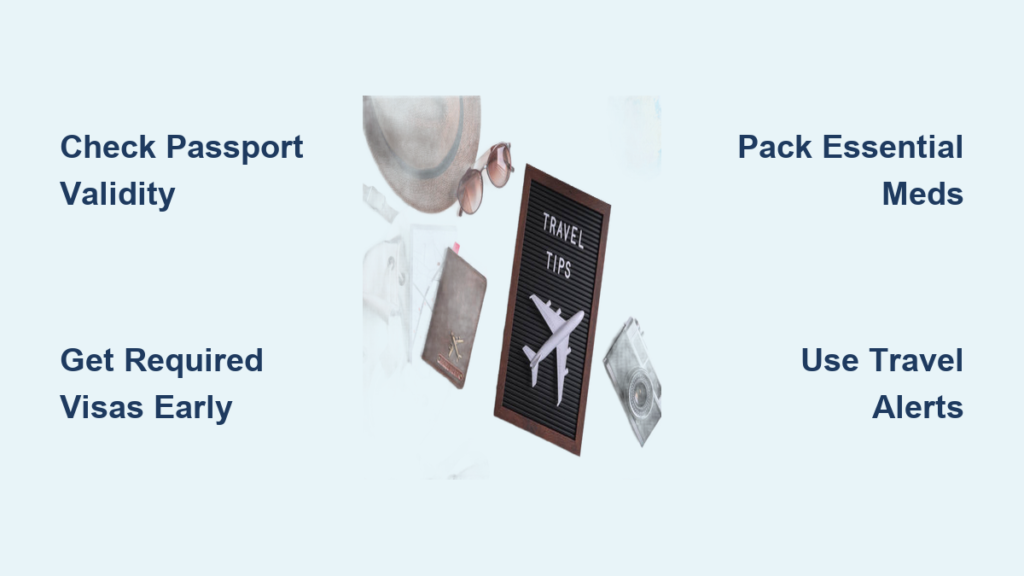
Your dream vacation shouldn’t start with a denied boarding pass or end with a hospital bill. Every year, 15 million travelers face avoidable crises—from expired passports to medical emergencies—simply because they skipped critical pre-departure steps. These essential country travel tips transform chaotic trips into seamless adventures by targeting the exact pitfalls that derail 80% of first-time international travelers. You’ll discover how to bypass visa headaches, outsmart pickpockets, and navigate cultural landmines with confidence. Most importantly, you’ll learn money-saving hacks that keep your budget intact while ensuring safety at every border crossing and street market.
Forget generic “pack light” advice. This guide delivers battle-tested strategies verified by travel clinics, embassies, and veteran globetrotters. We cut through the noise to focus on non-negotiable actions that prevent real-world disasters. Whether you’re backpacking Southeast Asia or touring European capitals, these protocols work universally. By the end, you’ll know exactly how to prepare your documents, secure your finances, and respond to emergencies—so you spend your energy exploring, not fixing preventable mistakes.
Visa and Entry Requirements: Avoid Denied Boarding
Passport Validity Rules That Stop You at the Gate
Most countries flatly refuse entry if your passport expires within six months—a rule enforced even when your trip ends months before expiration. Airlines face $10,000 fines for boarding ineligible passengers, so they’ll deny you at check-in without exception. Additionally, destinations like Kenya and Thailand require two completely blank visa pages; partial pages won’t suffice. Always verify these rules on your government’s travel advisory site, not third-party blogs, as policies change weekly. If renewal is needed, apply immediately—U.S. passport processing now takes 6–8 weeks during peak seasons.
Visa Processing Timelines: Don’t Trust Last-Minute Fixes
E-tourist visas (like India’s ETA) often clear in 24–72 hours, but work or long-stay visas demand 4–6 weeks of processing time. Crucially, requirements vary wildly by nationality: U.S. citizens need Argentina’s $160 reciprocity fee paid online months in advance, while Canadians don’t. Always double-check official embassy websites—not your travel agent—for entry rules. Print proof of onward travel and accommodation; budget airlines like Ryanair routinely demand these at boarding. For extended stays, obtain an International Driving Permit before departure—it’s required for scooter rentals in Bali’s national parks, even if you’re not driving immediately.
Health and Medical Preparations: Prevent Costly Emergencies
Travel Clinic Timing: Vaccines With Countdown Clocks
Schedule clinic appointments 4–6 weeks pre-departure for destination-specific vaccines. Yellow fever certificates only become valid 10 days post-vaccination—arriving early risks being turned away at African borders. Japanese encephalitis shots for rural Asia require multiple doses spaced 28 days apart. Never skip altitude sickness meds for elevations above 2,500m; symptoms can escalate to life-threatening edema within hours. Download offline medical phrase translations via Google Translate—showing “I need an ambulance” in Thai or Swahili saves critical minutes during crises.
First-Aid Kit Essentials That Cover 95% of Issues
Skip bulky medical kits. Pack prescription duplicates in original bottles plus these compact lifesavers:
– Loperamide for sudden stomach emergencies
– Oral rehydration salts to reverse dehydration in 30 minutes
– Azithromycin (500mg) for bacterial infections when clinics are inaccessible
– Altitude sickness tablets for high-elevation treks
– Activated charcoal tablets to neutralize mild food poisoning
Verify your travel insurance covers medical evacuation—standard policies exclude it. Providers like World Nomads explicitly cover scuba diving and trekking above 4,000m. Without this coverage, a helicopter rescue in Nepal costs $15,000+ out-of-pocket.
Financial Preparation Strategies: Stop Money Leaks

Banking Notifications That Prevent Card Lockouts
Set travel alerts online through your bank’s portal—not by phone—for instant activation. Specify exact countries and dates; vague notifications like “Europe” trigger fraud alerts. Carry two cards on separate networks (Visa + Mastercard) plus one no-foreign-fee debit card like Charles Schwab. Airport exchange kiosks charge 15%+ markups; instead, use fee-free ATMs inside terminals. Always decline “dynamic currency conversion” (DCC) when prompted—it locks in poor rates and adds 7% hidden fees. Withdraw larger sums less frequently to minimize transaction costs.
Daily Budget Tracking That Catches Overspending Early
Use Numbeo to estimate daily costs in local currency, then add a 15% buffer for exchange rate swings. Track every expense with Trail Wallet—categorize spending to spot dangerous patterns (e.g., $50/day on taxis in Mexico City). Withdraw emergency cash in USD/EUR as a hard-currency fallback; store it separately from your wallet in a shoe compartment. Never keep all funds in one place—split cash between your money belt, backpack lining, and hotel safe.
Smart Packing Systems: Travel Lighter, Safer, Smarter

Anti-Theft Packing That Outsmarts Pickpockets
Use a decoy wallet with expired cards in your back pocket as a distraction. Store real valuables in a neck pouch under clothing—not a waist belt, which shows through thin fabrics. Photograph all documents and store encrypted copies in cloud storage plus a password-protected phone folder. For electronics, pack a universal adapter with USB-C PD (like Anker 735) and a 20,000mAh power bank—critical during Africa’s frequent blackouts.
Clothing Strategy for Any Climate or Culture
Adopt a neutral color palette (black, grey, olive) so all items mix and match. Merino wool base layers resist odor and dry overnight—essential for multi-day hikes. Pack one semi-formal outfit for upscale restaurants or religious sites banning shorts. In Asia and the Middle East, always carry a lightweight sarong to cover shoulders/knees instantly at temples. Remove shoes before entering homes in these regions; keep clean socks handy as some sites require them.
Daily Safety Practices: Navigate Like a Local
Transportation Verification That Prevents Scams
Verify rideshare license plates and driver photos against the app before entering. Share real-time trip status with friends via WhatsApp. In Latin America and Africa, pre-book airport shuttles online—unlicensed touts inside terminals inflate prices 300%. For overnight buses, secure luggage with a cable lock to seat frames and keep valuables in a cross-body bag.
Food Safety Rules That Keep You Exploring
Follow “Boil it, Cook it, Peel it, or Forget it” for street food. Choose stalls with long local lines—high turnover means fresher ingredients. Drink only bottled or UV-purified water (use SteriPEN) in Southeast Asia and South America; avoid ice unless confirmed safe. Carry loperamide for emergencies, but seek clinics if symptoms last over 48 hours.
Regional Special Considerations: Avoid Cultural Blunders
Europe’s Hidden Pitfalls
Validate train tickets before boarding in Italy and France—unstamped tickets trigger €50+ fines. Many shops close Sundays; stock groceries Saturday evenings. Use chip-and-PIN cards exclusively; magnetic-stripe cards fail at 60% of European ticket machines.
Asia’s Unspoken Rules
Carry tissues and hand sanitizer—public restrooms rarely provide toilet paper. Remove shoes before entering temples; some require socks (carry spares). SIM cards cost $5–10 for 8–12GB data in Thailand and Vietnam—buy at official carrier stores like AIS, not street kiosks.
Africa’s Critical Precautions
Start malaria prophylaxis (Malarone/doxycycline) 1–2 days pre-arrival for sub-Saharan regions. Negotiate taxi fares upfront; meters are rare outside South Africa. Carry dual-voltage power banks—blackouts cripple grids daily in rural areas.
Key Takeaway: These essential country travel tips prevent 90% of disasters before you leave home. Start with passport validity and visa checks—then lock down medical prep and financial safeguards. Master just three habits: packing anti-theft essentials, verifying transport digitally, and respecting regional norms. Do this, and every border crossing becomes a gateway—not a gamble. Your next adventure awaits, fully protected.