
Packing perfectly pressed dress shirts only to unpack them looking like crumpled paper is the universal travel nightmare that derails confidence before you even reach your destination. That sinking feeling when you pull out a wrinkled suit for an important meeting after a smooth flight—despite careful packing—leaves many travelers frustrated and scrambling for hotel irons. But what if your clothes emerged from your suitcase looking as crisp as when you packed them, regardless of turbulence or suitcase stacking?
Mastering how to fold clothes for travel to prevent wrinkles transforms your entire travel experience. You’ll save precious time at your destination, pack more efficiently, and arrive looking polished despite hours in transit. This guide reveals the exact techniques flight attendants, business travelers, and packing experts use to keep garments pristine—no expensive steamer or ironing required.
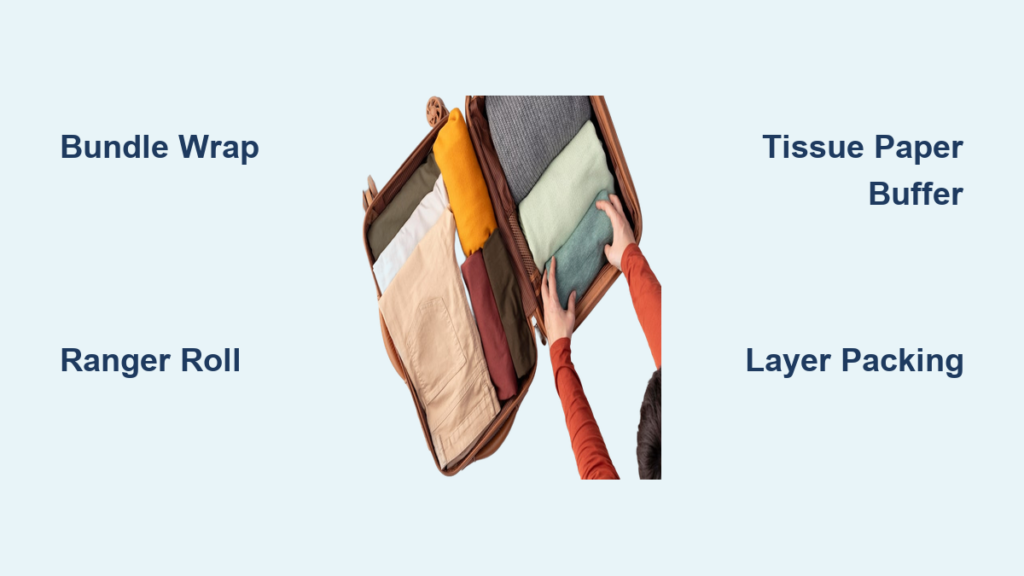
3 Military-Tested Folding Techniques That Eliminate Travel Wrinkles
Bundle Wrapping Method for Delicate Fabrics
The bundle wrap creates a protective cocoon that shields your most delicate items from pressure points during transit. Think of it as building a fabric nest where each layer cushions the next, absorbing movement that would otherwise cause wrinkles.
Start by placing socks and underwear at the center to form a soft core. Lay your largest garment (typically a dress or jacket) face down, then add progressively smaller items in alternating directions—shirts horizontally, pants vertically. Fold sleeves and pant legs inward to create smooth edges before rolling the entire bundle from the longest edge with consistent, gentle tension. The resulting package should feel firm but not compressed, like a well-rolled sleeping bag.
Pro tip: Pack 6-8 garments per bundle for optimal wrinkle protection during flights over 4 hours.
Ranger Roll System for Maximum Space Efficiency
Originally developed for military deployments, ranger rolls create compact cylinders that maximize suitcase space while eliminating pressure points. Each garment becomes a self-contained unit that maintains its shape through even pressure distribution.
For dress shirts:
– Lay shirt face down and smooth every wrinkle with your palms
– Fold both sleeves straight back along the shoulder seam
– Create a rectangle by folding sides to center
– Roll tightly from collar to hem, then tuck the rolled portion into the folded bottom
For pants:
– Align creases perfectly and fold one leg over the other
– Roll from waistband to cuff in one continuous motion
– Secure by folding the cuff over the rolled portion
You’ll fit 8-10 ranger-rolled items in the same space as 4 traditionally folded garments—perfect for carry-on travelers.
Tissue Paper Buffer Method for Formal Wear
Acid-free tissue paper creates a friction barrier that prevents fabric-on-fabric contact—the primary cause of travel wrinkles. This method is essential for formal wear and delicate fabrics like silk.
Place tissue on your folding surface, position your garment on top, then add additional tissue between each fold at stress points like collars and cuffs. The tissue absorbs pressure and allows fabrics to slide past each other instead of creating permanent creases.
Pro tip: Save tissue paper from dry cleaning bags—it’s perfect for this technique and costs nothing.
Cotton vs. Silk: How to Fold Each Fabric Type Without Creases
:max_bytes(150000):strip_icc()/MSLFolding_Rollfinals1-f1ad2ca001444427be4faa741525dcc3.png)
Cotton Dress Shirts That Stay Crisp for 12+ Hours
Cotton’s cellulose fibers crease easily but respond well to strategic folding along existing seam lines. Always button all buttons before folding to maintain garment shape throughout your journey.
The business travel method:
1. Lay shirt face down on a smooth surface
2. Fold sleeves back along shoulder seam
3. Create thirds horizontally: fold bottom third up, then top third down
4. Fold in half vertically with edges perfectly aligned
5. Place between two sheets of tissue paper
This creates a compact package that emerges wrinkle-free even after multiple flights.
Synthetic Performance Fabrics That Resist Wrinkles Naturally
Polyester blends and performance fabrics have memory properties that make them ideal for rolling techniques. These synthetic fibers naturally resist wrinkles, but improper folding can create permanent creases.
Use the ranger roll method for synthetic blouses and pants. The cylindrical shape distributes pressure evenly, while the fabric’s memory helps it spring back into shape when unrolled. Avoid sharp folds that can override the fabric’s natural wrinkle resistance.
Delicate Wool and Knits That Won’t Distort
Wool fibers can break under sharp folds, creating permanent damage. Instead, roll wool sweaters loosely or use the flat fold method:
- Lay sweater face down
- Fold arms straight across the back
- Bring sides to center without stretching
- Fold bottom up loosely to meet shoulders
For wool suits, use the hanging fold method—fold as if the garment were on a hanger, then layer carefully in your suitcase with tissue paper between layers.
Packing Layer Strategy: Why Your Suitcase Order Creates Wrinkles
:max_bytes(150000):strip_icc()/how-to-pack-a-suitcase-2000-4704f7f6898e4f7a9683d5b78db609fc.jpg)
Base Layer Foundation That Absorbs Impact
Build stability with your heaviest, most wrinkle-resistant items first. Jeans, jackets, and sweaters form the foundation—each carefully ranger-rolled and stacked to create a level surface at the wheeled end of your suitcase where impact occurs during handling.
Place these items with waistbands alternating direction like logs for maximum stability. This foundation layer prevents crushing of delicate items above.
Middle Layer Organization That Prevents Shifting
This layer contains moderately wrinkle-prone items: casual shirts, khakis, simple dresses. Use packing cubes to maintain organization and prevent items from shifting during transit.
Arrange rolled items in tight rows, filling gaps with socks and belts. Each cube should be 80% full—overpacking creates pressure wrinkles, while underpacking allows items to shift and crease.
Top Layer Protection for Delicate Items
Silk blouses, linen shirts, and formal dresses form the final layer. These receive premium treatment: tissue paper interleaving, bundle wrapping, or garment bag protection.
Ensure this layer sits perfectly level with your suitcase rim. Any overhang creates pressure points when the case closes, leading to deep wrinkles that resist removal at your destination.
Compression Without Creasing: Packing Cubes vs. Vacuum Bags

Packing Cube Strategy for Structured Compression
Packing cubes provide structure while maintaining folded integrity. Different sizes serve specific purposes:
- Large cubes: Sweaters and pants, ranger-rolled
- Medium cubes: Shirts and blouses, rolled precisely to cube dimensions
- Small cubes: Underwear and accessories, organized by type
Roll items to fit cube dimensions like Tetris pieces—locking together without compression. The cube’s structure prevents crushing while keeping everything organized.
Critical mistake: Never overstuff cubes beyond their designed capacity. The 80% rule applies—leave room for fabric to breathe.
Strategic Space Utilization That Prevents Random Creases
Fill every gap without overpacking. Dead spaces around shoes become perfect homes for rolled socks and belts. Use shoe bags to create additional structure while protecting clothes from dirty soles.
Pro technique: Place heavier items at the bottom near wheels, lighter items on top. This weight distribution prevents crushing and makes your suitcase easier to maneuver through airports.
Hotel Room Wrinkle Fix: Steam Techniques That Work in 5 Minutes
Immediate Steam Release Method
Upon arrival, immediately unpack and hang garments in the bathroom. Run a hot shower for 10 minutes with the door closed—the steam naturally releases most travel wrinkles.
For stubborn wrinkles: Hang items in steamy bathroom during your shower, then smooth with your hands while fabric is warm. This technique works particularly well for cotton and synthetic blends.
Emergency Wrinkle Solutions When You’re Rushing
Pack a small spray bottle with water and a few drops of fabric softener. Lightly mist wrinkled areas, smooth with your hands, and hang dry. This creates instant relief for last-minute meeting emergencies.
Dual-purpose hack: Your hair straightener works wonders for collar and cuff touch-ups. Just ensure it’s clean and on a low heat setting for delicate fabrics.
Overpacking Disaster: 3 Folding Errors That Guarantee Wrinkled Clothes
Ignoring the 80% Suitcase Capacity Rule
Stuffing suitcases beyond capacity creates pressure points that cause deep, stubborn wrinkles. Follow the 80% rule: leave 20% space for expansion and movement during transit.
Warning sign: Difficulty zipping your suitcase indicates overpacking. Remove 2-3 items and repack using the techniques above—your clothes will thank you.
Folding Against Natural Seam Lines
Folding garments across natural seam lines creates unnecessary creases that become permanent during transit. Always fold along existing creases and seam lines—these natural breakpoints minimize new wrinkles.
Pro tip: Practice your chosen technique 2-3 times before travel to perfect the motion and avoid last-minute packing stress.
Using Compression Bags for Formal Wear
Vacuum compression bags create sharp creases that resist removal, especially on formal garments. Reserve compression bags for casual wear only—never use them for dress shirts, suits, or delicate fabrics.
Critical exception: If you must compress formal wear, leave 15% expansion room and place tissue paper between all folds.
Master these folding techniques once, and you’ll never dread unpacking again. Your clothes will emerge ready to wear, your confidence will soar, and you’ll arrive looking polished regardless of how many connecting flights you’ve endured. Start with one technique—the ranger roll for your next weekend trip—and build your skills gradually. Soon, you’ll be the traveler others ask for packing advice, arriving wrinkle-free while everyone else hunts for irons. How to fold clothes for travel to prevent wrinkles isn’t magic—it’s method, and now you’ve got the flight attendants’ playbook.