
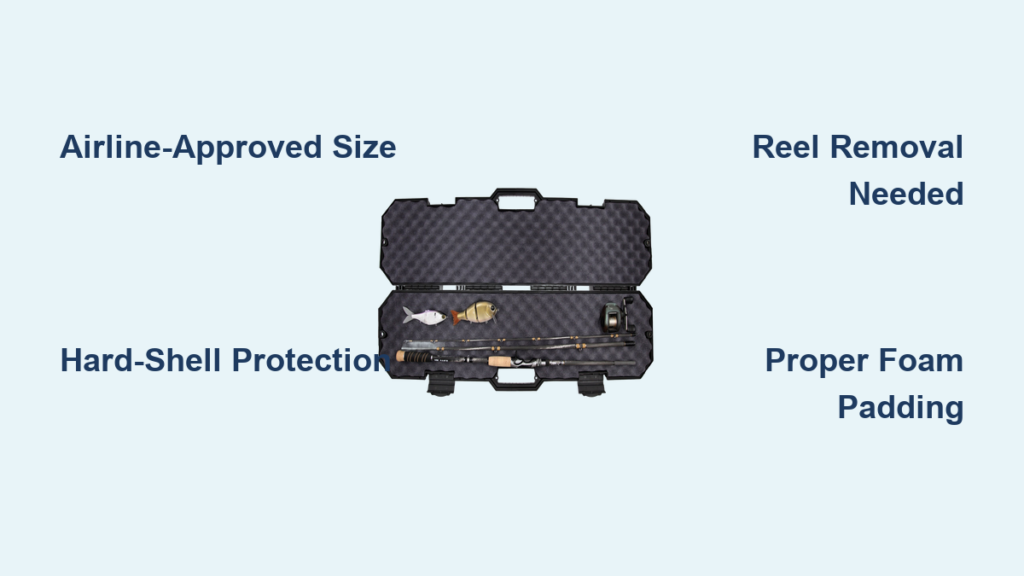
Flying with fishing gear creates unique challenges that standard luggage simply can’t solve. When your prized rods face the rough handling of airport baggage systems, one wrong bump can turn a dream fishing trip into a nightmare of broken blanks and damaged guides. The right fishing rod case for air travel transforms this anxiety into confidence, ensuring your equipment survives transit intact while complying with airline regulations. This guide cuts through the marketing hype to reveal exactly what makes a rod case truly travel-worthy, helping you choose the best fishing rod case for air travel that protects your investment without breaking the bank.
Why Your Regular Suitcase Will Destroy Fishing Rods
Airport baggage handlers toss, stack, and drop luggage with no regard for fragile contents inside. Standard suitcases lack the structural integrity to protect long, slender fishing rods from crushing forces that occur when heavy bags pile on top during transit. Without dedicated rod compartments, your gear shifts freely inside the case, causing rod sections to bang against each other and external walls with every jostle.
The consequences extend beyond broken rods. Airlines often charge extra fees for sporting equipment, and improperly packaged fishing gear may get rejected at check-in, stranding you at the airport minutes before departure. A purpose-built fishing rod case signals to airline staff that you’ve properly secured your equipment, potentially speeding up the check-in process and reducing handling risks. Consider this: replacing a single high-end fishing rod costs more than most quality travel cases, making the right case an essential insurance policy for any traveling angler.
Hard-Shell vs. Soft-Shell: Battle-Tested Travel Protection

Why Hard Cases Win for Maximum Rod Safety
Rigid hard-shell cases constructed from aircraft-grade aluminum or reinforced polycarbonate provide unmatched protection against crushing forces during air travel. These cases maintain their shape when stacked under heavy luggage, preventing external pressure from reaching your rods. Look for models with military-spec foam interiors that cradle each rod section independently, absorbing impacts from drops up to 6 feet high.
The trade-off comes with weight—hard cases typically add 8-15 pounds before you even insert your rods. For international trips with strict weight limits, this extra poundage could push you into overweight baggage fees. However, the peace of mind knowing your $500 fly rod survived multiple transcontinental flights makes this investment worthwhile for serious anglers who travel frequently.
When Soft Cases Make Sense for Flexible Travel
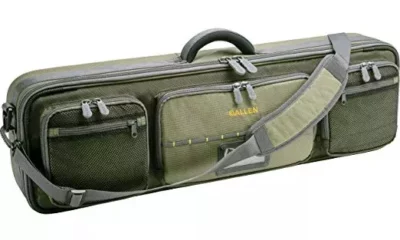
Lightweight soft-shell cases built with ballistic nylon exteriors and high-density foam padding weigh significantly less than hard cases while still offering decent protection for shorter trips. These cases often feature expandable compartments, backpack straps, and exterior pockets for storing reels and terminal tackle, making them ideal for anglers who need to navigate crowded airports or connect through small regional airports.
Soft cases excel when you need to fit gear into overhead compartments for short flights or when traveling with multiple rods. However, they provide minimal protection against crushing loads, so avoid checking them on flights requiring multiple connections or transfers through large hub airports where baggage handling is particularly rough.
Airline-Approved Dimensions Every Traveler Must Know
How to Avoid $100 Oversized Baggage Fees
Most major airlines limit checked baggage to 62 linear inches (length + width + height), with some carriers reducing this to 55 inches for economy passengers. Fishing rod cases frequently approach these limits, especially when carrying multiple rods. Measure your fully packed case before purchasing—many “airline-approved” cases actually exceed size restrictions when loaded with protective rod tubes.
Pro tip: Look for cases with telescoping designs that extend for rod storage but compress to meet airline size requirements. Some manufacturers cleverly design cases that measure 61 inches when packed but expand internally to accommodate rods up to 9 feet long. Always verify measurements with your specific airline, as policies vary significantly between carriers.
Weight Limits That Catch Travelers Off Guard
Hard-shell rod cases often weigh 12-18 pounds empty, consuming nearly half your standard 50-pound baggage allowance before adding rods and accessories. Soft cases typically weigh 5-8 pounds, leaving more room for additional gear. Weigh your fully packed case at home using a luggage scale to avoid $100+ overweight fees at the airport.
Budget airlines like Spirit and Frontier enforce stricter weight policies with lower limits and higher fees. If traveling with these carriers, choose ultra-lightweight cases made from carbon fiber or advanced composites that shave crucial pounds while maintaining protection.
Rod-Specific Case Features You Can’t Ignore
Fly Rods Demand Specialized Protection

Fly rods with delicate tapers and multiple sections require cases with individual tube compartments that prevent sections from rattling against each other. Look for cases with dedicated reel storage pockets and foam-cut slots for leaders and tippet material. The best fly rod travel cases include moisture-wicking liners to prevent condensation damage during climate changes.
Avoid cases with single large compartments for fly rods—these allow sections to shift and potentially damage ferrules during transit. Instead, choose models with adjustable dividers that let you customize space for different rod configurations.
Spinning and Baitcasting Rods Need Strategic Support
Long spinning rods with exposed guides require cases with guide-safe channels that prevent eyelets from scraping against case interiors. The best designs incorporate padded reel seats that hold reels securely without pressure on sensitive drag systems. For multi-rod travelers, look for cases with removable partitions that let you configure space for different rod lengths.
Never transport rods with reels attached unless the case has specifically designed reel pockets. The leverage created by reel weight on rod tips during handling creates stress points that frequently lead to broken tips—even in high-quality cases.
Packing Secrets That Prevent 90% of Travel Damage
The Critical Reel Removal Step Most Anglers Skip
Removing reels before travel prevents two common damage scenarios: reel feet scratching rod blanks during transit and vibration damage to sensitive drag systems. Store reels in separate padded cases or soft pouches inside your main rod case. This simple step eliminates the most frequent cause of rod damage during air travel.
If you must travel with reels attached, use reel lock systems that secure the reel foot to the rod while preventing metal-on-rod contact. Never rely on the rod’s own reel seat hardware to hold the reel during travel—these weren’t designed to withstand the forces of baggage handling.
Foam Padding That Actually Works
Generic egg-crate foam compresses too quickly to provide lasting protection. Instead, look for cases with closed-cell polyethylene foam that maintains its shape after repeated impacts. When packing, ensure rods rest in foam channels with no gaps—any movement during transit creates wear points that lead to damage.
Place additional foam padding around rod tips, the most vulnerable section during travel. Many anglers cut foam pieces to fill empty space around tips, preventing them from vibrating against case walls during flight.
Maintenance That Doubles Your Case’s Lifespan
Post-Trip Inspection Checklist
After every trip, inspect your case for damage that could compromise future protection. Check foam padding for compression, examine zippers and latches for wear, and verify wheel mechanisms still roll smoothly. Small issues like torn fabric or loose stitching will worsen with each trip if not addressed immediately.
Pay special attention to rod guide channels in soft cases—repeated use can wear through padding, exposing rods to direct contact with case exteriors. Replace worn padding sections before your next trip to maintain optimal protection.
Cleaning Methods That Prevent Premature Wear
Saltwater anglers must rinse cases thoroughly after ocean trips to prevent corrosion of zippers and hardware. Use mild soap and lukewarm water to clean interiors, then air dry completely before storage. Never store cases while damp—trapped moisture breeds mold that degrades padding and creates unpleasant odors.
For hard cases, wipe down exteriors with non-abrasive cleaners to maintain scratch resistance. Avoid harsh chemicals that can degrade protective coatings over time. Store cases in cool, dry places away from direct sunlight, which breaks down plastics and fabrics through UV exposure.
Choosing the best fishing rod case for air travel means balancing protection, weight, and airline compliance for your specific fishing needs. The right case transforms travel anxiety into confidence, knowing your gear will survive the journey ready for action. Prioritize cases with airline-approved dimensions, rod-specific protection features, and construction quality that matches your travel frequency. Remember that proper packing technique matters as much as the case itself—take those extra minutes to secure reels separately and fill empty spaces. With the right case and packing method, you’ll spend less time worrying about gear damage and more time catching fish at your destination.