
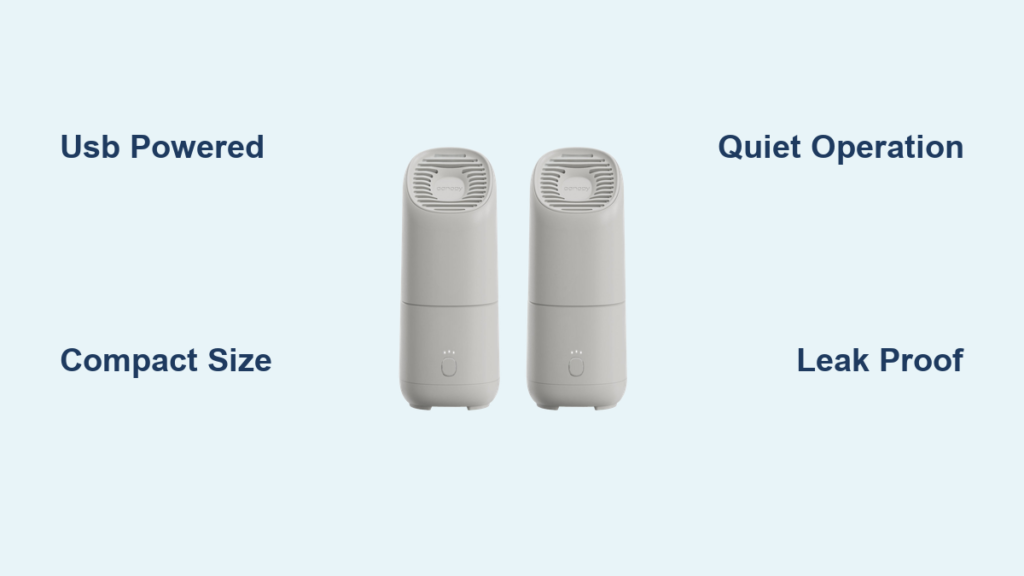
Nothing ruins a peaceful night’s sleep in a hotel room quite like waking up with a dry throat, irritated sinuses, and static-charged hair clinging to your face. Commercial airplanes maintain humidity levels as low as 10-20%, while hotel air conditioning systems often strip moisture from the air, leaving travelers feeling dehydrated and uncomfortable. A best travel humidifier solves this pervasive problem by delivering targeted moisture exactly where you need it—your personal space—without the bulk of standard home units. These portable devices fit effortlessly into carry-on luggage, operate quietly through the night, and transform stale, dry environments into comfortable resting spaces that support better sleep and overall well-being.
Unlike stationary humidifiers designed for entire rooms, the best travel humidifiers prioritize strategic compromises between size, runtime, and mist output. They typically weigh less than a pound, feature compact water tanks that prevent spills during transport, and offer multiple power options to match diverse travel scenarios. Whether you’re a business traveler navigating time zones, a family on vacation, or an adventure seeker camping in remote locations, the right portable humidifier eliminates one more variable that can make or break your travel experience. This guide cuts through marketing hype to identify exactly which models deliver reliable performance where it matters most—when you’re far from home.
Why Standard Humidifiers Fail for Travelers
The Size and Weight Problem
Home humidifiers designed for bedrooms or living spaces simply don’t translate to mobile use, often weighing 3-5 pounds with water tanks that would leak through luggage during transit. Travel-specific models solve this by incorporating sealed, leak-proof designs with water capacities optimized for overnight use rather than continuous operation. The most effective travel humidifiers maintain a delicate balance—holding enough water for 6-8 hours of sleep (typically 300-500ml capacity) while weighing under 12 ounces when empty. Larger units exceeding 16 ounces quickly become “that thing I should have left at home” as luggage weight accumulates with other essentials.
Power Source Compatibility Issues
Hotel rooms worldwide feature inconsistent electrical configurations, making standard plug-in humidifiers impractical for international travelers. The best travel humidifiers solve this with USB power delivery, allowing operation from power banks, laptop ports, or universal wall adapters without voltage converters. USB-powered models draw minimal energy (1.5-5 watts), meaning a standard 10,000mAh power bank can fuel overnight operation without draining your phone’s battery. This flexibility ensures your humidifier works whether you’re in Tokyo, Paris, or a remote cabin with only solar-powered electricity.
Ultrasonic Technology: The Traveler’s Secret Weapon

How Ultrasonic Mist Production Works
Unlike evaporative humidifiers that use noisy fans, ultrasonic models create fine mist through high-frequency vibrations that break water into microscopic particles. This technology delivers three critical advantages for travelers: near-silent operation (under 35 decibels), compact design without bulky fans, and energy efficiency that extends battery life. The resulting cool mist disperses evenly through small spaces without disturbing sleep—a crucial feature when sharing a room with a light sleeper or partner.
Distilled Water vs. Tap Water Tradeoffs
Ultrasonic humidifiers require careful water selection to prevent “white dust”—mineral deposits released when tap water evaporates. While manufacturers recommend distilled water, this creates logistical challenges when traveling where distilled water may be unavailable. Some premium travel models incorporate built-in demineralization cartridges or special filters that allow safe tap water use, eliminating the need to carry extra water bottles. For travelers without these features, packing small distilled water containers or using filtered hotel water provides a practical solution that prevents mineral buildup in the unit.
Top Models for Specific Travel Scenarios
Backpacker’s Choice: Bottle-Attached Mist Generators
For minimalist travelers counting every ounce, bottle-attached humidifiers screw directly onto standard water bottles, transforming any container into a moisture source. These ultra-lightweight options (under 4 ounces) operate via USB power banks and produce sufficient mist for personal comfort within a 3-5 foot radius. While coverage area remains limited compared to standalone units, their space-saving design appeals to hikers and campers who prioritize weight reduction above all else. Models like the MistPal Pro deliver 4-6 hours of runtime from a single bottle, making them ideal for overnight train journeys or hostel stays where space is extremely limited.
Business Traveler’s Essential: USB-Powered Night Comfort
Frequent business travelers benefit most from mid-sized humidifiers (8-12 ounces) with 500ml tanks that provide uninterrupted overnight operation in standard hotel rooms. Top models include features like automatic shut-off when water runs low, adjustable mist intensity controls, and discreet blue lighting that won’t disturb sleep. The Levoit Vital 300S Travel edition exemplifies this category with its 360-degree mist nozzle that directs moisture away from electronics, 8-hour runtime on medium setting, and compact cylindrical design that fits in laptop sleeves. These units strike the ideal balance between performance and portability for travelers staying in climate-controlled environments with reliable power access.
Family Vacation Solution: Extended Runtime Models
Traveling with children demands higher output and longer runtime to accommodate multiple sleepers in larger accommodations. Family-oriented travel humidifiers typically feature 600ml+ tanks, warm mist options for congestion relief, and noise levels below 25 decibels to avoid disturbing light sleepers. The TaoTronics TT-AH038 stands out with its dual mist technology (cool mist for general humidity, warm mist for respiratory comfort) and impressive 30-hour runtime on the lowest setting—enough to cover multiple nights without refilling. While slightly heavier (14 ounces), the added performance justifies the minimal weight increase for families dealing with children’s dry skin or allergy symptoms exacerbated by dry air.
Critical Mistakes That Render Travel Humidifiers Useless

Ignoring Power Bank Compatibility
Many travelers purchase USB humidifiers only to discover their power banks lack sufficient output to maintain operation. Standard humidifiers require 5V/1A power delivery, but many compact power banks only provide 500mA on secondary ports—enough to charge phones but insufficient for sustained humidifier operation. Before purchasing, verify your power bank delivers at least 1A on the port you’ll use, or opt for models with built-in rechargeable batteries that eliminate this compatibility issue. Carrying a dedicated 10,000mAh power bank (1.5″ x 3.5″) specifically for your humidifier ensures reliable operation without draining your phone’s battery.
Overlooking Water Refill Logistics
Hotel rooms rarely contain distilled water, and carrying multiple bottles adds significant weight to luggage. Travelers who fail to plan for water sourcing often abandon their humidifiers after the first night. Smart solutions include packing empty 1-liter distilled water bottles that collapse when empty, using filtered hotel water with demineralization cartridges, or selecting models with built-in water filters that tolerate tap water. The Honeywell HCM350W Travel edition includes a permanent filter that reduces mineral deposits, allowing safe use with standard tap water—a game-changer for spontaneous travelers who can’t plan water sources in advance.
Maximizing Performance in Extreme Conditions
High-Altitude Humidity Challenges
At elevations above 5,000 feet, reduced atmospheric pressure decreases mist visibility and evaporation rates, making humidifiers appear less effective. Travelers to mountain destinations should increase mist settings by one level and position the unit closer to their sleeping area (within 3 feet) to compensate for these conditions. Some advanced models like the Pure Enrichment MistAire Travel include altitude adjustment features that automatically increase output at higher elevations, ensuring consistent performance whether you’re in Denver or the Swiss Alps.
Desert Climate Strategies
Extreme dryness in desert environments requires strategic placement to create a localized comfort zone. Position your travel humidifier at pillow level rather than floor level to maximize moisture where you breathe, and combine it with a light blanket over your head and pillow to trap moisture within your immediate breathing space. Models with directional mist nozzles (like the VicTsing Mini Humidifier) allow precise targeting of moisture output, making every drop count in environments where relative humidity regularly falls below 20%.
Selecting the best travel humidifier ultimately depends on matching your specific travel patterns with the right combination of size, power options, and mist output. For most travelers, USB-powered ultrasonic models weighing under 12 ounces with 300-500ml tanks deliver the ideal balance of performance and portability. Avoid the temptation of ultra-cheap models that sacrifice build quality for low price—reputable brands like Levoit, TaoTronics, and Pure Enrichment offer reliable operation that justifies their modest premium. Before your next trip, test your humidifier at home to verify noise levels and mist output, and always pack it in an easily accessible location in your carry-on luggage. With the right portable humidifier, you’ll transform dry, uncomfortable accommodations into restful sanctuaries that help you arrive at your destination feeling refreshed rather than depleted. Properly maintained, a quality travel humidifier will pay for itself in improved sleep quality and reduced travel fatigue over just a few trips—making it one of the most valuable, yet overlooked, items in any frequent traveler’s packing list.